Carversville United Church of Christ makes Sunday services available to all, from anywhere, with simple AV technology
Quote Icon
“Kramer solutions have allowed us to achieve our goal with older members and friends now being able to participate in worship from their homes.”
Bob Fogal | Pastor, Carversville United Church of Christ

Background

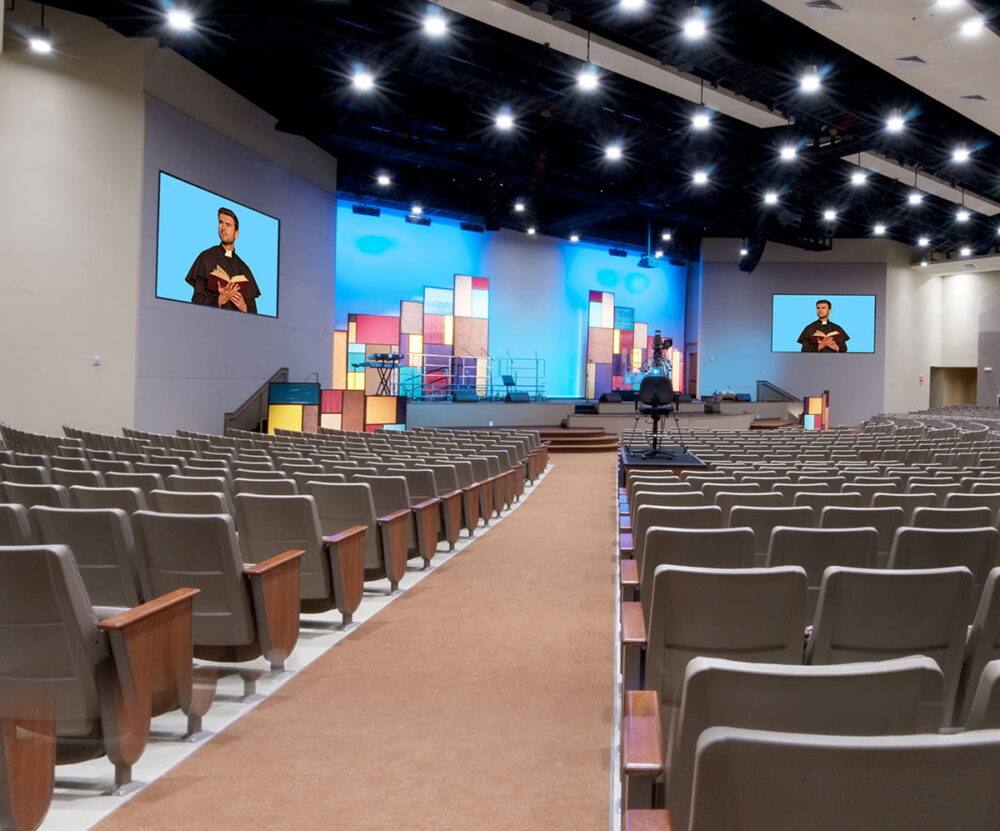
Carversville United Church of Christ, located in the geographically isolated area of Bucks County, Pennsylvania, has a congregation that came together from several Protestant traditions with roots in colonial America. Officially founded in 1957, its sanctuary dates back to 1837.

A pretty, rustic church with a stone block exterior, it continued in operation until a fire burned the plaster interior and roof in 2010. The historic church was completely rebuilt and brought up to code in 2011. As part of the upgrade, a new sound system and AV rack were installed. In addition to Sunday services, with wonderful acoustics, the church now hosts live concerts in its sanctuary, including Jazz Vespers, as well as many instrumental and vocal groups which have performed and recorded there.

Quote Icon
“The camera is totally unobtrusive. Folks don’t see it unless we point it out to them. And anyone who can use a TV remote can operate the camera.”
Bob Fogal | Pastor, Carversville United Church of Christ

Goals

With the outbreak of COVID-19, many members of the congregation expressed concern about attending services in-person. Starting in mid-March, 2020, Pete Putman of ROAM Consulting LLC began shooting abbreviated services on Friday mornings, using three Panasonic and Canon cameras and a TASCAM DR-40x digital audio recorder for later editing in Adobe Premiere, which he later posted to YouTube, the church’s website, and the church’s Facebook page. In July, the decision was made to switch over to live streaming of the Sunday services. Accordingly, Pete installed an AViPAS 1080HD pan/tilt/zoom camera in the back of the choir loft, above the AV closet. To get the video and audio signals to the church office, located in the 1984-vintage annex, he had quite the challenge: The construction of the building prevented reliable WiFi linking, as the plaster lathe acts like a Faraday cage, shielding RF signals. For highest signal reliability, his choices were either a network connection (AV over IP) using Cat 6 cable, or HDBaseT connections, also using Cat 6 cable. Pete opted for HDBaseT, given the 220-foot (67-meter) length of Cat 6 cable required to link the two points.

The Solution

Audio from the master AV rack is injected downstream from an 8-channel mixer through a Kramer VM-50AN into a Kramer TP-590TXR HDBaseT transmitter. This allows the two fixed and three wireless microphones used during services to be heard on the live stream. In the church office, a TP-590RXR HDBaseT receiver converts the AV signal back to the HDMI format. This signal then feeds a Magewell USB Capture HDMI card, streaming HD video into a desktop PC monitor. OBS Studio streaming software controls the video and audio feed and encodes it to the H.264 format for connection to YouTube live streaming. In addition, OBS Studio records each service to the desktop for on-demand streaming and archiving.

The AViPAS camera comes with a standard IR remote and can save 10 different combinations of zoom, pan, and tilt settings. To confirm the camera settings in the sanctuary, Pete piggy-backed a Kramer KW-14 wireless HDMI receiver on a Bosstouch 7-inch HD LCD monitor. This small, unobtrusive monitor can sit anywhere in the sanctuary, as the receiver links up reliably with a Kramer KW-14 wireless HDMI transmitter above the audio rack. For example, during a service, the organist can change camera views as needed while watching this tiny confidence monitor. The KW-14 transmitter gets its HDMI signal from a VM-2xl 1:2 distribution amplifier mounted next to the TP-590TXR above the audio rack.

Value

The entire streaming system from camera to office is activated by touching one power switch, so that anyone can operate it – with no need to adjust any levels or controls. Once the system is running, an operator launches OBS Studio, logs into YouTube, and starts streaming. Thanks to this setup, in September 2020, at the advice of state health advisories, the church was already fully prepared to switch-over to live streaming of Sunday services.

“We are very pleased with the installation of Kramer’s solutions,” confirms Pastor Bob. “They have allowed us to achieve our goal with older members and friends now being able to participate in worship from their homes.”

In addition, the church has appreciated the ease of use and discreet nature of the solution for those attending services in-person. “The camera is totally unobtrusive,” Pastor Bob continues. “Folks don’t see it unless we point it out to them.” Plus, he’s a big fan of the system’s performance, noting “anyone who can use a TV remote can operate the camera. The technical quality is superb.” 

Tags:

Houses of Worship

Signal Management

Americas

United States

Got a question for one of our AV experts? Contact us here, and we’ll connect you.

Hurst-Euless-Bedford ISD makes teaching and learning more interactive, with Kramer technology

Quote Icon
“I’ve got a centralized server, I can administrate, monitor, and troubleshoot every Kramer device from my own desk using Kramer’s VIA Site Management Software.
Shawn Finch | Network Engineer, HEB I.S.D

Background

Established in 1958, the Hurst-Euless-Bedford Independent School District (HEB ISD) spans 44 square miles, encompassing the three adjacent cities of Hurst, Euless, and Bedford in the Dallas-Fort Worth area of Texas. Serving more than 24,000 pre-K and K-12 students and more than 3,300 employees, the district currently comprises 20 elementary campuses, five junior highs, and four high schools. In addition to its classroom-based facilities, the HEB ISD has seven buildings that house administration, athletics, and a maintenance complex. Fast growth over the past five years has seen a six percent increase in enrollment, or just shy of 1,300 students. Two new educational campuses are now under construction to accommodate this influx.

Nearly 20 years ago, a redundant, currently 20Gb, fiber optic network was installed throughout HEB ISD setting the stage for today’s advanced AV over IP technology solutions. Until two years ago, the only technologies in the classrooms were SMART Boards, document cameras, and interactive projectors.

Goals

For over a decade, Vikki Durham, an Instructional Technology Support Specialist, has worked on location with teachers, students, coordinators, and administrators to integrate technology and train staff across the district. According to her, when she started as a teacher at HEB ISD 30 years ago there was “absolutely no technology other than a TV, a computer, and a whiteboard.”

To help understand the changing technology needs of teachers and administrators, a district-wide survey was conducted. Results from the study were used to set goals and expectations from the district’s leadership who stated that “they wanted the teachers to be up out of their desks and integrating and communicating and collaborating with the students – actively monitoring,” says Vikki.

To keep students and teachers alike engaged, the district had to find a secure, robust solution allowing maximum mobility. Vikki was hopeful that this would meet real teacher needs, saying, “A lot of teachers didn’t like being in the front of the room. Some teachers wanted to be in the back of the room and some teachers wanted to be in the middle of the room.”

Quote Icon
“They wanted the teachers to be up out of their desks and to integrate and to communicate and collaborate with the students – actively monitoring.”
Vikki Durham | Instructional Technology Support Specialist, HEB

Solution

1,633 Kramer VIA GO units were installed in classrooms across its 36 buildings, to allow teachers to actively engage with students and wirelessly share content onto the projection surface in the classroom.

Flexibility, scalability, and affordability were key requirements for making this choice, according to Shawn Finch, the Network Engineer who oversees HEB ISD’s massive technology infrastructure, as he was evaluating competitive products. “With a district as large as HEB, it was completely unacceptable to have to configure each device one at a time,” he says. “Kramer has this centralized enterprise server and all the VIA GO’s phone home to it, so when I need to make a change, I can go to one place and I make the adjustments for an entire school, or multiple schools, or the entire environment at once. ”

Beyond the benefit of working on a centralized system, the district also needed a solution that would live up to its secure wireless network. “We require an SSL certificate. We require usernames and passwords. And many of the competitors’ boxes felt more like they were made for small offices and home use.” According to Shawn, the Kramer VIA GO difference was that “It was able to handle our enterprise-class wireless security settings, and in addition to that, it has an Ethernet port. The benefit to that is it connects to both at the same time, so we can have a physically wired cable in the back to provide very reliable network connectivity.”

Technological advantages aside, for HEB ISD, there remained the simple fact that across the long-term Kramer’s price point for VIA GO fell far below its competitors. “We also needed to be looking at price to make sure it was something that we could afford over a period of time,” Vikki highlights. “Kramer filled that niche too because it provided us with a hardware opportunity that probably would last longer and you didn’t have to get a subscription associated with software licenses.”

Value

Using VIA GO teachers can untether from their central docking station and move freely throughout the classroom while presenting materials from their own devices and actively interacting with students. “The student Chromebooks have the ability to mirror the projector as well, and so you could have the teacher on one side with, say, a problem that had not been solved,” says Vikki. “A student could project up there alongside that teacher and solve the problem where the whole entire class could see it.”

Kramer’s VIA GO also provided HEB ISD with a solution compatible with a diverse array of operating systems. According to Vikki, “Some of the competitors could handle Apple devices and PCs but couldn’t handle Chromebooks. Some of them could handle Apple devices and Chromebooks but couldn’t do PCs. This is the only one that we’ve been able to find that would allow us to use all of our platforms.”

The accompanying VIA App software also solves the problem of multimedia playback on an already-congested network. “We used to roll an entire cart of 30-plus computers into a classroom when the teacher wanted to play a video,” says Shawn. “But what Kramer’s developers did that was very clever is they allowed you to stage your multimedia content on the app, and then when you’re ready to play it, it tells VIA GO to get it for you.”

The VIA GO units also have the benefit of being wall-mountable, which is especially helpful in a classroom where expensive equipment could be easily damaged. “You know a kid will step on them and they’ll get crushed,” Shawn explains. “We wanted these units someplace safe and out of the way. On the wall is a great way to do that, or, in our future campus, up above the ceiling – above the projector.”

With hundreds of teachers across the district being introduced to VIA GO over a short period of time, one might think there would be some difficulty in transitioning to the new technology. However, that did not prove to be the case. “There was a little bit of a learning curve, but it’s really not hard,” Vikki points out. “Some early adopters, of course, jumped right on it. Some teachers have been a little bit slow to use it, but they’re getting there because they see the value of it.”

There is resounding consensus from teachers and administrators alike that over the past two years, Kramer’s VIA GO has been instrumental in encouraging active learning in HEB ISD. “We have been pretty successful,” Vikki concludes. “When I pass by 10 to12 classrooms, I’ve got at least six to eight using it on a daily basis. This is great for classroom management. It frees the teachers up to actively participate with the students.”

Tags:

Education

Collaboration Applications

Americas

United States

Got a question for one of our AV experts? Contact us here, and we’ll connect you.

Classroom collaboration gets an upgrade at the University of Denver using Kramer VIA solutions

Franklin Jackson, Digital Media Services Manager, University of Denver, talking about Kramer VIA Collage and Kramer VIA Connect PRO
“Results have been overwhelmingly positive… Now that word has spread, VIA Collage and VIA Connect PRO are in high demand campus-wide.”
Franklin Jackson | Digital Media Services Manager, University of Denver

Background

Founded in 1864, The University of Denver (DU) is a private university spread across 125 acres just south of downtown Denver, Colorado. The school offers over 100 undergraduate programs and more than 120 graduate and professional programs. With approximately 11,600 students, DU was ranked among the top 100 universities by U.S. News and World Report. Kiplinger’s Financials ranked the school 64th in the nation in 2015 for the best value in private education. In addition to its academics and affordability, the university is also committed to environmental conservation and sustainability efforts. It is the largest wind-energy buyer among Colorado colleges and universities. The university has pledged to become carbon neutral by 2050.

Goals

University of Denver’s Digital Media Services department wanted to provide its instructors with an intuitive classroom presentation system that had both wired and wireless connectivity. The university wanted to upgrade 46 classrooms at the same time. The technology had to be easy to use and easy to support, yet robust enough for heavy classroom usage.

Franklin Jackson, Digital Media Services Manager for the University of Denver, says that DU not only needed a wireless collaboration system but also needed to define best practices and efficient workflow. According to custom audio-video integrator Lenny Marko-Franks at CCS Presentation Systems, DU had been searching for a solution for some time when they discovered VIA Collage at the AV Expo. He adds that one of the biggest challenges was how to gradually introduce the system.

VIA solutions addressed the university’s needs and have become the standard for its AV installations on campus. 

Value

The VIA solutions addressed the university’s needs and have become the standard for its AV installations on campus. Recently, additional VIA Collages were installed in two new classroom buildings. “Results have been overwhelmingly positive,” according to Franklin. “It’s new technology on our campus and folks were slow to adopt it initially. But now that word has spread, VIA Collage and VIA Connect PRO are in high demand campus-wide”.

The excellent performance was followed by an excellent evaluation and installation experience. “Kramer sales and tech support teams have been stellar,” says Franklin. “This project would not have gone as smoothly as it has without their support. Our Kramer regional sales manager was especially instrumental during the introduction and evaluation of the products and has been a pillar of support throughout the entire process.”

Franklin adds that “the team from Kramer has been a pleasure to work with. They are quick to respond with timely and meaningful solutions. I’m excited about the future partnership with Kramer and building a solid customer/manufacturer relationship.”

Tags:

Education

Collaboration Applications

Americas

United States

Got a question for one of our AV experts? Contact us here, and we’ll connect you.
GateWay Community College complements its renovation with a state-of-the-art AV system

“This classroom design with the VP-729 scaler/switcher as the backbone enables us to display any analog or digital AV device on the screens with easy interface control.”
Senadz Lubovac | Coordinator of Audiovisual, IT, GateWay Community College

Background

GateWay Community College (GCC), in Phoenix, Arizona – with approximately 13,000 students – is part of the largest community college district in the United States.

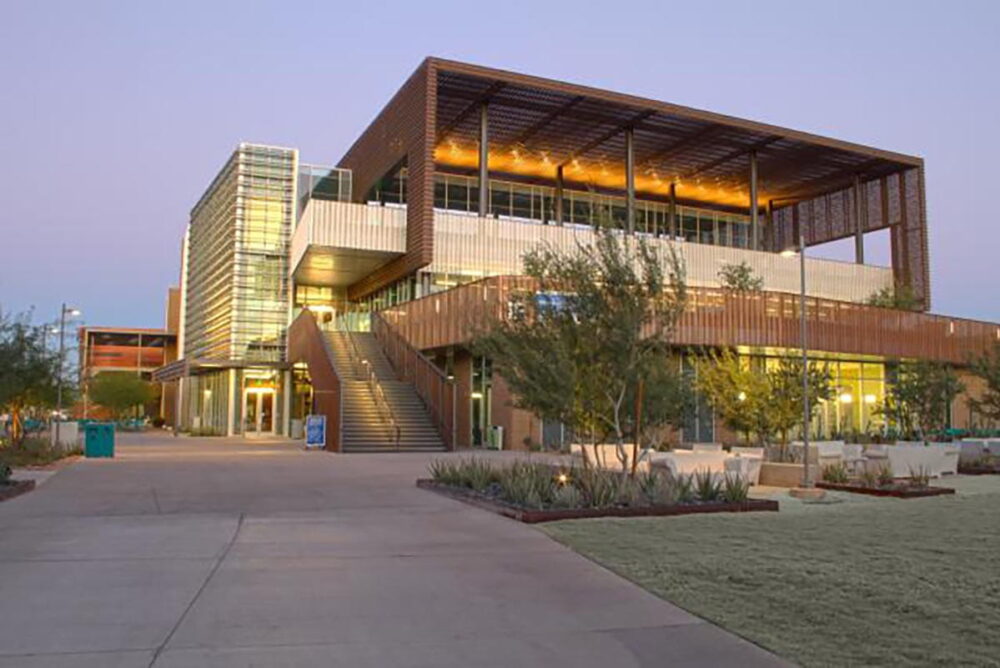
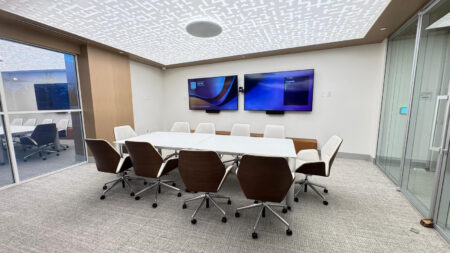
During a recent renovation, the college added 23 new classrooms, a PC networking lab, a vocational skills lab, two conference rooms, and a tri-divisible multi-purpose room. This new 125,000-square-foot Integrated Education Building also has 15 dual-screen classrooms, a single-screen art studio, and a three-screen multi-purpose room with over 200 seats. Around the same time, the college also remodelled the Maricopa Skill Center, a vocational school and division of Gateway Community College.

Goals

GateWay Community College wanted a state-of-the-art AV system and IT classrooms to complement its new Integrated Education Building and remodelled Maricopa Skill Center. The system needed to allow students and faculty access to digital AV and HDCP content in a simple-to-use configuration. 

An intuitive model that would be identical in all rooms was required, to reduce the need for troubleshooting by technical support staff. The college also needed to integrate digital and analog devices in the classrooms and reduce the size and cost of lectern-to-projector cabling.

Solution

For the classroom systems, the GateWay AV team selected the Kramer VP-729 ProScale® digital scaler/switcher and Kramer TP-573, and TP-574 DGKat™ twisted pair transmitters/receivers for HDMI, bidirectional RS-232, and IR signals – all of which are housed in a slim lectern in each room.

The VP-729 sits at the heart of the conference rooms. Videoconferencing equipment and a 60- or 70-inch display were also added. All multi-purpose rooms follow the same configuration and include a Kramer VS-66HDCPxl 6×6 DVI Matrix switcher, TP-581T/582R HDBaseT twisted pair transmitters/receivers, and FC-46xl audio de-embedders.

“After comparing the features, complexity, and pricing of a variety of products, we decided to use Kramer as a core infrastructure in designing our standardized classroom because it met our needs to handle both HDMI and HDCP,” says Senadz Lubovac, Coordinator of Audiovisual Information Technology at GateWay Community College.

Value

The relevant rooms in the Integrated Education Building and remodelled Maricopa Skill Center are now equipped with a state-of-the-art AV system. Intuitive to operate, the new technology gives students and faculty easy access to digital AV and HDCP content. And there’s little need for help calls to the college’s technical support team.

“This design with the VP-729 scaler/switcher as the backbone enables us to display any analog or digital AV device on the screens with easy interface control,” says Lubovac.

With the budget, a major success factor for GCC, “Kramer’s pricing made a real difference.”

Tags:

Education

Collaboration Applications

Signal Management

Americas

United States

Got a question for one of our AV experts? Contact us here, and we’ll connect you.
Illinois State University classrooms go digital with a seamless user-interface from Kramer

Quote Icon
“We put in a standard user interface and they know that if they press ‘computer’, the magic happens and the computer shows up on their projector, and they don’t have to think about it.”
Doug Smith | Director, Illinois State University

Background

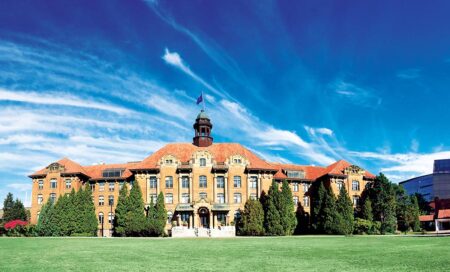
Illinois State University, located in Bloomington-Normal, Illinois, was the state’s first public university.  Founded in 1857, the school has approximately 18,000 undergraduate students, 2,300 graduate students and 3,560 employees, including 1,224 departmental faculty. Illinois State University has received numerous awards.

For 2017, U.S News & World Report ranked the school 78th among America’s best public universities for academic quality and excellence. Illinois State received a rank of 22nd from College Factual among the best colleges for the money out of 1,200 schools and was included among the country’s best universities for veterans. Illinois State is also listed among the best schools for military and veteran education by Military Advanced Education & Transition and was named a “Gold Medal-level Military Friendly School” by Victory Media. 

Goals

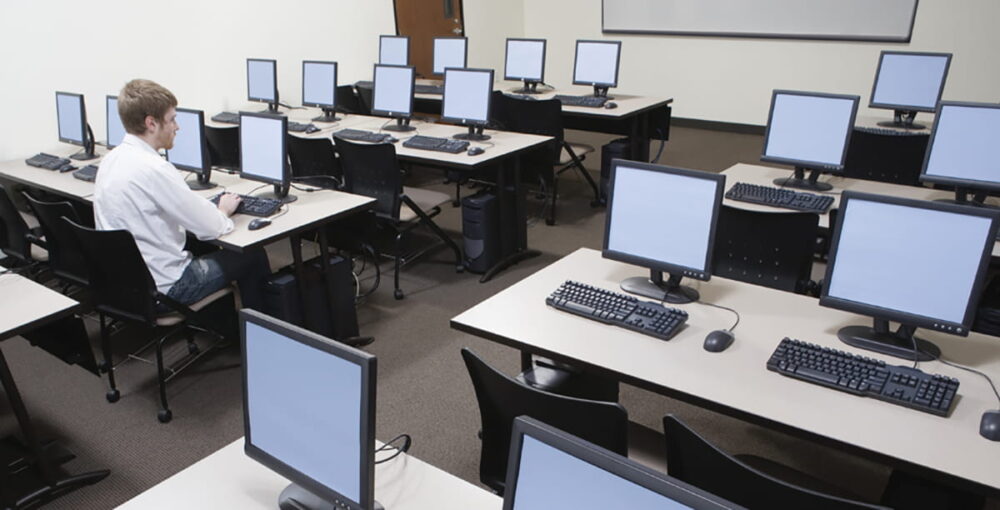
Illinois University wanted to find a digital audio-video solution for its classrooms that would allow faculty to easily switch between different video sources in 320 classrooms. In 2009, the university began to add more AV technology in its classrooms, but incident rates reflected the fact that faculty members had trouble using it. To reduce the number of incidents and service calls, the customer wanted to switch all classrooms to digital while ensuring ease of use.

Kramer was tasked to convert all 320 classrooms with the appropriate scaler/switcher to make sure the faculty’s user experience was seamless no matter where a class was being held.

Solution

The Kramer custom integrator recommended the VP-728* and VP-730* and a 9-input ProScale™ presentation scaler/switchers for analog and digital video with picture-in-picture, picture-and-picture, and split-screen capability. In addition, the VP-773A, an 8-input HDMI & HDBaseT ProScale™ presentation switcher/scaler with 2K support and an audio power amplifier was installed in each of the classrooms. In so doing, Illinois State was able to convert all 320 classrooms to digital capabilities with easy-to-use interfaces.

Value

Kramer presentation switchers have allowed Illinois State AV specialists to provide faculty with a standard setup for each classroom. “They can go from room to room and know what’s going to be there such as a computer, document camera, and the likes; and Kramer has the switching core. We put in a standard user interface and they know that if they press ‘computer’, the magic happens and the computer shows up on their projector, and they don’t have to think about it,” says Doug Smith, Director, Learning Spaces and Audio-Visual Technologies at Illinois State University.

Doug further explains that despite there being more technology now, the incident rate has plummeted. “As we ramped up our responsibilities, the number of times we had to go in and revisit rooms just kept dropping. The impact has been staggering.”

In addition, through reduced service calls and incidents, among other things, Doug adds that the Kramer solution has saved the university money. “The product is rock-solid, Kramer support is rock-solid and the solution saves me money every time I turn around”.

* The VP-732 is Kramer’s most current product for this specific use (recommended).

Tags:

Education

Collaboration Applications

Signal Management

Americas

United States

Got a question for one of our AV experts? Contact us here, and we’ll connect you.
“AMEC didn’t want a control system or a confusing bunch of products. They wanted nothing on the table tops, so we designed a simple, easy-to-use system using Kramer products that were also easy to use.”
Tom Austin | Account Manager, Industrial Audio/Video Inc.

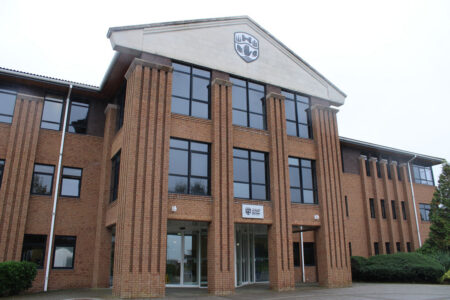
Simplicity was the key to AMEC’s new audio/video system in its Houston oil and gas office. According to Tom Austin of Industrial Audio/Video Inc. ( IAV ), the local integrator who installed the system, the executives at AMEC wanted to be able to outfit conference rooms and training rooms with easy-to-use equipment that allowed the use of both HDMI and VGA. They wanted to get presentations up on the screen in two easy steps:

  1. hook up a laptop
  2. a picture appears 

“They didn’t want a control system or a confusing bunch of products,” Austin said. “They wanted nothing on the table tops, so we designed a simple, easy-to-use system using Kramer products that were also easy to use.”

IAV designed sleek, no−nonsense systems for three different parts of the building: the training room, the executive conference room and 23 smaller conference/training rooms. Each room had a simple system that accessed the necessary digital technology with the push of a single button. There was no adjusting of projectors, resizing screens or poor-quality images on the screens.   

The primary training room, which seats about 30 people, inherited equipment from the executive conference room.  It included a Smart tablet for annotating, two ceiling-mounted projectors and Kramer VGA and HDMI cables within a custom podium.  

Twenty-three smaller conference/training rooms were outfitted with identical systems that included a Kramer VP-434 or VP-435 scaler along with Kramer VGA and HDMI cables. In each room, the Kramer scaler converts the selected video signal to a computer graphics or HDTV output resolution. It outputs an HDMI signal, transmitted to the projector using CAT5 cabling. Because the cabling already existed in most of the rooms, it saved the time and money of re-wiring, Austin said. The VP-434 and VP-435 scaler, along with a CAT5 transmitter, switcher and all of the VGA, and HDMI cables, are housed under the conference room tables, so there is no clutter on the tables themselves. Each system is controlled by a simple eight-button wall controller with easy-to-understand functions. 

The AMEC executive conference room also features a 25-foot conference table with nothing on it. IAV incorporated an under−the−table mounted Kramerauto−sensing VP−435 ProScale Digital Scaler to scale HDMI and VGA signals to a computer graphics output resolution. The room also uses a Kramer FC−46 audio de−embedder for audio conferencing.

“We were very conscious of having no clutter on the table, and the under-table mounted units helped us achieve that,” said Austin.

Austin said the installation was done in stages and by blocks of conference rooms. AMEC used the rooms Monday through Thursday, so the IAV team could only work in them on Friday and Saturday. It took about eight months to complete the installation at the pace of about three or four rooms each week. “The training room was the most sophisticated, and the others were simple, even though each one was a little different,” Austin said. “We were very conscious of having no clutter on the table, and the under-table mounted units helped us achieve that.” 

IAV made an auto−sensing system that addressed the technical and aesthetic needs of the end user. Kramer’s scalers made it simple.

AMEC (LSE: AMEC) is a focused supplier of consultancy, engineering and project management services to its customers in the world’s oil and gas, minerals and metals, clean energy, environment and infrastructure markets.

Tags:

Enterprise

Connectivity

Control

Americas

Got a question for one of our AV experts? Contact us here, and we’ll connect you.
The National Judicial College does justice to courtroom communications with its updated AV system

Quote Icon
“We designed the system using Kramer equipment because we know Kramer’s track record for reliability and ease-of-use.”
Kevin Sandler | CEO and Founder of ExhibitOne

Background

Founded in 1963, The National Judicial College (NJC) is a leading provider of judicial education in the US. The first to offer programs to judges nationwide, the NJC continues to work with the judiciary to improve productivity, challenge current perceptions of justice, and inspire judges to achieve judicial excellence. The college offers an average of 90 courses and programs annually with more than 4,000 judges attending from all 50 states, US territories, and more than 150 countries.

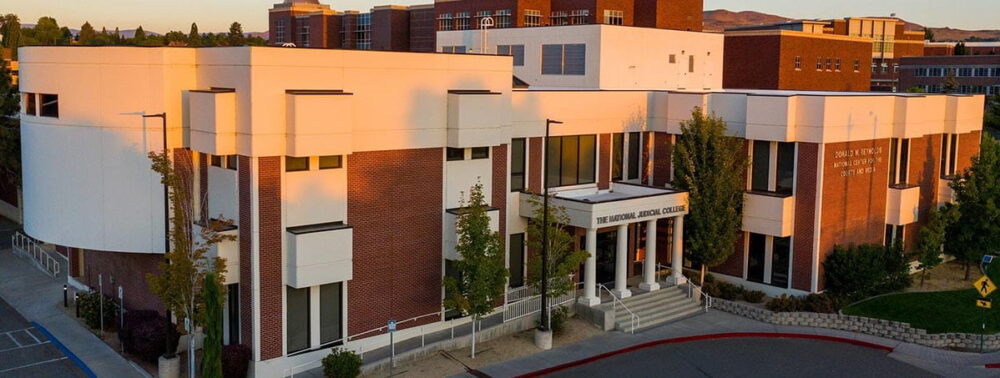
The NJC’s 50th  anniversary in 2013 culminated in the opening of its 90,000-square-foot facility that houses five state-of-the-art classrooms, a 150-seat auditorium, a multimedia room, and an updated model courtroom. 

Goals

The challenge was to manage and control a seamlessly integrated, easy-to-use audio/video system that would facilitate communication throughout several rooms and consistently reproduce an outstanding signal.

Quote Icon
“This system is a showcase for judges throughout the country, so the technology had to be stellar and reliable, as well as user-friendly”
Kevin Sandler | CEO and Founder of ExhibitOne. 

Solution

The audio-video technology in the courtroom is anchored by Kramer products.

The model courtroom system includes a VS-162V 16×16 composite video matrix switcher and a VS-3232DN modular multi-format digital matrix switcher for signal management. Each attorney table has a SID-X1 multi-format video over a twisted pair transmitter and Step-in Module that allows the input of up to four sources (HDMI, DVI, VGA, and DISP Port), plus audio. 

The signal, which is routed through the switchers and the PT-572+ twisted pair receivers, can be switched to the main courtroom displays as well as individual displays at the jury box, attorney rooms, and media room using an intuitive touchscreen panel. Signals are routed through the twisted pair transmitters and receivers and distributed as necessary by a VM-1H4C twisted pair distribution amplifier or VM-8H HDMI distribution amplifier. An FC-46xl audio de-embedder reproduces clear HDMI audio signals for the courtroom. 

Value

“We designed the system using Kramer equipment because we know Kramer’s track record for reliability and ease-of-use, and the Kramer technology consistently reproduces an outstanding signal every time,” said Kevin. 

The system now allows communication throughout the mock courtroom with individual video screens and big screen displays as well as video to the jury room, media room, judge’s chambers, and attorney rooms.

Tags:

Education

Control

Americas

United States

Got a question for one of our AV experts? Contact us here, and we’ll connect you.
About Ellis Island (National Parks Service)

Visitors from around the world come to Ellis Island to learn about the history of American immigration, and many also come to investigate their own family’s story. Now they can experience the history of Ellis Island in digital 1080HD video with 3-channel audio through the film, “Island of Hope, Island of Tears” in Ellis Island Theater One. Made in the 1990s, the movie originally ran in 35mm. It was converted to HD in 2001. With recent audio/video system upgrades in Theater One, including a new player and projector, the film now looks and sounds even more realistic.

Challenge

Kramer technicians worked with National Parks Service (NPS) technicians to design a customized control system for the theater, generating creative solutions for various challenges. One of the biggest challenges was adapting the system to run on a precise, automated schedule. The presentation needs to run once every hour throughout the day and requires an automatic restart. But government security regulations prevent connection to Ellis Island’s computer network for accurate timing. As a result, a Kramer SL-1N master room controller is used as the time source.

Solution

At the core of the theatre’s new control system is Kramer K-Touch. K-Touch is a cloud-based control solution that enables end-users to control any device directly over IP. K-Touch control systems run on commercially available Apple iOS or Android tablets or phones. There is no need for dedicated touch panels or other hardware. All data is stored in a cloud-based platform and can run on any web browser. K-Touch control systems are designed using the K-Touch Builder. The free K-Touch app is available in the App Store and Google Play.

K-Touch is a cloud-based control solution that enables end-users to control any device directly over IP. K-Touch control systems run on commercially available Apple iOS or Android tablets or phones.

In the theatre’s new control system, content can be delivered from various sources, including an HD media player, Blu-ray player, and sources connected through VGA and HDMI inputs. The film is on an SD card in the HD media player, and the images are brought to life on a 9-foot high x 16-foot wide screen. K-Touch also controls a surround sound processor and multiple relays for auxiliary equipment and lighting.

A senior AV production specialist at the NPS explained that this is the organization’s first IP-controlled presentation system. “K-Touch was recommended by a Kramer consultant who presented its capabilities and discussed the outcome for the NPS,” he said. After reviewing K-Touch, the NPS saw the potential for its use in the theater and decided to make it part of a pilot program.

Results

The system now runs unattended for eight hours a day, seven days a week. NPS officials estimate nearly 300,000 people visit the site per year. NPS is planning to duplicate the system in Ellis Island Theater Two in 2016. Theatre Two is used in conjunction with Theater One during busy periods.

SL-1N, K-Touch, K-Touch 2.0

Tags:

Entertainment

Control

Americas

United States

Got a question for one of our AV experts? Contact us here, and we’ll connect you.
Independence Blue Cross gives its stamp of approval to Kramer’s reliable signal distribution

Quote Icon
“The Kramer system makes the technology seamless. All we have to do is turn the system on and it works every time.”
David Hering | Manager of Audio-Video Systems, Independence Blue Cross

Background

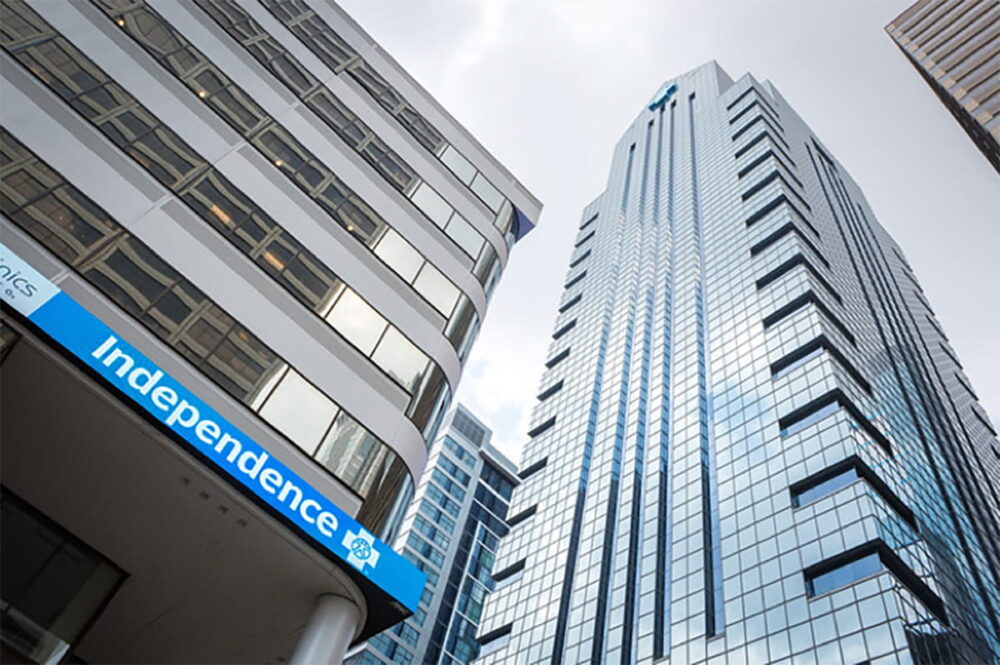
Independence Blue Cross (IBX) has been providing healthcare products and services for over 80 years. Based in the Philadelphia area, IBX is one of the leading health insurance providers in the United States, serving approximately 10 million people in 24 states and the District of Columbia.

Goals

IBX wanted to upgrade the 40-seat boardroom and executive conference room at its Philadelphia offices with a high-quality signal distribution system. As revamped, cutting-edge spaces, the company required perfect functionality and reliability from the system. In addition, it was imperative that the system be easy-to-use and able to handle all needs – from audio and video to lighting – at the touch of a button.

Solution

Designed and installed by IMS Technology Services, a Garnet Valley, Pennsylvania-based system integrator, the rooms now feature full digital technology and seamless control systems, all managed by Kramer ProScale™ digital scaler/switchers.

Video sources are routed using seven VP-729 ProScale digital scalers/switchers, three VS-66HDCP HDMI switchers, and two Kramer HDMI distribution amplifiers. Nine PT-571 and PT-572+ DGKat twisted pair transmitters/receivers convert HDMI signals over a single twisted pair signal using Kramer cables.

This setup enables clear signals for up to 200 feet (61 meters). Video sources include Blu-Ray DVD players, cable TV set-top boxes, and recording devices.

Value

“Kramer was the most reliable solution for this project,” says Bob Lobascio, Vice President of Sales at IMS Technology Services. “The IBX board of directors holds the company to exacting standards and any system had to work flawlessly.” This reliability is why Kramer was chosen for the project, and how it continues to perform.

“The Kramer system makes the technology seamless,” continues David Hering, Manager of Audio-Video Systems at Independence Blue Cross. “All we have to do is turn the system on and it works every time.”

Tags:

Enterprise

Healthcare

Connectivity

Control

Americas

United States

Got a question for one of our AV experts? Contact us here, and we’ll connect you.

Educational Testing Services (ETS) boosts presentation flexibility with Kramer wireless AV system

“The Kramer KW-11 was a simple solution that solved a lot of issues. It was a small transmitter plugged into the HDMI input and it allowed the presenter to walk around while using it.”
Patrick Whipkey | Senior Project Manager, IMS Technology Services

Background

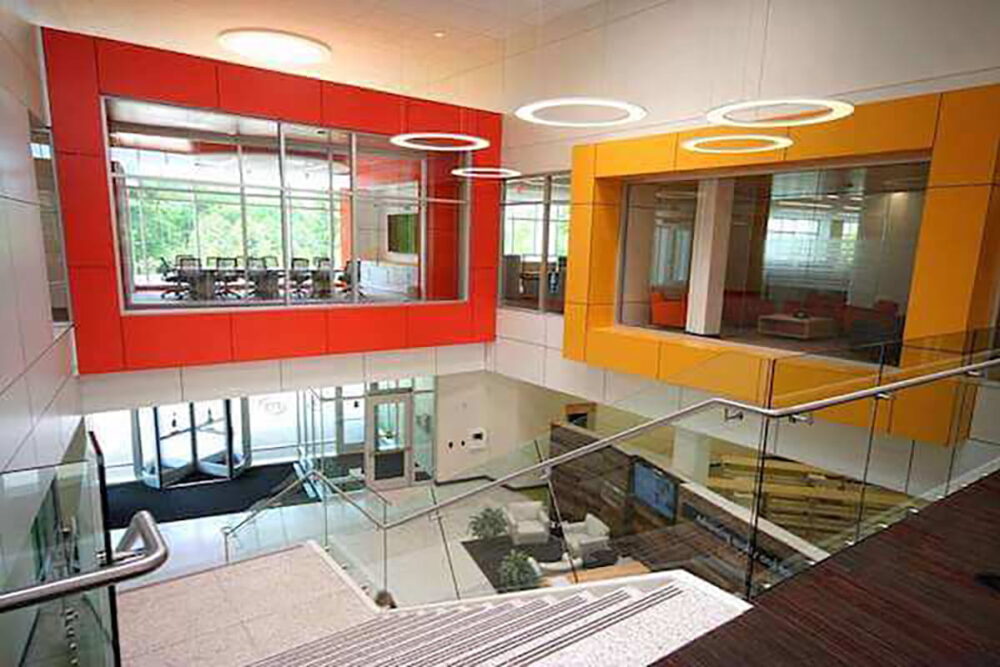
Founded in 1947, Educational Testing Service (ETS) is one of the largest, private nonprofit educational testing and assessment organizations in the world. Based in Princeton, New Jersey, ETS creates customized assessments for individuals, educational institutions, and government agencies. It develops, administers, and scores more than 50 million tests annually at over 9,000 locations worldwide.

Goals

ETS needed a reliable, standalone wireless AV presentation system that was easy to use and would transmit the audio and video all from one place. Plus, it wanted a solution in the office of one of its top officials that could simply be plugged in and turned on. The organization also required a secure transmission, separate from the IT network.

Solution

For these purposes, ETS chose the Kramer KW-11T transmitter and KW-11R receiver,  a high-definition, wireless HDMI combination designed for use over short distances (up to 39 feet/12 meters). The KW-11T converts an HDMI signal to a wireless signal and sends it to the KW-11R. The KW-11R then converts the wireless signal back to HDMI.

The transmitter/receiver pair offers uncompressed video resolutions of up to 1080p60 with AES 128 encryption for a secure AV link. As an additional benefit, the KW-11T and KW-11R are part of Kramer TOOLS™, Kramer’s family of high-quality and space-saving compact solutions.

Value

ETS already had VGA and HDMI ports installed on the floor by the conference table, but the KW-11 also allowed users to walk around the office wirelessly and still be connected. The transmitter can be plugged into the HDMI input on a laptop for an immediate connection.  A simple press of a button changes the source input on the display as necessary.

“The Kramer KW-11 was a simple solution that solved a lot of issues,” says Patrick Whipkey, Senior Project Manager at IMS Technology Services, the systems integrator that handled the project. “It was a small transmitter plugged into the HDMI input and it allowed the presenter to walk around while using it.”

The IMS Technology Services team reviewed the specifications for the KW-11 with the ETS audio-video team and security personnel and approved the encryption.

Answering all the needs of ETS, the new AV presentation system aced the performance test, passing with flying colors.

Tags:

Education

AVoIP Solutions

Signal Management

Americas

United States

Got a question for one of our AV experts? Contact us here, and we’ll connect you.