“Moving signals from room to room quickly is important in this application, and the scalers allow rapid signals at high quality. The ‘hub and spoke,’ configuration allows for expansion possibilities, and the system has proven top-quality and reliable.”
Hardy Morris | Account representative, PCS

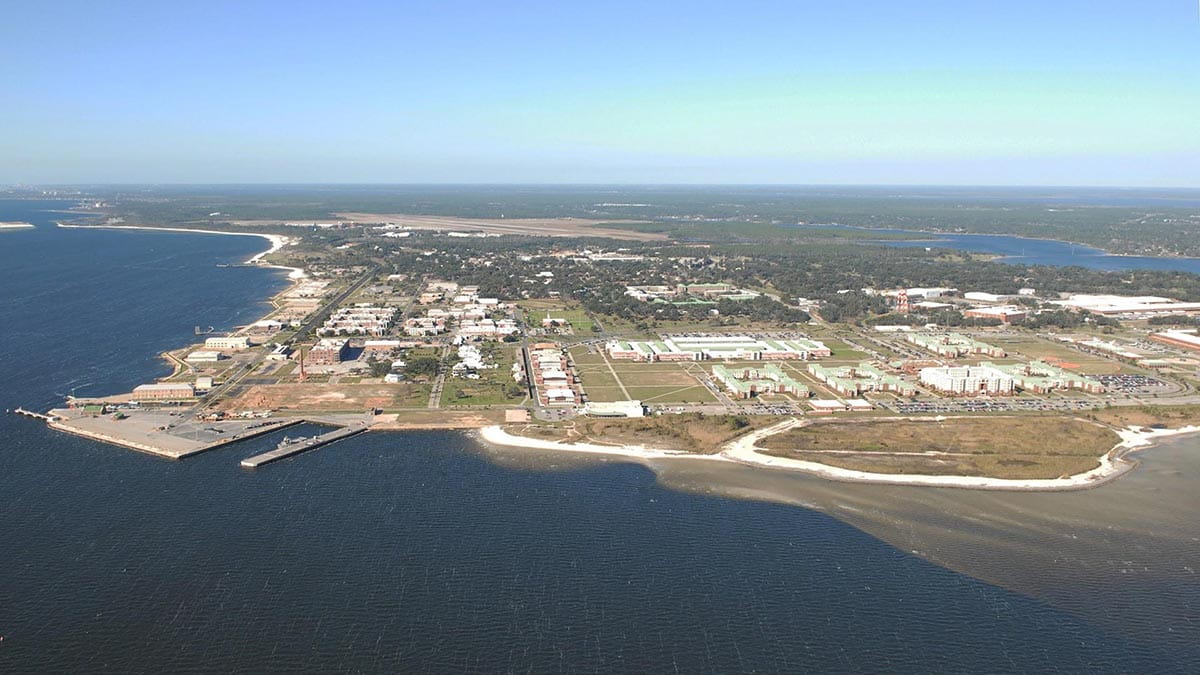
After Hurricane Ivan destroyed much of Florida’s Pensacola Naval Air Station (NAS) in 2004, this Navy base began its quest to rebuild its Wings of Gold. Two years later, one of its finished products is a conference facility that features high-speed audio/video communications with improved quality and signal routing, a user-friendly interface, and a remarkable feeling of high technology.

At the controls: Kramer and Sierra Video Systems products. Providing the necessary mix of quality, versatility, and value, the Kramer and Sierra Video products are the heart of the Pensacola NAS conference facilities network.

While Pensacola NAS serves as the launching pad for the flight training of every Naval Aviator, graduating more than 30,000 students each year, it also has 15,000 employees requiring meeting space for everything from training to classified briefings.

The new conference facility is used by military personnel, civilians, Department of Defense officials, and various Federal Government employees. Pensacola NAS communication specialist Gabriel Walker was charged with replacing the weather-damaged rooms. His ideal system included scalers and switchers in every room that would provide enough features and inputs to handle digital video signals and at least three different video sources. Working with Professional Communications Systems (PCS), a Florida-based professional audio/video designer/integrator, Pensacola NAS rebuilt a seamless system that features the Kramer VP-724DS ProScale™ scaler/switcher in each of the 11 conference rooms. The machines offer both multi-standard video to RGBHV scaling and multiple-input switching capabilities. The system also includes 28 VP-200NA distribution amplifiers for computer graphics video signals and stereo audio signals throughout the building.

The Sierra Video Systems 3232V5S RGBHV 32 x 32 Matrix Switcher links all the rooms together in the central control room, enabling signals from DVD and VHS players, computers, laptops, cameras, and satellite video to be distributed back to the conference rooms. Signals can be routed between rooms and each room offers videoconferencing capability. PCS installed an AMX touch-screen control system in the central command center, a Symetrix audio system, and Pelco video cameras, all interwoven through the Kramer and the Sierra Video Systems switchers and scaler/switchers.

Hardy Morris, the account representative at PCS, noted that the Kramer scaler/switchers met the government’s technical requirements, provided a high-quality image, and allowed a smaller, yet expandable, matrix switcher in the application. The scaler/switchers in each room digitally reprocess the signals and regenerate the video at a higher line and pixel rate format, providing native-resolution video for LCD, DLP, and plasma displays. They also act as glitch-free switchers for easy component switching. In addition, thanks to the scaler’s seven inputs, classified briefings are possible in each room by maintaining a dedicated line for classified information.

“Moving signals from room to room quickly is important in this application, and the scalers allow rapid signals at high quality,” Morris said. “They also eliminate the blue screen when switching sources.” After working for nearly two years to accommodate funding and construction schedules, Morris says the final product has met all of their goals. The ‘hub and spoke’ configuration allows for expansion possibilities, and the system has proven to be top-quality and dependable. “The Kramer seven-year warranty was also important because it eliminated any issues resulting from construction delays – the customer still had the complete warranty on the product,” said Morris. With Kramer and Sierra Video Systems technology aboard its conference facility, Pensacola NAS will continue to soar as the premiere flight center for Naval Aviation.

Tags:

Government and Defense

Collaboration Applications

Control

Signal Management

Americas

United States

Got a question for one of our AV experts? Contact us here, and we’ll connect you.

“The client needed high resolution for computer signals, as well as the ability to manipulate the software almost instantaneously. Sierra Video was able to deliver all these things in one product that could meet our deadlines.”
Todd Nelson | CTS, Mission Electronics

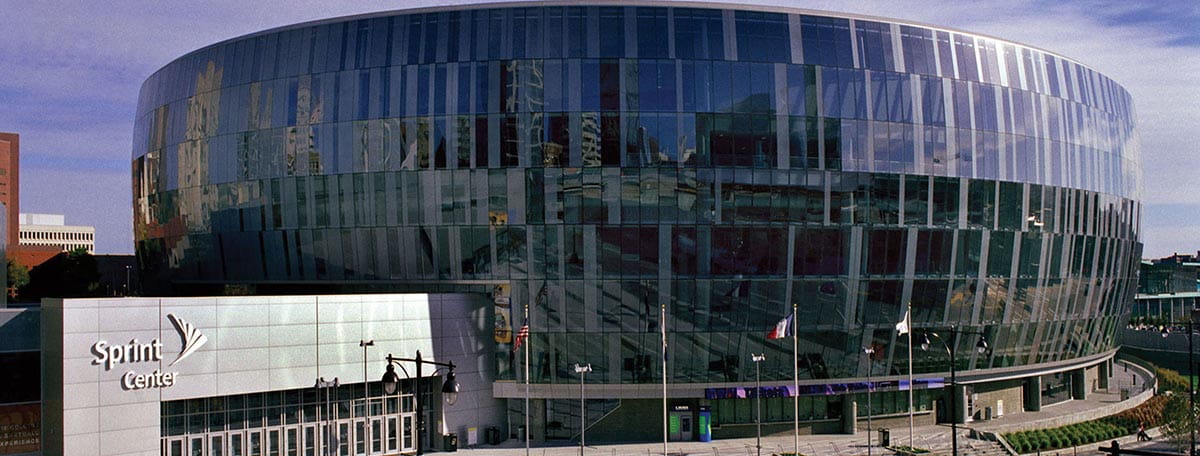
Visitors to Sprint Center in Kansas City, MO, are greeted by a 70-foot media wall featuring interactive audio and video technology. They can experience music, video, and games through a touch-screen panel, gesture recognition technology, focused audio, or even their own cell phones.

To create this incredible interactive experience for the more than one million guests visiting the Center annually, Sprint enlisted a team of display designers, creative agencies, interactive software developers, and audio/video integrator Mission Electronics. Mission Electronics knew they needed to offer the Sprint management team a reliable system that provided versatility, room for growth, and consistently high-quality images. Their choice for managing the video sources: the Sierra Pro XL™ 3232V5S wideband video and stereo audio routing switcher.

The Sierra Pro XL router was chosen for its performance and reliability. In addition, both Mission Electronics and Sierra Video met the challenge of a tight installation time frame – less than two months to the live date. According to Todd Nelson, certified technology specialist (CTS) at Mission Electronics, “When we were designing the system, we specified a router with a 1920×1080 bandwidth and RS232 control. The client needed high resolution for computer signals, as well as the ability to manipulate the software almost instantaneously. Sierra Video was able to deliver all these things in one product that could meet our deadlines.”

“The capability of the display is constantly changing, so a reliable, versatile router is one of the most important components in the system.”
Todd Nelson | CTS, Mission Electronics

Mission Electronics designed an audio/video system that feeds a 4×4-foot video cube consisting of 16 40-inch LCD displays, plus two additional displays on either side of the video wall. The Sierra Pro XL router is rack-mounted behind the video wall, along with the APC network control and the audio processing unit. The router currently sends signals from eight different computers, but its 32-output capacity allows further expansion as the system changes.

Mission Electronics powered the system with Scala 5 networked software for digital signage and interactive technologies. The displays can showcase a single picture, 16 different pictures, or even blocks of four pictures by using the Sierra Pro XL router to direct the various signals. Visitors to Sprint Center, the nation’s number five arena, have enjoyed interactive games with 3-D infra-red motion-sensing technology, multizoned audio that changes as the content on the screens change, and games and live data feeds controlled by phone commands.

“The Sierra Video router runs 24 hours a day, seven days a week, and has never had a hiccup,” Nelson said. “The capability of the display is constantly changing, so a reliable, versatile router is one of the most important components in the system.”

Tags:

Entertainment

Signal Management

Americas

United States

Got a question for one of our AV experts? Contact us here, and we’ll connect you.
“We chose Kramer HDMI matrix switchers for their reliability and functionality. We use various Kramer products in our installations because we know they will perform to our customers’ high standards.”
Dan Levine | CEO, CytexOne

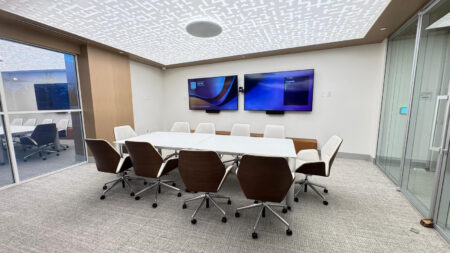
Audio and video entertainment in any room, any time, at the touch of a button – linked to a central system that also controls lighting, security cameras, and wireless computer network systems. The controller: Kramer VS-66HDMI 6 x 6 Matrix Switcher.

When the owner of an eight-room Manhattan penthouse wanted an easy, intuitive system for his family’s home, CytexOne, a New York-based technology integrator, created a personalized, computer-automated system. “The owner wanted a simple-to-operate system that was hassle-free for his family,” said Dan Levine, CEO of CytexOne. “By using a central controller to manage everything, switching sources in each room becomes easy.”

In this detailed installation, audio, video, computer, and security systems are tied together from an equipment rack in the home. In the equipment rack are four Kramer 6 x 6 HDMI Matrix Switchers, creating a 12 x 12 matrix. The switchers distribute video to a 50-inch plasma display in the living room, a 60-inch plasma display in the listening room, and two 26-inch LCD displays in the bedrooms. Other rooms are also pre-wired for video. The switchers allow viewers in any room to watch their choice of video sources, which include two cable TV tuners, BluRay/DVD, a computer, and an Internet movie rental component.

“We chose Kramer HDMI matrix switchers for their reliability and functionality,” Levine said. “We use various Kramer products in our installations because we know they will perform to our customers’ high standards. There are very few manufacturers that have such a wide range of offerings.”

Tags:

Home

Signal Management

Americas

United States

Got a question for one of our AV experts? Contact us here, and we’ll connect you.

“The Kramer products met our different needs as we upgraded the facility. I found them simple to use and program right out of the box.”
Joe Gambrell | Communications Center Systems Coordinator, Tampa International Airport

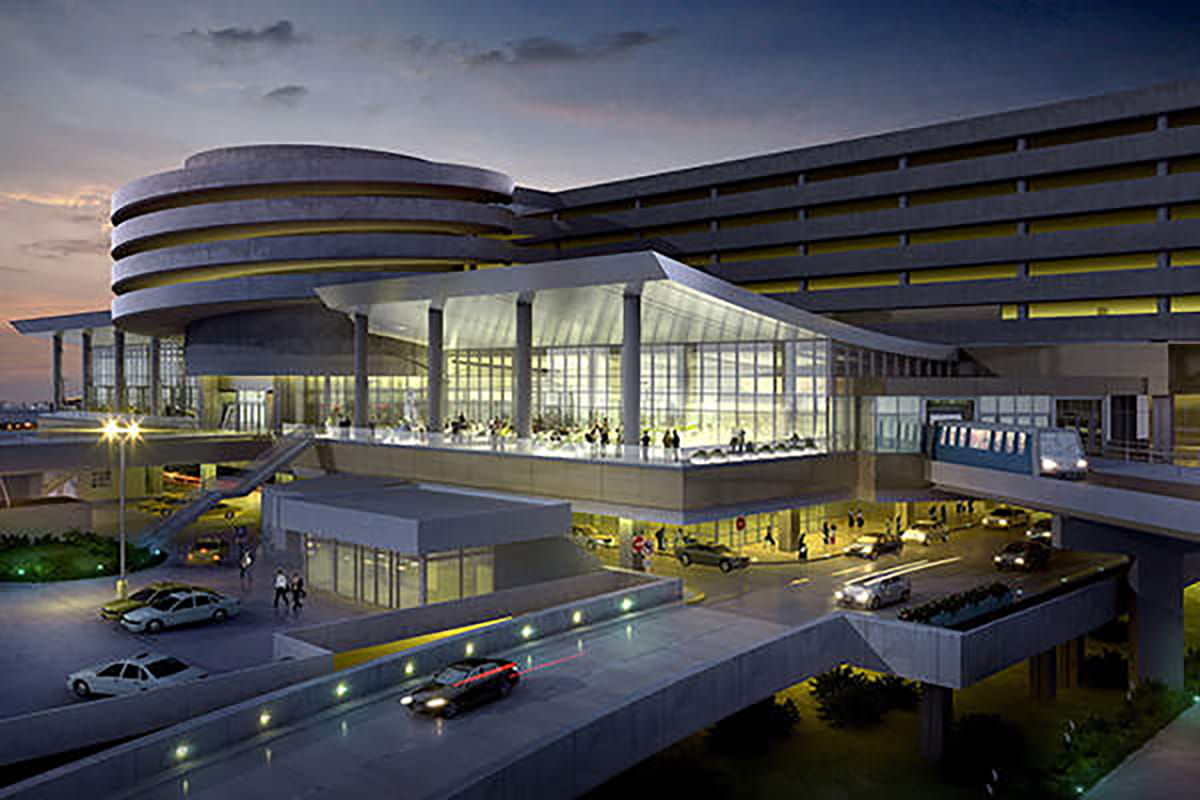
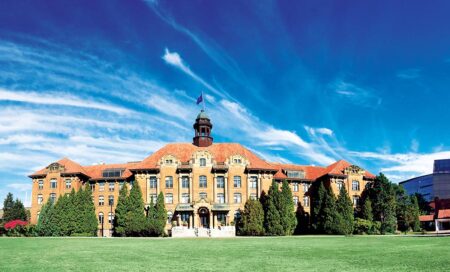
When technology officials at Tampa International Airport wanted to upgrade the Communications Center and Incident Command Center, they chose Kramer. Described as “the Communication Center for the future,” the 2,100-square-foot facility is the heart of the airport.

The Communication Center’s duties include dispatching police, fire, and emergency medical, 911 and airport operations, and monitoring fire alarms, access control systems, and closed caption television (CCTV). The Center also monitors and controls the airport’s automated transportation systems, comprised of monorails, shuttles, elevators, and escalators. Its dispatchers are trained to handle incoming calls and to provide the best possible customer service operations for the 19 million passengers utilizing the airport annually. Throughout the Communications Center, Kramer products distribute and manage video between various computers and television monitors, giving dispatchers clear views of all airport areas. Joe Gambrell, Communications Center Systems Coordinator at Tampa International Airport, chose Kramer products for their flexibility and reliability. “The Kramer products met the different needs we had as we upgraded the facility. I found them to be simple to use and program right out of the box,” Gambrell noted.

At Tampa International Airport, Kramer products keep the communications signals soaring.

Tags:

Enterprise

AVoIP Solutions

Control

Americas

United States

Got a question for one of our AV experts? Contact us here, and we’ll connect you.
Quote Icon
“The project was a challenge, and the perfect solution was to install the Sierra Matrix, the video servers, and the control software. We selected the Kramer Sierra 3232V matrix after reviewing other options.”
Albeiro Garcia Camelo | General Manager, E-Trade

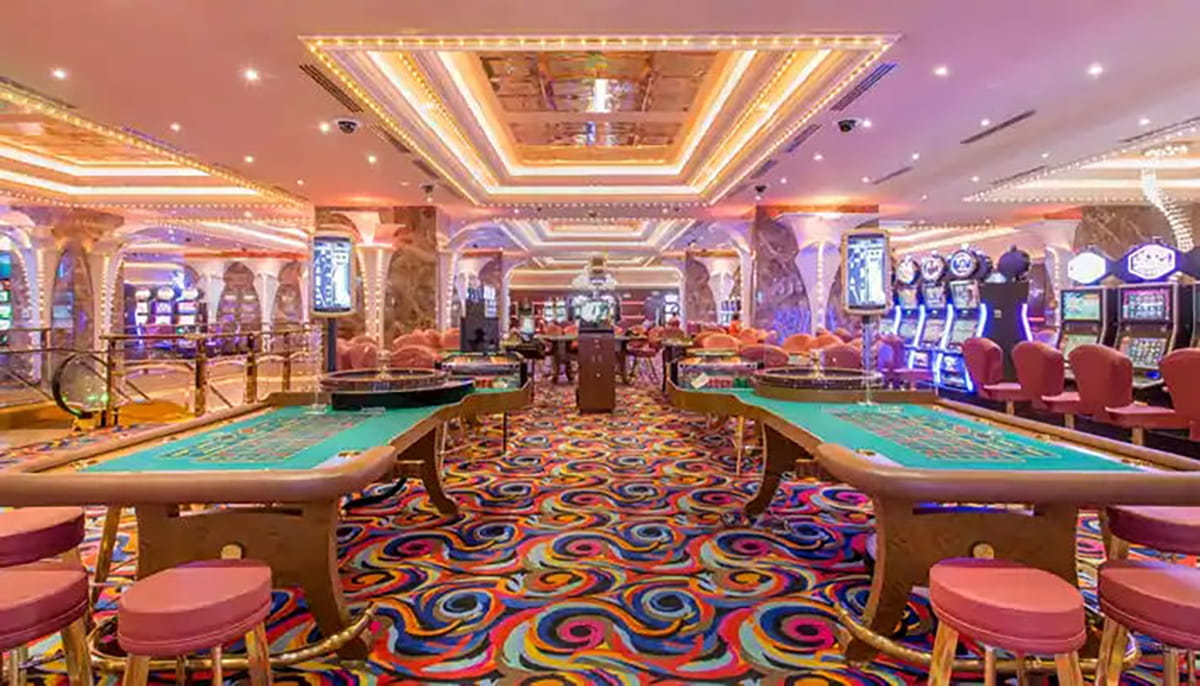
The casino owners in the prestigious Hotel Panama decided to upgrade and invest in a modern audio-visual system. It consists of 32 video sources: 12 direct TV channels (mostly sports), 2 Cable TV decoders, 3 ADTEC video servers, and 2 combo DVDs. These sources are routed into 32 outputs: 26 plasmas, 2 high power projectors – one outside, mounted in a special glass dome; and one internal, projecting on a huge 7 x 6.5 meters screen – and 4 small racks mount LCD control monitors.

The heart of the system, routing the video signals from sources to monitors, is a Sierra 32 x 32 Composite Video matrix switcher controlled by special software running on a PC. “When we came to design this system, we were looking for new, advanced Technological options because people expect that,” says Angel Sueiro, the Spanish architect who designed this impressive system. Sueiro is a part of the “International Thunderbird Gaming Corporation,” which has designed casinos also in Costa Rica, Spain, and more. “We selected the E-Trade company,” he continues, “because of their experience with the video servers they installed in the Panama Canal Museum and their knowledge of Kramer interface equipment.”

Quote Icon
“We selected the Sierra 3232V matrix after reviewing other options. In addition, the short delivery time helped us comply with the required time table”.
Albeiro Garcia Camelo | General Manager, E-Trade

The 3232V Sierra Matrix Switcher gives the operator – located on a dedicated high terrace facing the casino – the ability to route a video source to each plasma according to the need or the will of the people watching it. “The project was a challenge, and the perfect solution was to install the Sierra Matrix, the video servers, and the control software,” says Albeiro Garcia Camelo, General Manager of E-Trade, the Panamanian AV company who installed the system within a short period.

Tags:

Entertainment

Connectivity

Control

Signal Management

Americas

Panama

Got a question for one of our AV experts? Contact us here, and we’ll connect you.
Quote Icon
“On behalf of the Sào Paulo Metro, which is among the best Metros in the world, we strongly recommend Kramer equipment for any similar train project or any digital signage project for that matter, as it has proven to be the best there is. We have the system here in Sào Paulo to prove it.”
Benedito Ribeiro | Technical Director, TV MINUTO

This impressive large-scale digital signage project was conceived in September 2004, with the objective of installing a Signage System in all Sào Paulo Metro Cars that would provide real-time information to passengers as well as delivering advertisements. This important information is now available and visible to more than 3 million people who use the metro daily.

The goal of the Sào Paulo Metro digital signage project is to install these systems in all of their 109 trains. Each of the trains has six cars, for an impressive total of 654 total cars to be outfitted with these digital signage systems.

Each car will have eight 17“LCD monitors, arranged in four groups of two displays each of which are mounted back-to-back. Signal distribution to the LCD monitor pairs is accomplished with Kramer equipment. Each of the 109 trains is equipped with a Kramer TP-100 twisted pair transmitter, five TP-200 twisted pair receivers, one VP-200N XGA 1 in/2 out distribution amplifier, and 12 VP-400N XGA 1 in/4 out distribution amplifiers.

As of today, there are already 32 trains that have fully installed systems up and running. These trains run 19 hours daily, but the electricity is never turned off. This means that these digital signage systems and the Kramer equipment that drives them run 24 hours a day, 7 days a week, 365 days a year. And these Kramer products do all this inside a compartment on the train cars where the average operating temperature is 60°C (140°F).

“In the project prototype, we started by trying to send the XGA signals through the train, using typical shielded XGA cables. By doing that we had too much noise on the image and we lost the sync toward the end which resulted in no image on the last two cars” stated Benedito Ribeiro, Technical Director of the TV MINUTO, the company which won the Metro bid by showing a functioning prototype using the Kramer products.

Each of the trains has four CHOPER engines per car for a total of 24 engines per train which operate at 750 Volts DC and create a huge amount of electromagnetic induction noise. Kramer products provided the solution which changed the whole project concept. TV MINUTO used the state-of-the-art Kramer equipment for the transmission of XGA signals over twisted pair cables. With the TP-100 and TP-200 twisted pair transmitter and receiver and the VP-200N and VP-400N distribution amplifiers, the problem was solved.

“During the first year of operation of the system, we have not even had one problem and we have never had to replace a single Kramer machine” stated Ribeiro. “Nobody here believes it but we have had zero problems with the Kramer equipment! We (the Metro people) are very proud of this project.” “On behalf of the Sào Paulo Metro, which is among the best Metros in the world, we strongly recommend Kramer equipment for any similar train project or any digital signage project for that matter, as it has proven to be the best there is. We have the system here in Sào Paulo to prove it.”

Tags:

Enterprise

Connectivity

Signal Management

Americas

Brazil

Got a question for one of our AV experts? Contact us here, and we’ll connect you.
“We decided that we needed a system as flexible as possible with one central control system that could also be managed remotely. We found that Kramer’s solution can handle the task as part of the whole automation system.”
Peter Lindquist | Owner of KJPL ARbyte

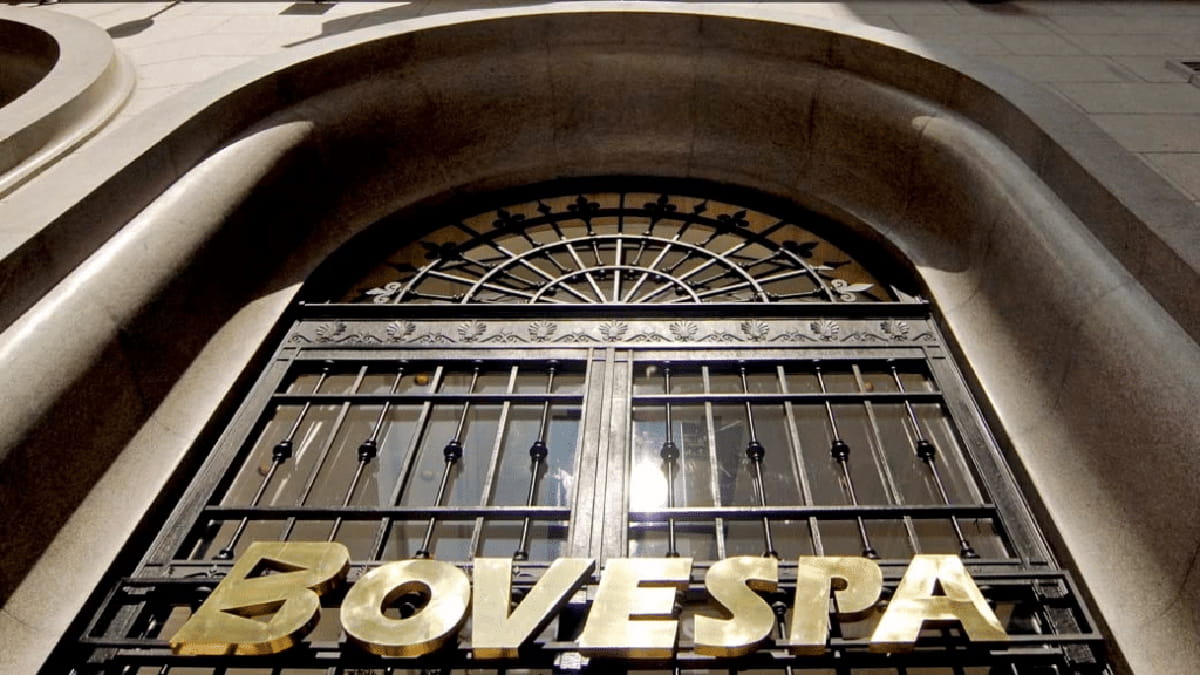
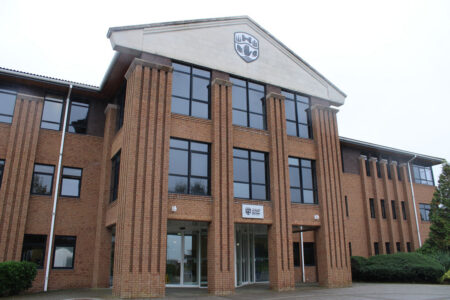
BOVESPA is the Brazilian stock market, located in an old-style building in the center of San Paulo. As part of its renovation, the management decided to install a state-of-the-art audiovisual system in the main visitors’ hall, in-house museum, and in the 3D presentation.

The BOVESPA project was inaugurated in October 2006. Many visitors come daily to see it, impressed by the advanced multimedia system, comprising many projectors (including a 3-dimensional presentation) and plasmas (part of them in an XGA wall configuration).

This innovative audiovisual project was defined by the architectural company Balken, who recommended the KJPL ARbyte company for the design, integration & installation of this impressive system. Peter Lindquist and Nicola Bernardo, owners of KJPL ARbyte, say: “When we got this project our first question was what we wanted the system to do. Since the space was going to be used in several different configurations, we decided that we would need a system as flexible as possible with one central control system that could also be controlled remotely. The system had to control everything, lighting, projectors, plasmas, computers, audio, and video signal processing. After analyzing several solutions we found that Kramer equipment can handle the task as part of the whole automation system.”

“With Kramer equipment we developed a unique integrated control system, offering full flexibility, by using a 32 x 32 RGBHV and 16 x 16 CV matrices together with many Kramer interface machines such as VP-724xl scalers, VP-701SC scan converters, DAs, and VGA over CAT-5 (PT-110 & PT-120) transmitters and receivers controlled by a high-level application using Watchout software. We chose Kramer equipment because of their high quality, reliability, support, and the excellent experience that we had in a previous sophisticated project”.

Tags:

Enterprise

Control

Signal Management

Americas

Brazil

Got a question for one of our AV experts? Contact us here, and we’ll connect you.
Quote Icon
“Because the project required visually stunning content, the only option was an RGBHV infrastructure. We decided to go with Kramer based on product quality and excellent customer service.”
Noah J. Glazov | Co-owner, Proximidia

When the international Cinemark movie theater chain decided to install a new facility in Iguatemi, the most high-end shopping mall in San Paulo Brazil, the president of Cinemark Brazil contacted the Digital Signage company “Proximidia” to get a state-of-the-art Audio Visual system, according to guidelines established by the Cinemark architect.

The system comprises 15 screens: 11 plasmas and 4 LCDs, all 42’’, bringing a lot of useful information to the moviegoers visiting this top-end Cinemark facility. The information includes product pricing, trailers, advertisements, etc. Cinemark wanted a visually unique signage solution, which is a 3 PC-based content delivery system, utilizing the following Kramer machines: XGA matrix model VP-4×4 for routing the 3 inputs to the 4 groups of screens, XGA Distribution Amplifiers model VP-400N to split each XGA image to the screens in each group and one pair of XGA over CAT-6 transmitter model PT-100 and receiver model PT-120 (15 pairs, same number as the screens).

“What we needed was a dynamic visual solution to provide a high-resolution result,” says Noah J. Glazov, co-owner of “Proximidia” and the designer of this AV system. “Because the project required visually stunning content the only option was an RGBHV infrastructure. After searching for available products in the marketplace we decided to go with Kramer based on product quality, excellent customer service, and price. Kramer personally worked with us to provide a complete and innovative solution. The dedication of the Brazilian staff made the difference between creating a One-Of-A-Kind project and something commonplace.”

Tags:

Entertainment

Control

Signal Management

Americas

Brazil

Got a question for one of our AV experts? Contact us here, and we’ll connect you.
Gulfstream Park Installs Kramer Electronics and Sierra Video Solutions for HD Video Installation

Quote Icon
“We recommended Kramer and Sierra Video for this project, knowing their quality, durability, and value proposition. The race track was looking for a specific feature set. Kramer and Sierra Video products fit the bill, outranking competitors in installation product variety and meeting nearly every application dead-on.”
Serge Pieters | AV National Product Manager White Radio’s

Jerusalem, Israel – February 11, 2007 – Kramer, a worldwide supplier of innovative and reliable signal management products, today announced its participation in an extensive HD video project at Gulfstream Park, a state-of-the-art horseracing and entertainment facility, located in Hallandale, Florida. The brand-new park offers simulcast betting, racing replays, and sports TV, distributing high-definition video of the events on over 350 large-screen plasma displays and 11 giant LED and rear projection displays throughout the site. Facility architects and designers deployed an extensive suite of Kramer and Sierra Video products to meet the project’s complex signal management needs.

Owned by Magna Entertainment Corp., North America’s number one operator of horse race tracks and one of the world’s leading suppliers of simulcast racing content, Gulfstream Park is the prototype facility in Magna Entertainment’s mission to restore thoroughbred racing to the top of the betting industry. While the park features amenities such as restaurants and luxury suites, the technological achievement was in its world-class audiovisual system, designed by system contractor Westbury National Show Systems.

Installed over a three-month period, the audiovisual system was designed to give patrons the upscale, exciting atmosphere of a Las Vegas casino. “We had a client with a great vision,” said Brock McGinnis, Sales Manager of Westbury National. “We helped prepare them for the next 20 years technologically.” Requirements such as satellite video conversion to computer graphics video, signal flow, and signal management characterized the challenges of the proposed system.

With input from racetrack architects The McCasey Group and White Radio, the Canadian market leader in audio and video product distribution, Westbury National specified Kramer and Sierra Video products for routing the high-definition video throughout the three-story building to outside displays. Over 700 Kramer and Sierra Video products, including matrix switchers, scalers, distribution amplifiers, twisted pair transmitters, and receivers were used for the project.

“We recommended Kramer and Sierra Video for this project, knowing their quality, durability, and value proposition,” said Serge Pieters, White Radio’s National Product Manager for Video Products. “The race track was looking for a specific feature set, and Kramer and Sierra Video products fit the bill, outranking competitors in installation product variety and meeting nearly every application dead-on.”

Tags:

Entertainment

Signal Management

Americas

United States

Got a question for one of our AV experts? Contact us here, and we’ll connect you.

Video and audio signals come from several sources: satellite streaming, satellite TV, and cable TV decoders, as well as DVD players, but share a common ground: composite video, with stereo audio.

Customer

Play City

Industry

Entertainment

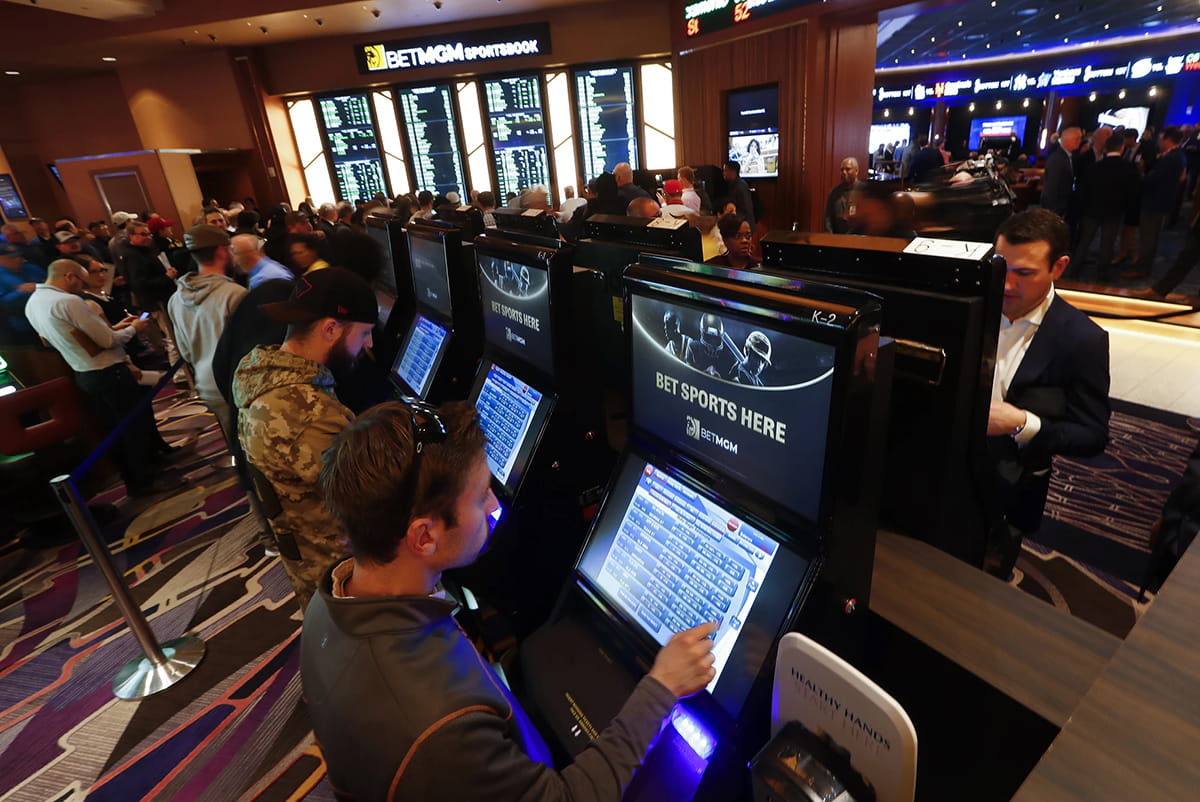
Play City sport bets and entertainment centres open their doors to the public in general and call players to great amusement and entertainment, in their three modalities: Traditional Bingo, Electronic Slot Machines, and Sports Bets. In these centres, video and audio distribution are primordial for the event and Kramer/Sierra Video Systems handles successfully the package. The request is to distribute, in a dynamic, simple, and reliable way, the audio and video signals incoming from 32 sources, to be distributed to between 76 and 96 plasma display screens, depending on the surface of the several sites, which oscillates between 3000 and 5000 m2.

Play City is a new concept in adult entertainment centres, based upon sports bets and electronic slot machines. Still, when it comes to vital video and audio signal distribution, decision-making is no longer a question of games: the devices required must be robust, reliable, affordable, and professional. This is why Play City does not play around with its distribution infrastructure and relies on Kramer/Sierra Video Systems for these tasks. We know how important and critical the video/audio signal presence and quality are on this type of site. This is why Play City receives top-of-the-line quality equipment.

Video and audio signals come from several sources (satellite streaming, satellite TV, and cable TV decoders, as well as DVD players), but share a common ground: composite video, with stereo audio. Signals must be distributed into several main areas:

  1. Electronic Slot Machines Section
  2. Bar
  3. Sport Bets and Racers
  4. VIP rooms (which may vary from 1 to 3)
  5. Lobby
  6. Traditional Bingo (Numbers)

These sections may be divided into several areas for audio distribution.

Requirements are standard for high-resolution composite video signals, distributed throughout a network that runs along with power lines, light dimmers, ballasts, spot lighting, neon lines, etc., which radiate a large amount of ESI and EMI (electrostatic and electromagnetic interferences). The video routing switcher used is a Sierra Video Systems Yosemite 32X96 Model 3296VR, with both a control processor board and power supply redundancy. This equipment offers hot-swappable board capability, which ensures seamless operation even in the infinitely remote event of a board failure. The Yosemite line offers this thanks to its broadcast and professional video features, with a bandwidth superior to 100MHz for composite video. Audio spectrum transparency is also a must, with a bandwidth between 20 Hz and 20 kHz. To ensure audio distribution to each and every section, with professional audio quality, we used Sierra Video Systems audio routing switcher Tahoe 3232AAR Model, a 32X32 balanced stereo audio routing switcher, with a redundant power supply. Control to this matrix comes directly from the Yosemite routing switcher and can be configured as an audio-follow-video (AFV) or breakaway. For this specific application, an audio breakaway is configured. Control is provided separately in two remote control panels, one for video and another for audio. Because of the higher complexity and diversification of sections in the audio distribution, a Sierra Video Systems SCP-224 remote control panel is used for the audio routing switcher, and an SCP-112 is used for the video routing switcher. Both panels are multi-level and customizable, ensuring the end user the most ease to use control panels available, thus making the routing operation both simple and intuitive. Neither technical background nor experience is required to operate Sierra Video Systems routing switchers, once the panels are customized and configured. Such is the degree of intuitive control they provide.

Besides the audio signals coming in from the AV sources, a variety of microphone and external stereo audio signals can be fed into the router, such as iPod music players and Discmans. Microphones are scattered along the whole complex, both in fixed positions and wireless microphones. Incoming signals must be fed as balanced audio, at line level, to the router. This is accomplished using Kramer devices, such as the VA-4, an audio pre-amplifier, used to raise microphone signals to line level, as well as WA-21, to balance audio signals coming from portable audio players, such as iPods and Discmans). The idea is to allow customers to connect their portable devices and listen to music playlists. Audio distribution is complemented by using several of Kramer’s VM-1110xl audio distribution amplifiers, whose quantity varies between 3 and 9, depending on the size of the Play City site they are allocated in.

Tags:

Entertainment

Control

Signal Management

Americas

United States

Got a question for one of our AV experts? Contact us here, and we’ll connect you.