November 2, 2022

What do you envision for the class of 2030?
How will new AV solutions impact the learning and teaching experience?

Written by:

Kramer Expert
Kramer Expert

This is the third article in our blog series dedicated to sharing insights from Kramer’s experts in AV for education. In these posts, we delve into how the educational experience is evolving and inspiring AV innovation to support scholastic excellence in K-12 and higher education around the world.

Now that we’ve explored recent AV changes and delved deeper into regional AV trends, it’s time to look toward the future – and dream. In this blog, our experts give us a sneak peek into the future, sharing their visions for the class of 2030. While some ideas may sound more on the science fiction fantasy side, much of it is already on the cusp of happening, perhaps even sooner than we may think.

Insights and experiences shared by: Sefi Aharon, Director, Education Markets Development (Global), Marc A. Remond, President, Asia Pacific, Kristen Garner, Director of Business Development US Education Sales, Bharat Kerai, Director of Global Strategic Accounts, UK, Jared Walley, Regional Sales Manager Australia, Kirti Shetti, India Country Manager, Nir Elizov, Israel Pre-Sales Manager.

What do you envision for the class of 2030? How will new AV solutions impact the learning and teaching experience?

Sefi Aharon: From my personal experience, I can tell you that today’s children, the ones who are now 5-10 years old, live in a virtual world. My two kids play with their apps and digital games all the time. Using avatars, they literally play with their friends and meet in imaginary worlds. And I think that’s where we’re going in many aspects of life, including education. We’re not there yet, but I think augmented reality (AR) and virtual reality (VR) will become something that is not just for research laboratories or specific types of classes, but instead more of a common ground for all students. It’s going to be a very interesting future! The changes are starting now, but they’ll apply mostly to today’s smaller kids as they go through the system.

The concept is in its infancy, but in a way, it’s already connected to the physi-digi world our children live in. Right now, in the morning they go to a physical classroom, in the physical world. But in the afternoon, they are already actually living in a digital world, in front of their screens. And hence, I see the need for the education market to match up to their reality and way of experiencing things. That means education will be on some type of virtual platform like the metaverse and others to come.

Sefi Aharon, Kramer's Director of Education Markets Development
“I see the need for the education market to match students’ reality and way of experiencing things. That means education will be on virtual platforms like the metaverse and others.”
Sefi Aharon | Director, Education Markets Development (Global), Kramer

Marc A. Remond: Based on current consumption trends, I expect video will play a much bigger part in the class of 2030. This means the AV solution will have to support even higher resolution and frame rates.

There may also be video with AR (Augmented Reality) content. For instance, I could use my phone’s camera to look at an object, and get the information displayed as an overlay on the object. And it’s not only shared with the students in the same room but also captured and sent to remote students as well.

I expect video will play a much bigger part in the class of 2030. This means the AV solution will have to support even higher resolution and frame rates.
Marc A. Remond | President, Asia Pacific, Kramer

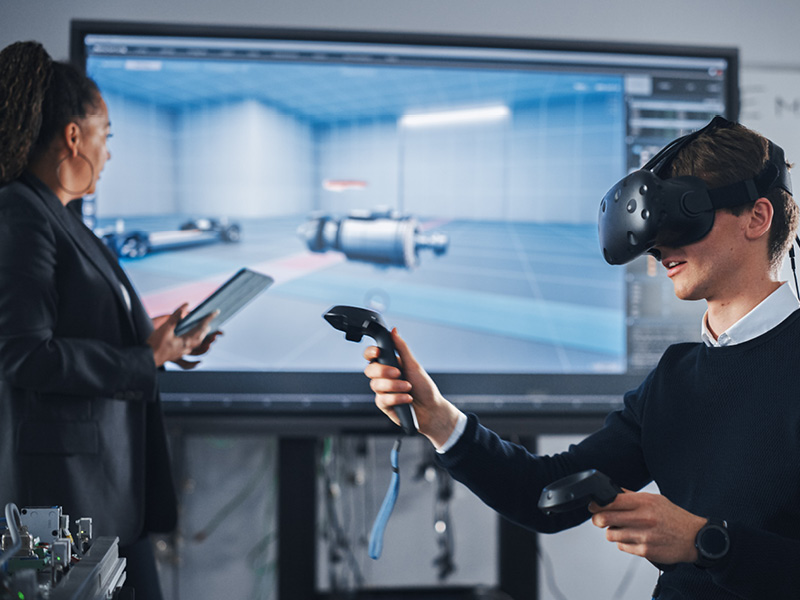
Virtual reality is great for asynchronous content, so maybe it will be used for on-demand e-learning. However, I don’t see VR (virtual reality) being accepted as a mainstream solution for the classroom, because VR solutions require a specific headset. Live instruction requiring students to wear headsets and use all kinds of remote controls is less likely unless you’re doing very niche education applications such as in engineering.

Kristen Garner: We’re moving away from the ‘teacher at the chalkboard’ type of instruction and towards technology that’s able to digitalize that content, so we can deliver it through an asynchronous model, making it easier for students to consume.

We’re just scratching the surface on this, but I feel like learning is going to be more dictated by the students and their desires, and how they gather information. Are they a night owl? Are they an early bird? Are they someone who prefers a small screen and not a lot of interactivity with other students? Or are they someone who really relies on that interaction with other humans and people?

Kristen Garner, Kramer's Director of Business Development, Education, US
“Beyond 2030, I presume we’ll be seeing more AI. Everyone has an avatar out there that sometimes attends classes for you – so your virtual self is present in the classroom – and even coming back with notes.”
Kristen Garner | Director of Business Development US, Kramer

With digital capabilities, we’re able to bridge the one-size-fits-all style of teaching to deliver content and transfer knowledge in a way that’s more flexible, for how different types of students learn.

Beyond 2030, I presume we’ll be seeing more AI. Everyone has an avatar out there, for example. And it’s possible we’ll be seeing the flexibility of learning extended in kind, with your avatar sometimes attending classes for you – so your virtual self is present in the classroom – and even coming back with notes.

Bharat Kerai: We think 2030 is far away, but it’s not. We’ve seen technology really push itself during pandemic lockdowns and today I’m a big fan of the way virtual classrooms work. We’re nearly there with virtual classrooms. But I’ve also got my eye on the metaverse. It’s a solution that’s moving forward. And I really see a good hybrid situation coming where we’ve got a metaverse and what we call a real-world hybrid environment. So, you know, teachers can be in the metaverse, meaning they’re anywhere, educating students in the real world as well as the virtual world.

A Kramer employee, smiling at the camera
“Teachers can be in the metaverse, meaning they’re anywhere, educating students in the real and virtual worlds. I imagine we’ll be walking around, going into different classrooms in a metaverse environment.”
Bharat Kerai, Director of Global Strategic Accounts, UK, Kramer

Today, we’re literally halfway there. We’re in version 0.5 of a metaverse. For remote learning, we’re sitting in a real world, and when we connect on Teams or Zoom, coming into a virtual world. Soon, however, I’d imagine, we’ll find ourselves extending this, walking around, going into different classrooms in a metaverse environment, so there is life-like interaction, but the students and teachers can actually be anywhere.

Jared Walley: When I look ahead five to 10 years from now, I think that the first thing that we’re going to see is budgets shifting from delivering building infrastructure to delivering digital infrastructure and digital technologies. I think that’s going to be a big need.

From that, I think we’ll see more software-centric solutions, open standards, and the ability to fully manage integrated solutions with our IT systems.

Jared Walley, Kramer's Sales Performance, South Australia
“We’ll see more software-centric solutions, open standards, and the ability to fully manage integrated solutions with our IT systems. We’re definitely going to see an uptake of virtual augmented and blended reality technologies.”
Jared Walley | Regional Sales Manager, Australia, Kramer

We also need more personalization to improve the education experience. More flexible user experiences, flexible interface designs, and things like that.

And we’re definitely going to see an uptake of virtual augmented and blended reality technologies.

Kirti Shetti: Back in 2015, I was talking about what the class of 2020 would look like, and it was hybrid and collaborative. So, even without knowing the pandemic would come, I got that right. Now looking to 2030, I think that will continue to grow, but a few elements will get added, make it more immersive, and personalized, which I think is going to be the next big thing in education.

Kirti Shetti, Kramer's Indian Country Manager
“Everything in every technological space needs to be seamless, and artificial intelligence is going to play a major role in that.”
Kirti Shetti | India Country Manager, Kramer

The other thing which will be incorporated is more artificial intelligence. Everything in every technological space needs to be seamless, and artificial intelligence is going to play a major role in that. Plus, as many jobs become increasingly automated, being able to work with AI will become part of the skill-base required to understand things like blockchain technology and succeed in the professions of tomorrow.

And then, we’ll have augmented reality, or virtual reality, mixed in, bringing experiential content to classrooms, so students can learn it better.

Nir Elizov: AVoIP is the latest big step in terms of progress, and it will likely be part of new school designs in the future, if not already today. That’s because IP gives you the ability to broadcast any type of content to any type of room, which translates into a lot of flexibility in managing schools in different ways.

Nir Elizov, Kramer's Pre-Sales Engineer, next to a microphone at a radio show 2
“I expect there will be more demand for central management tools, not just a solution for the room or auditorium, as more AV technology is adapted by schools.”
Nir Elizov | Israel Pre-Sales Manager, Kramer

Video and audio transmission will also be much faster, and easier, using IT, the internet, cables, and technology. That is a big change.

Also, looking ahead to 2030 and beyond, I expect there will be more demand for central management tools, not just a solution for the room or auditorium, as more AV technology is adapted by schools.

Stay tuned for the next post, in which our educational experts delve into how AV experiences can get this generation of kids more engaged with learning.

In the meantime, read the previous blogs in this series, in which our experts discuss:

Tags:

Education

AVoIP Solutions

Collaboration Applications

Collaboration Devices

Room Control

Would you like to consult with Kramer?

September 15, 2022

What are the latest trends you’re seeing for AV in education in your region?

Written by:

Kramer Expert
Kramer Expert

After our first post highlighting how AV in the classroom has changed over the past decade, our AV in education experts delve deeper into key trends for AV in education, in their regions. Beyond being an excellent comparison, it is interesting to note that even within a region, different countries can have very different experiences.

Insights and experiences shared by: Marc A. Remond, President of Asia Pacific, Kristen Garner, Director of Business Development US Education Sales, Bharat Kerai, Regional Sales Manager UK, Jared Walley, Regional Sales Manager Australia, Kirti Shetti, India Country Manager, Nir Elizov, Israel Pre-Sales Manager, Sefi Aharon, Global Education markets development

Sefi Aharon, Global Education Market

From a global level, I can already tell you that we teach and learn differently in each country.

It’s hard to determine which is the most advanced and active at adopting Audio-Visual educational tools. However, I can say that AV costs are lower in APAC countries like Singapore, Thailand, and Japan, where there’s a lot of competition between manufacturers, which helps with adoption. Plus, there’s more openness to technology. As a result, you’ll find classrooms equipped with interactive flat panels, which are considered very expensive elsewhere. In contrast, in India and Israel, there’s a lot more use of less-expensive equipment such as projectors and large displays.

In China, you need to have products that are made in China, so that impacts what technology is used there.

Sefi Aharon, Kramer's Director of Education Markets Development
“In the AV industry, each country has its own specifications, requirements, and even terminology, and we need to be accommodating to that.”
Sefi Aharon | Global Education markets development

In the US, everything is big. A single district may require a rollout for 12,000 classes that use the same Audio-Visual educational tools. So even with what we’d think of as a small and simple solution – like one or two products per class – the number of classes makes it a big project. The needs are kept fairly basic to accommodate the scale, without “fancy” technology.

In the US, higher education has its differences. For Ivy League universities, being at the front end of technology is part of building their reputation and a way to draw students, and they have the budgets to do this.

Those are just a few examples, of course. What’s important to remember in our role in the AV industry is that each country has its own specifications, requirements, and even terminology, and we need to be accommodating to that.

Marc A. Remond, Asia Pacific

After two years of attending classes virtually, many students are back on campus, but many others still attend classes remotely. So, the most significant trends for AV in education is the hybrid classroom. Particularly in Asia, we have many international students who have yet to obtain their student visas to go and study in Hong Kong, Singapore, Malaysia, or even Australia.

Marc Rémond, Kramer APAC President
The most significant trend is the hybrid classroom. Particularly in Asia, we have many international students who have yet to obtain their student visas to go and study in Hong Kong, Singapore, Malaysia, or even Australia.
Marc A. Remond | President, Asia Pacific

In addition, many institutes want to attract international students to join their virtual education programs. It’s easier to increase enrollment by opening more hybrid classes or virtual programs to students from any country worldwide.

This is particularly true for local business schools, which need to compete against business schools worldwide that offer MBAs online. And one of the ways to do this is by investing in AV technology in classrooms to create competitive differentiation. This means business schools tend to be the first ones to try new things and offer new services, not only to MBA students but also to their corporate clients in executive education and leadership development programs, which are pretty lucrative.

China is a very different market because a university in China is like a small city. There can be 100,000 students on campus – with 20, 30, or even 50 buildings that are part of the same campus. Just the size of the campus dictates the adoption of AVoIP at the highest possible speed today. And it’s all based on 10-gigabit Ethernet networks to carry audio and visual signals from one building to another.

In terms of technology investment, Australia is a very large market. Every school spends money on technology. People understand how it can contribute to the learning and teaching experience from K to 12, all the way to university.

Kristen Garner, US

Each state has its government in the United States, which makes for many differences across the country, including how new, Modern AV teaching methods are rolled out, and how quickly students return after COVID. Some states have much larger budgets devoted to education, which also impacts trends.

One trend I’ve noticed is a lot of small broadcast studio-type spaces, which makes sense. If a faculty member is delivering content almost exclusively remotely, they only need a small space, maybe with a whiteboard. They don’t necessarily need to take up the entire classroom that seats 30 students. With a smaller footprint, they can deliver the content much more intimately.

One trend I’ve noticed is a lot of small broadcast studio-type spaces. If a faculty member is delivering content almost exclusively remotely, they only need a small space.
Kristen Garner | Director of Business Development, Education, US

Another exciting trend is related to the opportunity to extend some of the teaching spaces. Maybe you’re teaching one class at one school, but you need to reach students at another school. In America, we have this big spread between metropolitan areas that are densely populated and highly remote, lightly populated rural areas where students don’t have the same access.

There’s also a noticeable trend for AV adoption in professional development. Each district seems to be including administrative spaces devoted to professional development. They are outfitting those spaces with equipment to accommodate things like group learning and small workshops in a way that incorporates different learning styles while facilitating discussion.

Also, some exciting things happen between schools and the communities around them. For example, I’m seeing a lot of K-12 schools and smaller community colleges create beautiful culinary programs that are more community-facing than just a general classroom. And for that, they need technology like 4K cameras, streaming, and fast switching.

Bharat Kerai, UK

We talk about universities, colleges, and schools as education customers in the UK. But one interesting customer I had was the National Health Service (NHS), which has an extensive education department that needs to stay on top of new medicines and treatments. To do this, during lockdowns, one NHS hospital in Liverpool upgraded its operating theaters to send feeds to learning hubs, both in the hospital and across the UK and abroad. To me, it’s been interesting seeing how AV technology and modern AV teaching methods improve not only the teaching environment – but also the global medical community.

A Kramer employee, smiling at the camera
During lockdowns, NHS hospital in Liverpool upgraded its operating theaters to send feeds to learning hubs both in the hospital and across the UK and abroad. It’s been interesting seeing how AV technology improves not only the teaching environment but also the global medical community.
Bharat Kerai | Regional Sales Manager, UK

London, in particular, has seen a big AV boom. It’s always had the latest technologies in education because it’s such a densely populated area, but during the lockdowns, we found almost every university within London implementing distance learning. So, a student can virtually be in class without actually being there. Plus, it’s interactive, so they can share work and content, and also edit content, with the solutions we provide. And that has spread beyond London, too, though to a lesser extent.

Jared Walley, Australia

In Australia, there’s been a strong trend toward using Audio-Visual educational tools to enhance flexibility in education and interactive learning with AV, especially in terms of content creation and recording. We’re giving the students far more flexibility now in being able to watch their content from home and then attend tutorials and things afterwards.

Also, in general, Australia is working to increase accessibility and inclusiveness in education. This includes integrating accessible lecterns and tables in learning spaces for wheelchairs or other mobility tools. And in AV, we’re addressing it with solutions for the visually and hearing impaired.

Jared Walley, Kramer's Sales Performance, South Australia
In Australia, there’s been a strong trend toward using AV to enhance flexibility in education, especially in terms of content creation and recording.
Jared Walley | Regional Sales Manager, Australia

For example, we’re now working towards getting audio onto the network with standards such as AES67 for better accessibility in hearing augmentation. As we move forward, I expect even more significant accessibility improvements. For example, using students’ personal devices for hearing augmentation, rather than relying on universities carrying large managed fleets of headsets.

Kirti Shetti, India

Initially, the trends for AV in education in India was primarily focused on higher education, where technology adoption was faster. But K-12 learning is also very important here, with a strong emphasis on meeting primary educational needs.

Kirti Shetti, Kramer's Indian Country Manager
A huge push to adopt curricula for the new skillset and adapt to new technologies requires making this happen in education spaces.
Kirti Shetti, | Country Manager, India 

The current education system in India understands the need for having a very specialized skill set to move away from repetitive, low-skilled jobs to different professions. So, a huge push to adopt curricula for the new skillset and adapt to new technologies requires digital classroom advancements, in order to make this happen in education spaces. From an AV perspective, that means deploying products, collaborative classrooms, immersive learning, smart classrooms, and hybrid spaces. Technology is increasing educational opportunities here, and the level of education is improving in turn.

Nir Elizov, Israel

The education system in Israel is very large, but there’s a severe teacher shortage. With Zoom, for example, you can have one teacher in three different classes simultaneously. The goal of the technology is to give the ability to reach more students.

Another trend is that schools are starting to be led by younger, technically savvy principals. Their thinking is different, changing the general attitude towards AV technology in classrooms and helping increase its adoption.

Nir Elizov, Kramer's Pre-Sales Engineer, next to a microphone at a radio show 2
The teachers often teach in multiple schools around Tel Aviv, and it doesn’t matter what classroom they go into. It’s the same system which makes it easier on them.
Nir Elizov | Pre-Sales Manager, Israel

In terms of differences, for example, Tel Aviv has about 1,500 junior high classes, and each has the same Kramer VIA solution. Teachers and students can bring any device to the room and connect to the screen, using the same system in the same way. Also, the teachers often teach in multiple schools around Tel Aviv, and it doesn’t matter what classroom they go into. It’s the same system which makes it easier on them.

About the “Educational Insights” Series

This series of blogs is dedicated to sharing insights from Kramer’s experts regarding trends for AV in education. In these posts, we discuss how the educational experience is evolving and inspiring AV innovation and excellence in K-12 and higher education worldwide.

Stay tuned for the next post, with a sneak peek into the future, as our education AV experts share their visions for the class of 2030.

Tags:

Education

AVoIP Solutions

Collaboration Applications

Collaboration Devices

Would you like to consult with Kramer?

August 25, 2022

The most impactful changes in AV for education over the past decade and continuing today

Education Insights

Written by:

Kramer Expert
Kramer Expert

Welcome to our new blog series featuring Kramer’s experts in education. To kick it off, we’re sharing reflections from the regions on how AV in the classroom has changed over the past decade and how those changes are playing out today. Some of the insights surprised even us.

What would you say have been the most impactful changes in AV for education over the past decade and continuing today?

Marc A. Remond, Asia Pacific: I would say there’s been an evolution, both in technology and the market. Right now, we’re at the junction where pro AV solutions are moving from hardware to software, from on-prem to cloud-based, and from AVSM to more AVoIP.

To explain a bit more, I underwent two transformations before joining Kramer. The first was when voice technology moved from analog and digital-based to IP. The second transformation I witnessed was in the video conferencing world, when video conferencing moved from hardware to software, from on-premises equipment to cloud-based. And that is now changing the way schools are buying AV technology.

Marc Rémond, Kramer APAC President
“I underwent two transformations. The first was when voice technology moved from analog and digital-based to IP. The second transformation was in the video conferencing world, when video conferencing moved from hardware to software, from on-premises equipment to cloud-based.”
Marc A. Remond | President, Asia Pacific

Bharat Kerai, UK: Being in AV, we used to get challenged by IT departments on how we manage this or how we install that. But at my first ISE show in 2020, just before COVID lockdowns hit, we were talking about AV over IT. This mindset shift was already flowing through education, but I think COVID-19 was the catalyst for it to take off here. Now, because AV is considered part of the IT department, it speeds up the process of designing, managing, and implementing spaces. So, AV moving into IT has opened up many doors and set minds at ease, especially with IT management.

That has facilitated another significant change; the desire of educators to share teaching materials with students in the classroom and also when they’re working from home if they have COVID or if there’s a lockdown. So it’s about sharing and collaboration. This is what education wants. We’ve been doing it for years, with a blackboard, with a whiteboard in the classroom. But now we need interactivity; if someone has work to show, they can show it, and then we can edit it together. Having real-life collaboration is what education establishments want now, another significant change we’re seeing.

A Kramer employee, smiling at the camera
“Having real-life collaboration is what education establishments want now, another significant change we’re seeing.”
Bharat Kerai | Sales Manager, UK

Jared Walley, Australia: I’ve been in the audio-visual industry for about 25 years, including almost five years in the AV and eSolutions teams at Deakin University. So, it’s been good to see that audio-visual is becoming mission-critical in recent years. Years ago, the mindset was that you needed a little bit of AV in the room, such as a projector; but a lot of importance was not necessarily held to it. Now that is reversed, and AV is seen as being just as critical as having the network up and running.

I certainly think the most impactful and immediate change has been brought on by COVID, particularly in Australia, where we had an almost instant removal of significant numbers of overseas students, and everybody had to work and learn from home and remotely. And then, there was the challenge of delivering the technology in such a short time span that would allow all that. That’s been incredible, and we’re seeing that trend continue now. Many leading universities here have been making massive changes in their audio-visual fleets. We see a lot of Teams and Zoom-based installations where we wouldn’t have seen that; rather, we would have seen more traditional audio-visual switching and control.

Jared Walley, Kramer's Sales Performance, South Australia
“It’s been good to see that audio-visual is becoming mission-critical in recent years. AV is just as critical as having the network up and running.”
Jared Walley | Regional Sales Manager, Australia

Also, as land and property prices go up, it’s increasingly critical for on-campus spaces to be delivered and utilized. We’re increasingly seeing flexible furniture solutions and having to fit AV around that to deliver different teaching types in the same space.

And importantly, I’ve found that we’re moving more from requirements defined by law and policy into a drive for more accessibility on and off campus. We’re seeing growing interest in integrating accessible lecterns and tables and things in the teaching spaces for people in wheelchairs or who are utilizing other tools for mobility.

Kirti Shetti, India: From a higher education perspective, a significant change has been that educators started realizing a need for more collaboration. It cannot be just one way of teaching. So, the more collaboration, the more online platforms came into the education space. That was something that revolutionized the way learning was happening in higher education spaces.

K-12, however, had the least technology. They were still in the traditional format of education. But I have seen over the years that even government schools understand the need to migrate to digital. Students are probably adopting it faster than teachers. But I think the analog-digital transformation that happened also ensued in the K-12 schools in India.

Kirti Shetti, Kramer's Indian Country Manager
“What audio-visual can bring to a student and a classroom cannot be matched. That everyone in the education space in India understands.”
Kirti Shetti | Country Manager, India

Also, there’s a move away from traditional textbook learning. Now, what we see is what we believe in! It’s no longer about taking a few notes of what was dictated or discussed in class. Now it’s a video played in 4K, a talk from one of the most reputable institutes, or from people who have done something unique in their careers, or technology innovation that you’re able to hear and see to get the whole experience. What audio-visual can bring to a student and a classroom cannot be matched. This is something that everyone in the education space in India understands. And they have been very forthcoming in saying they want this in the classroom. It also brings all the experiences out there in the world to the classroom and the students to improve learning.

Kristen Garner, US: Over the past decade, the technology has changed drastically, and we’ve gone from an industry-driven technology base and product lineup to more consumer-driven. So what folks are doing in their homes is what they want to experience in the workplace and school.

Whether it’s higher education or even in the K-12 arena, students are experiencing things at home that, even five and ten years ago, they didn’t bring into the classroom with them – the knowledge, the ability to voice-control things, and turn on their favorite TV show or their favorite music playlist, those types of things. That’s driving what’s happening in education right now. It’s kind of student-driven. And so we have to examine what’s happening at home and try to replicate that to the degree that facilitates education and the transfer of knowledge in a way that’s comfortable, not only for the person delivering that information but also for the students who are trying to receive that knowledge.

Kristen Garner, Kramer's Director of Business Development, Education, US
“Over the past decade, technology has changed drastically. So what folks are doing in their homes is what they want to experience in the workplace and school.”
Kristen Garner | Director of BusDev, Education, US

Government entities and districts, as well as universities, colleges, and campuses, have recognized that technology in classroom spaces plays a much more significant role than it did five or ten years ago. So, the way they invest and prioritize their AV equipment has also changed within the last decade. Education spaces are completely different from what they were two and three years ago.

Another significant change I’ve seen is that many campuses are developing revenue-generating and specialty spaces. They know that the draw will be what technology is available, which also influences how the educational institute invests in AV and what equipment goes into the various spaces. For example, if I’m a corporation or small business and I’m going to rent a space at a school, to hold a team building event or something like that, I need to understand what technology will be available to use. So those are things that schools and campuses look at as well. It brings together an excellent partnership with the community while creating an additional revenue stream. And, as it’s recognized as an additional source of funding, this is impacting AV for education too.

Nir Elizov, Israel: The significant change, of course, came with COVID-19. Even before that, the education market was trying to install the best equipment, so cameras and microphones were already in many schools. But when COVID-19 started, schools struggled with teaching when some children are at home, and some are at school and how to teach in an environment where no more than ten people can sit in the same room. Or how to teach outside in the schoolyard or on the campus lawn. These scenarios were a significant change, and it was an earthquake for AV in education. The entire market changed, as did classroom demands. Suddenly everybody was looking for more cameras and microphones. Everybody was looking for a hybrid. Everybody was buying like crazy.

Nir Elizov, Kramer's Pre-Sales Engineer, next to a microphone at a radio show 2
“It was a new world for us – call it hybrid learning or modular learning. It’s part of the Physi-Digi world. And as we’re all seeing, hybrid is here to stay.”
Nir Elizov | Pre-Sales Manager, Israel

There’s also been a broader mindset change. Today, city planners, for instance, think about things differently than they did in the past. If they’re planning to build a new school, they also plan things like the acoustics and the AV equipment in advance, which makes a big difference in creating effective learning spaces. At the same time, they’re also thinking about accessibility for different types of people, which is very important and is something AV technology can help with. For example, adopting things like digital signage or screens outside of the classrooms has been an impactful change that helps in accessibility as well.

Sefi Aharon, Israel: Education technology has barely changed for most of the past decade. But, in the past three years, there’s been a significant change in awareness of the importance of technology as an enabler for teachers to teach and students to engage. There’s more openness to it.

The other thing that has changed, together with the awareness, is funding. In some countries, there was zero spent on education technology for something like years. And because of that, some of the education market was unaware of the types of solutions available. There was no opportunity to invest, so they weren’t out there looking and investigating.

That started changing about three years ago. Money started pouring into education, and schools in some markets were able to refresh to equip themselves with whatever they needed.

Sefi Aharon, Kramer's Director of Education Markets Development
“It has been a significant change in awareness of the importance of technology as an enabler for teachers to teach and students to engage. There’s more openness to it.”
Sefi Aharon | Global Education Markets Development, Israel

A major catalyst was, of course, the pandemic, when the demand for hybrid learning exploded. But it started even before that. In particular, universities were already beginning to put things online and make it possible for students to learn from anywhere.

This has shifted the way that educators teach. It’s not just a frontal lesson or lecture. It’s hybrid. Lessons in the auditorium or lecture theater are also live-streamed so other faculties and universities can attend. People can learn anywhere and from anywhere. Also, there’s more customized learning, with students being able to learn at their own pace. These changes are being both driven by and enabled by technology.

Now, as we’re coming out of the pandemic, budgets will likely be tighter again, but I think there will still be funding for technology because there is now a new standard. You’ve got to have cameras, microphones, and an easy way to share content and engage across classes and campuses.

Stay tuned for the next post in which our education market experts share some interesting trends they see in their respective regions.

About the “Education Insights” Series

At Kramer, we’re proud to have some of the world’s leading specialists in AV for education on our global team of experts. The “Education Insights” series is dedicated to hearing their voices, so we can learn about how the educational experience is evolving, guiding our solutions, and inspiring AV innovation for academic excellence.

Tags:

Education

AVoIP Solutions

Collaboration Applications

Collaboration Devices

Room Control

Would you like to consult with Kramer?

Mandel Foundation creates state-of-the-art learning spaces across its vast campus by partnering with Kramer

Moshe Drori, CIO, Mandel Foundation - a place where Kramer solutions are installed

“I felt a full partnership with the Kramer team we worked with, both in the planning and execution of the project.”
Moshe Drori | CIO, Mandel Foundation

Background

The Mandel Foundation, established in 1991 and located in Jerusalem, Israel, is dedicated to cultivating leaders in the education, public, and non-profit sectors. It also runs programs to promote humanities and support neighbourhood and community development.

Goals

When building its vast new campus, the Mandel Foundation was looking for a supplier to partner with in creating an exceptional multimedia experience with the ability to combine image and sound from anywhere to anywhere, easily. 

With high technological demands and a large scope, the foundation wanted its supplier to help in the project’s planning, design, and execution.

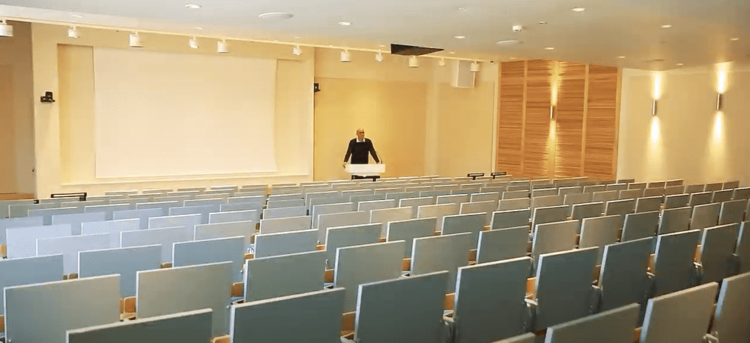
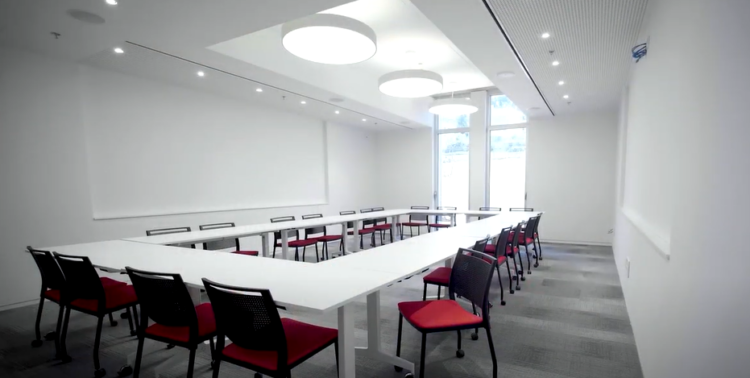
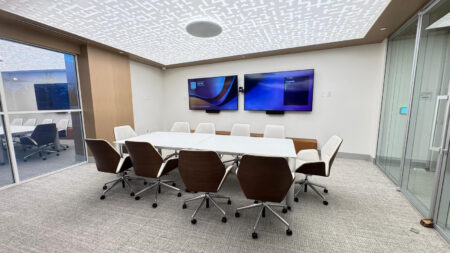
Classrooms, meeting rooms and the large auditorium needed to be equipped with AV solutions that would foster advanced learning spaces that are easy on the ears and eyes – and comfortable for everyone to use. 

Quote Icon
“We made sure that everything would be unified. That means if someone enters class one, two or three, they come across the same solution.”
Oren Sharon, CEO, Or Lashir

Solution

Even before the ground was broken for the new campus, Kramer’s experts worked closely with the Mandel Foundation’s IT team in planning a comprehensive audio-visual solution. During construction, almost 10 km of the pipeline was laid over the course of a year, in coordination with the contractor, to accommodate the required AV infrastructure.

Oricon Ltd, a local integrator, had four crews on the ground working around the clock, installing the requisite equipment for an end-to-end AVoIP solution.

Because it took almost three years from the planning stage until the new campus was ready for fit-out, the AV plan was updated ahead of installation to suit new needs. The classroom projectors and screens originally planned for the project were updated to 98-inch screens for better quality images and a better user experience that is also more suitable for Zoom meetings and remote video conferencing.

The auditorium was equipped with an accessible podium that allowed the use of any computer and easy connection for any guest. Equipment installed in the auditorium included touchscreens for managing the room, a speaker system, advanced projectors and displays, environmental cameras and UC cameras, a high-quality digital sound processor, and a wide range of microphones.

Digital signage screens, powered by Kramer’s content management solution, were also integrated into public spaces of the building, providing Keren Mandel with simple, smooth and effective management of dynamic content for guests and employees, such as room schedules, welcome messages and updates.

The entire project was pulled together by the Kramer Control system, which allows for centralized management of the rooms, including real-time alerts and the ability to initiate system upgrades or provide an immediate response to possible malfunctions.

Value

All learning and meeting spaces on the Mandel Foundation campus are now equipped with Kramer technology. The rooms all look and work the same, providing a unified end-user experience campus-wide. This ensures staff, visitors and students alike enjoy an exceptional audio-visual experience from any location, whether remote or in-person.

Cutting-edge, AV-enhanced classrooms facilitate exceptional learning and communication, while the auditorium ensures state-of-the-art visuals and acoustics and ease of use.

Simultaneous translation stations have also been added, which allow the audio signal to be received from all the rooms. Simultaneous translation can be done for guests and participants through translation-sharing systems and Wi-Fi headsets.

Working as a team, with its integrator and Kramer, the Mandel Foundation succeeded in this large-scale installation. The result is a state-of-the-art campus recognized for using the pinnacle of technology, from scheduling screens outside each room to the full scope of technologies within.

“In my opinion, without a real partner, we could not have succeeded in such a large and complex endeavor,” said Moshe Drori, CIO, Mandel Foundation, in summing up the project. “In their partnership, Kramer gave us a sense of security, a feeling that we always had someone ready and able to help, every step of the way.”


Tags:

Education

AVoIP Solutions

Signal Management

EMEA

Israel

Got a question for one of our AV experts? Contact us here, and we’ll connect you.

May 10, 2022

Kramer to showcase new high-performance AVoIP and collaboration devices at ISE 2022

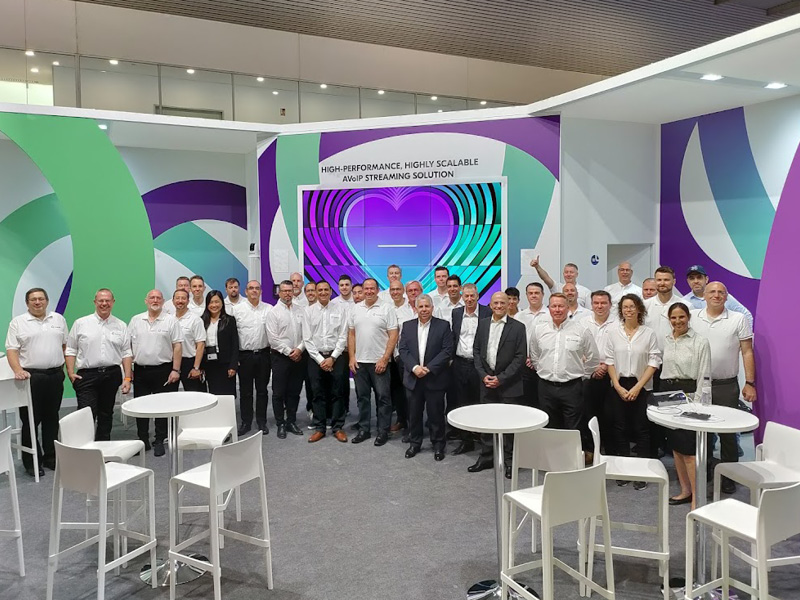
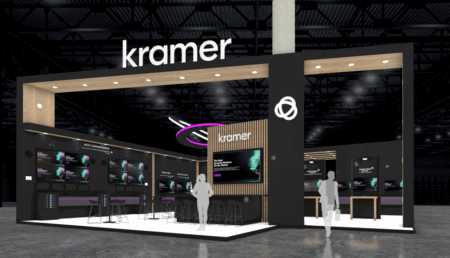
ISE, May 10, 2022: Kramer the leading audio-visual experience company, today reveals its next generation of engagement technologies at booth 3B350, Exhibit Hall Area 3, ISE Barcelona.

An audio-visual pioneer with over 40 years of experience and 20+ offices worldwide, the extraordinary growth of virtual communication has led Kramer to refocus on products and devices that seamlessly intersect the physical and digital.

Now, Kramer technology enables users to intuitively communicate and collaborate in our modern ‘physi-digi’ world. With Kramer by their side, organizations can future-proof their people’s audio-visual experiences for real, human engagement, no matter how far apart they may be.

AVoIP – main zone

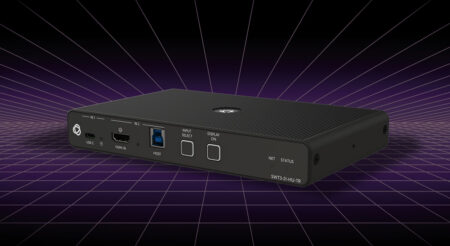
In the central zone of Kramer’s ISE booth, visitors will experience the company’s full eco-system of AVoIP solutions. This includes the new KDS-7 family of encoders and decoders, which provide low-latency, high-quality 4K60 4.2.0 video presentations and easy scalability to suit any size network AV installation. With fast deployment capabilities, a simple user experience, enterprise IT-grade security, and advanced, intuitive management, KDS-7 is a perfect fit for any enterprise, education, military, or government site.

Also on show is Kramer’s latest line of speakers for enhanced audio experiences. When paired with KDS-7, these advancements form Kramer’s industry-leading AVoIP eco-system, enabling instantaneous, secure engagement across organizations worldwide.

Collaboration devices – secondary zone

In the booth’s secondary zone, visitors can explore the new line of Kramer collaboration devices, spanning speakerphones, video cameras, and all-in-one collaboration bars. From the smart panoramic K-180 Mini camera, crafted for small meetings and huddle rooms, to the ultra-HD K-Cam4K, which offers crystal-clear coverage of auditoriums, the range ensures everyone can see and hear – and be seen and heard – whether they’re dialing in from home or sitting at the back of a boardroom.  

Kramer will also demonstrate its VIA Connect² platform, upon which users can hold scalable wireless meetings and classes from any Windows, Mac, Chromebook, Android, or iOS device, on all major videoconference platforms, in any location worldwide. The platform also features enhanced security capabilities, helping all participants meet stringent enterprise-grade and government requirements for safety, reliability, and confidentiality.  Put simply, the palm-sized VIA Connect² tool turns any space, anywhere, into a secure hotbed for hybrid productivity and collaboration.

Unified communications and collaboration (UCC) – secondary zone

Finally, Kramer will exhibit solutions from its latest strategic acquisition, unified collaboration experience pioneer UC Workspace (UCW). Amplifying Kramer’s mission to power extraordinary audio-visual experiences, UCW products transform how people communicate across multiple different platforms through unprecedented levels of simplicity, automation, and collaboration.

UCW’s Quicklaunch software is the industry’s fastest and most secure way to launch any meeting, regardless of conferencing provider. In just “one touch”, end users can wirelessly connect to over 30 meeting providers for instant communication and productivity, while enjoying customizable environments, interfaces, languages, applications, and more. With UCW’s full suite of solutions, Kramer is supporting organizations to supercharge output across multiple dimensions.

“From education to enterprise, government to military, Kramer’s next-generation product portfolio allows us to bring immersive, end-to-end audio-visual experiences to organizations worldwide,” said Gilad Yron, CEO of Kramer.

“We’re ready to support customers on their physi-digi journeys and give them the tools and solutions to succeed in the hybrid world in which we now live and work. I can’t wait to personally meet visitors at Kramer’s booth to demonstrate our audio-visual breakthroughs first-hand.”

Kramer at ISE 

The ISE exhibition will take place at the Fira Barcelona Gran Via Conference Center in Barcelona, Spain, from 10th – 13th May 2022. Kramer will be exhibiting at Booth 3B350 in Exhibit Hall Area 3.

Contact details 

For additional information, please contact:
Veralyne Tan or Emily Roe at [email protected]

Tags:

Education

Enterprise

Government and Defense

AVoIP Solutions

Collaboration Applications

Collaboration Devices

EMEA

Written by

Sefi Aharon
Sefi Aharon

Director, Education Markets Development, Kramer

Everyone’s talking about the “new normal” these days. It’s quickly becoming a tired phrase. But like it or hate it, it is the best way to describe our world right now.
So bear with me…

The emergence of hybrid learning – a short timeline

In education, the “new normal” is not so new. It’s been with us in changing forms since the very first days of the pandemic. And it emerged pretty quickly, driven by need.

  • 2020 – For the first time, remote learning became the standard for education, even for very young children. Hybrid learning followed, in different formats, as schools with different policies and technologies ironed things out.
  • 2021 – The hybrid model took hold in a whole new way. Some days (or even just lessons like art or math) had some kids in the classroom and some at home. Everyone was remote or in person on other days (or lessons). And it constantly switched back and forth.
  • 2022 – More kids are returning to the classroom, but it’s not a total return. Having tasted the freedom of hybrid learning and its inherent flexibility, many educators and students want it to stay in some form or another. Hybrid is here to stay. And it keeps getting better!

Lessons in learning throughout the pandemic

So what did we learn over the past two years?

A few interesting facts:

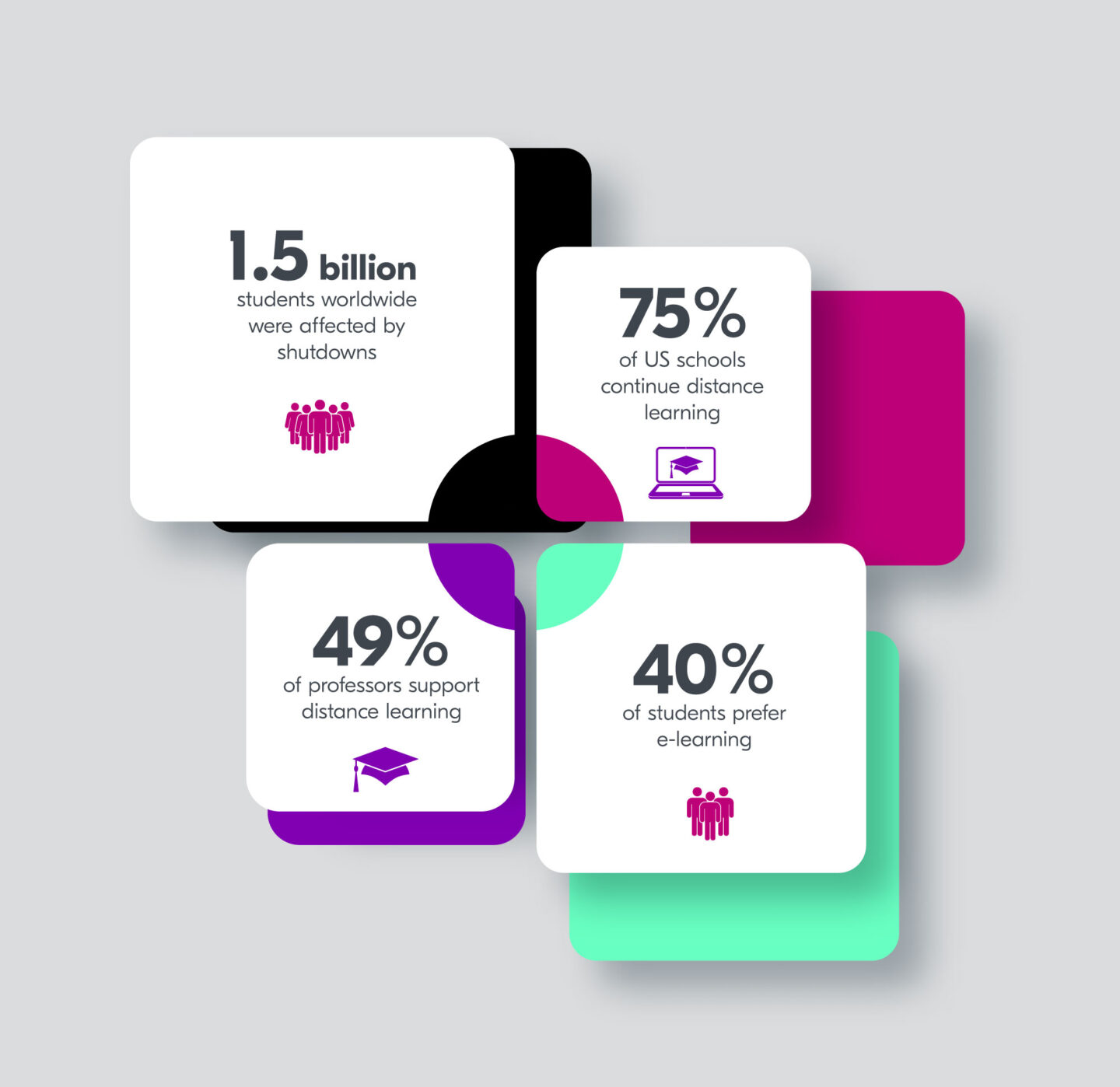
  • ~ 1.5 billion students worldwide were affected by shutdowns
  • 75% of US schools plan to continue distance learning
  • But just 49% of professors currently support it
  • While 40% of students say e-learning is more helpful than in-person learning

In addition, we met Gen H – a direct answer to the pandemic, resulting in the largest cohort of users of hybrid solutions and services. Unlike Gen X, Y, and Z, Gen H is not an age thing. It’s a state of mind and a global megatrend that is here to stay. Teach and learn from home and onsite; learn from anywhere with any device. We are all part of it in some way.

Students don’t just want to hear or see the content. They want to experience it. That means “being” in the same space as equals – even when it’s a virtual space.

Digitized content and online learning

Video used to be king when addressing the education market for the AV industry, with projectors in each classroom. Then, once hybrid learning kicked in, audio took the throne, with the addition of microphones and speakers. Now it’s content that reigns supreme. That’s the distinct challenge of our times.

Students don’t just want to hear or see the content. They want to experience it. That means “being” in the same space as equals – even when it’s a virtual space. No more talking to a blank screen, never seeing feedback on people’s faces. No more viewing classmates in little boxes on a monitor or cell phone screen. Instead, imagine a space that feels like 3D, even if it’s not, where it looks like everyone is sitting in the same room, even if they’re actually in different locations.

Sound futuristic? It’s really not.

Just think, less than ten years ago, we were predicting that AV would be integrated with the IT network. And that’s undoubtedly gaining steam with the advent of solutions that make it easy and secure to connect AV systems to their IT network.

Perhaps even more incredibly, just three years ago, we were still arguing about the efficacy and desirability of BYOD (bring your own device) learning environments. Now there’s no question. BYOD is a must, and AV solutions increasingly support that.

So it is with hybrid too. Schools and universities already using or planning spaces with multiple cameras, speakers, and display screens have laid the groundwork. The next step will be to design learning spaces with an enhanced hybrid experience in mind – which is already happening.

What’s next for education spaces?

It’s an exciting time, and there’s infinite potential as to where hybrid learning might lead. With all that’s occurred in just two years, imagine what the new normal for classrooms will look like ten years from now! I have some ideas, and we at Kramer are working on them.

What do you think? When it comes to education, what’s the new frontier?
Tags:

Education

Collaboration Applications

Collaboration Devices

Connectivity

Sefi Aharon is the Director of Education Markets Development at Kramer. Would you like to consult with Sefi?
Sefi Aharon
Sefi Aharon

Director, Education Markets Development, Kramer

When it comes to K-12 education, there is consensus on the basics. We all learn to read and write. Plus, there’s science class, gym, some civics studies, and more.
I always knew that the curriculum differs from country to country. But the more I travelled around the world, the more I learned that there is another substantial distinction between education systems that I had never thought of before –who the classroom belongs to.

Teachers vs. kids – Who moves around? 

Having grown up in Israel, it seemed obvious to me that kids stay in the same room all day, while teachers circulate between the classrooms. The same model is widely used in many countries across the globe: Australia, India, Germany, and China. That is why I was surprised to learn that things are done differently in other places. For example, teachers stay in their permanent room in the US, and students come to them

When planning the installation of AV technology in an educational space, it is vital to accommodate teachers’ needs.

How it works

In places where teachers move around, they must bring all their resources and equipment with them. It is not just about having their pens and teaching notes in hand. In today’s increasingly technologically empowered classrooms, teachers must use various electronic devices and systems to share their content and allow students to share their own. Due to the new normal, teachers also need to accommodate a hybrid learning environment – with some students in-room, and others participating remotely.

Teachers’ main challenges 

Busy teachers have enough to deal with: planning lessons, marking students’ work, conveying information, imparting skills, and discipline. They are simply too short of time to juggle multiple operating systems and struggle to connect different devices in the first 15 minutes of every class.

How can we help

When planning the installation of AV technology in an educational space, it is vital to accommodate teachers’ needs. While speaking with educators, I realized that teachers are really looking to simplify the process of operating technology in every classroom, whether they stay in place or move around. No hassles, no complications.

Streamlining technology is critical to empowering teachers, whether they teach in the same room all day or move around.

Based on my observations, three key takeaways can contribute to streamlining the technology in any given school:

1. Maximize automation: Enabling teachers to press just one button to get all the technology working for them saves time and irritation at the beginning of every class.

2. Offer BYOD (bring your own device) functionality: Making it possible for teachers to use their own familiar devices such as tablets, laptops and cell phones makes both lesson planning and delivery easier.

3. Provide remote troubleshooting and management of the spaces: Ensuring a smooth and continuous teaching environment is essential for efficiency and peace of mind.

In other words, the goal really is to make a tech-enabled space the teacher’s best friend!

To summarize, the question ‘Who does the classroom belongs to’ significantly impacts its management. Streamlining technology is critical to empowering teachers, whether they teach in the same room all day or move around. 

Now I am curious how this works in your country or school.

Please share your thoughts below.

Tags:

Education

AVoIP Solutions

Collaboration Applications

Collaboration Devices

Sefi Aharon is the Director of Education Markets Development at Kramer, leading the Product Team for audio-visual applications in the Education market.

Kramer launches new Collaboration Devices

Kramer Enriches it end-to-end solutions for Education and Enterprise

Jerusalem, Israel, February 8, 2022 – Kramer Electronics Ltd. is pleased to announce the release of its new Kramer Collaboration Devices, the latest addition to its end-to-end Pro AV solutions for Enterprise and Education applications. The new product line, which includes advanced cameras, a communication bar, and a speakerphone, offers outstanding AV quality, flexibility, and simplicity.

Kramer’s complete solutions for Enterprise meeting spaces, schools, and universities meet customers’ needs for complete, integrated solutions from a single, trusted partner that provides certified solutions, market-leading warranties, and end-to-end support, all under one roof. Offering simple setup and seamless use, it is agnostic to all UC applications and supports multiple conferencing platforms.

Kramer Collaboration Devices are designed for varied spaces from small huddle rooms up to large boardrooms, classrooms, and auditoriums. They ensure all participants, whether in the room or connecting remotely, consistently enjoy superb interactions, with immersive audio and video experience. With Kramer Collaboration Devices, all participants can see and be seen as well as hear and be heard clearly – enabling meaningful and effective collaboration.

An integral part of Kramer end-to-end solutions for Enterprise and Education applications, Kramer Collaboration Devices are fast and simple to deploy. They can easily be combined with Kramer’s in-room A/V signal management and control products for a complete collaborative, hybrid experience.

“With workplace norms and needs changing across business and education markets, our end-to-end solutions are building the foundation for truly inclusive hybrid interaction spaces,” says Gilad Yron, Kramer’s CEO. “The addition of the new line of Kramer Collaboration Devices is the latest step towards this vision, helping ensure engaging experiences for all participants and successfully bridging the gap between in-person and remote interactions.”

The new Kramer Collaboration Devices product line includes:

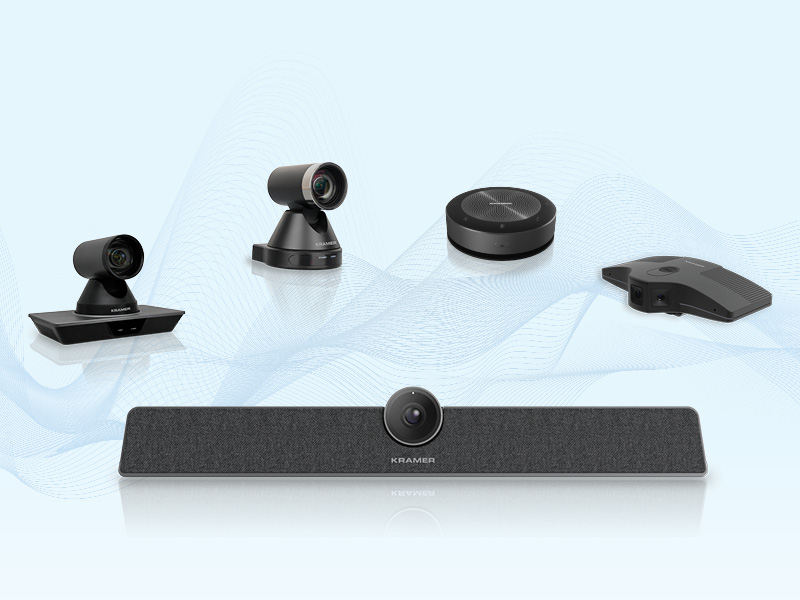
K-Speak – A compact speakerphone with 360° omnidirectional audio pickup that enhances the audio experience for everyone. Perfect for any room size where additional audio coverage is needed.

K-Bar – An all-in-one video and audio communication bar that allows participants to quickly start collaborating. Ideal for small to mid-sized spaces where an all-in-one device saves space and cable clutter.

K-180Mini – A smart, 4K wall-mount panoramic camera with integrated microphone, that captures clear video across a full 180° field of view. Designed for small rooms and huddle rooms.

K-CamHD – A professional HD PTZ camera for versatile video capture that ensures a clear view of all meeting attendees, with special attention wherever needed. Ideal for varied spaces and use cases, ranging from medium sized rooms up to board rooms, classrooms and auditoriums.

K-Cam4K – An ultra-HD PTZ camera for premium-clarity video in large spaces that puts every meeting in sharp focus, with crystal-clear, ultra-high-definition video capture. Supports the most advanced and challenging setups in large meeting rooms and educational spaces.

Contact details

Ornit Sade-Benkin
VP Marketing
Kramer Electronics Ltd.
[email protected]

Tags:

Education

Enterprise

Hospitality

Collaboration Devices

February 1, 2022

Kramer acquires UC Workspace in a strategic move to expand the boundaries of collaboration

Jerusalem, Israel, February 1, 2022 – Kramer Electronics Ltd. announced today the acquisition of UC Workspace (UCW), a pioneer and leader in unifying collaborative experiences. Uniting UCW’s and Kramer’s technology and product portfolios under one roof creates new and unique opportunities to bring a new level of simplicity, automation, and collaboration to Enterprise and Education customers.

UCW products facilitate engagement across multiple platforms, providing intuitive ways to communicate, control and collaborate. Its award-winning Quicklaunch software solution enables people and organizations to seamlessly engage across multiple UCC platforms. It is the fastest and most secure and intuitive way to launch and control any meeting regardless of conferencing provider. With its upcoming WEAV content and interaction platform and UCCentral software, which provides unparalleled insight and control of workspaces, devices, and apps, UCW innovation is helping organizations boost productivity across multiple dimensions.

“This acquisition is the latest step in our journey to reinvent the collaboration experience,” said Gilad Yron, Kramer’s CEO. “It is a power-up in our commitment to creating new ways for people to engage and collaborate more intuitively, simply and inclusively, and with that, to bring more layers of productivity to our customers.”
He continued: “Bringing UCW into the Kramer family accelerates our drive to build a market-leading product and R&D organization. It’s a perfect fit with our existing technologies and our innovation plans for the new physical-digital world.”

Angela Hlavka, CEO of UC Workspace, said: “Having created the market for unified collaborative experiences, we are thrilled to take UCW technology and partner network to a new scale. This will benefit all our customers, through a broader range of solutions, new technologies, and market-leading customer support. We are delighted to join the Kramer family on this exciting journey toward better and more productive collaboration for all.”

Contact details

Ornit Sade-Benkin
VP Marketing
Kramer Electronics Ltd.
[email protected]

Tags:

Education

Enterprise

Entertainment

Collaboration Applications

October 25, 2021

Kramer partners with Sony

Kramer delivers state-of-the-art teaching studio technology with Sony Edge

Jerusalem, Israel, October 25 2021 – Kramer Electronics Ltd. has collaborated with Sony Electronics to integrate an Augmented Reality (AR) Teaching Studio Solution designed for virtual or hybrid learning experiences that incorporates AR software with Artificial Intelligence (AI) technologies.

The solution, intended for any education or corporate institutions, combines Kramer’s award-winning control solutions and other various audio, video, and management products with Sony’s Edge presentation, visualization and analytics suite (REA-C1000). The Sony device, combined with the Kramer Control Solutions, improves the quality of all presentations and communication. Edge seamlessly blends AR software with AI technology to intuitively enhance the presentation experience and improve the visual and audio quality for in-room and remote participants. 

The Kramer Control platform is embedded on a specially designed tablet that allows the presenters to move around the space freely and easily operate all the equipment in the room via a single user interface. 

Providing the education sector with a cost-effective and professional quality presentation suite, lecturers, teachers and presenters can choose to add optional licenses to incorporate features including handwriting extraction across multiple displays, PTZ auto-tracking, close-up by gesture features, Chromakey-less CG Overlay and real-time cropping, all through a single device.

Using AR technology, the handwriting extraction feature ensures that any words and diagrams written on a whiteboard or a blackboard remain in full view to the audience, no matter where the speaker is standing. Chromakey-less CG Overlay technology extracts the presenter’s image and overlays it onto any background image, animation, or video in real-time without the need for dedicated studio equipment or a specialist graphics operator. Focus Area Cropping allows one camera to simultaneously show two different output images and can be set to be shown as either a static or dynamic picture.

For perfect image reproduction for virtual participants, the PTZ auto-tracking cameras accurately and smoothly follow the speaker’s movement throughout the presentation to ensure they stay in focus and within frame throughout their presentation. For those in-room, the close-up by gesture technology can also detect and react to the gestures of audience members.

Aviv Ron, Vice President, Corporate Development and Strategy at Kramer, explains;

“Our continued partnership with Sony has enabled us to strengthen the education vertical offering with a single solution which will enhance presentation technology systems and increase learning effectiveness and experience in classrooms and lecture halls. The Sony-Kramer Solution is a progressive education-based offering that empowers faculty and professional staff to deliver impactful, cinematic presentations and lesson content in real-time.

Not only that, but it will also enhance the experience for students and improve engagement, without the need for installing a dedicated studio. By digitizing the classroom experience, a new learning style is created that gives those in the room and those at home the same great experience.”

An agnostic platform, the Sony-Kramer Auditorium Solution enables complete integration with existing devices or as a new installation and can be configured with audio devices, cameras, video bars, webcams and recording devices.

Rich Ventura, Vice President, B2B, Imaging Products & Solutions – Americas at Sony, comments;

“Sony is recognized worldwide for offering great technology, innovation and support to our customers. By working with our collaborative partner, Kramer, we’re combining our collective strengths, while expanding our power and reach to deliver comprehensive and integrated solutions designed to add value and meet the specific needs of our users.”

The Sony-Kramer Solution is available now worldwide to authorized resellers.

More details can be found at pro.sony/AVsolutions.

Tags:

Education

Control