Quote Icon
We chose Kramer products because they have the best price-to-quality ratio, hands down.”
Jyri Poittinen, Head of AV Services, University of Helsinki Property Services

Background

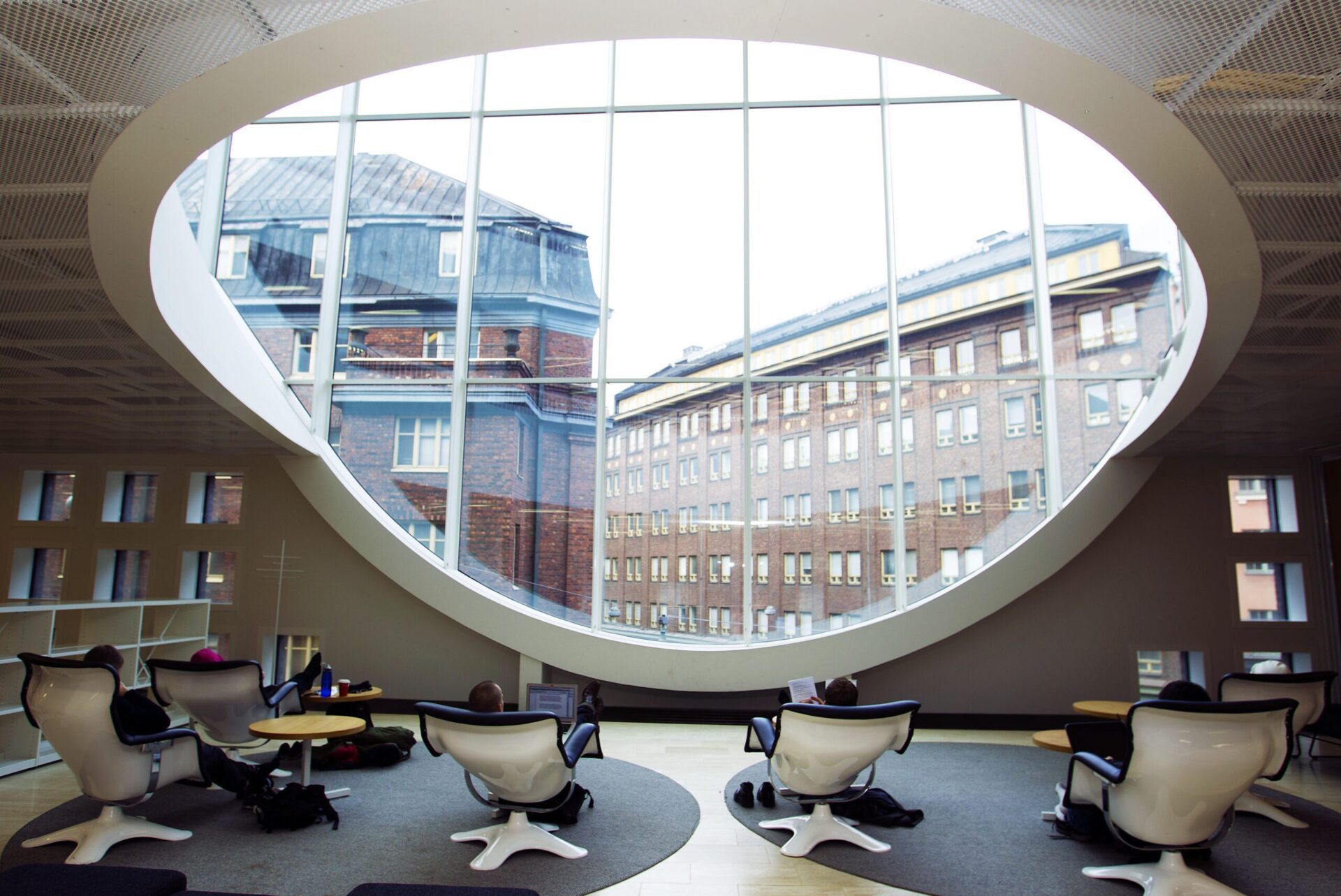
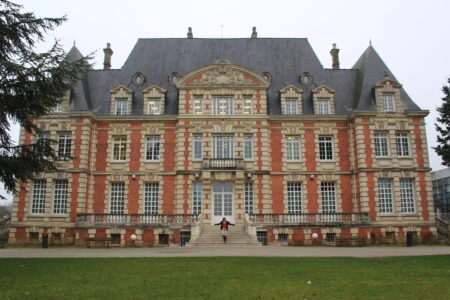
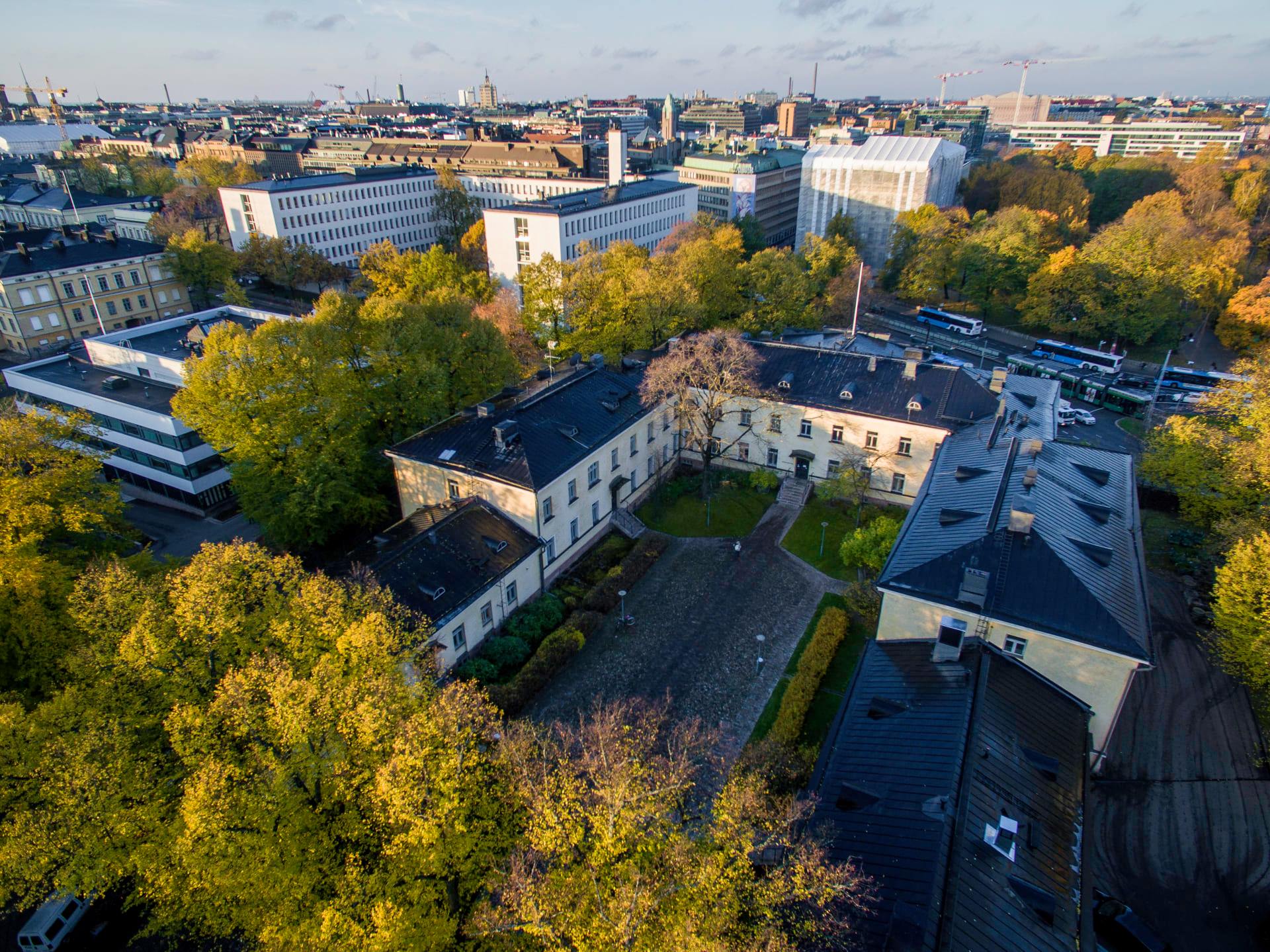
The University of Helsinki is the oldest and largest institution of academic education in Finland. Established in 1640, it now has 31,000 students and nearly 10,000 employees across four campuses and 11 faculties in Helsinki, with an additional 10 locations, including campuses and research stations overseas. Highly competitive, it regularly ranks among the top 100 universities in the world.

Quote Icon
Kramer’s VIA is easy to use, can be managed remotely, and has frequent firmware updates to ensure data security.”
Jyri Poittinen, Head of AV Services, University of Helsinki Property Services

Goals

To solidify its reputation and ability to provide its students with the latest technology, the University of Helsinki required a wireless presentation solution to avoid cable clutter and provide a more flexible method for presentation. After careful consideration, the facility opted for Kramer collaboration technology, with Kramer VIA facilitating meeting experiences in a more convenient manner for students and lecturers alike.

“We had already acquired a wireless presentation solution from a Kramer competitor,” says Jyri Poittinen, Head of AV services, University of Helsinki Property Services. “But the previous vendor was operating on an open network, and there were significant data security issues, with about 200 security attacks reported daily.” Beyond the serious security and privacy implications, this was causing the IT department immense frustration.

The university also wanted to be able to use different meeting platforms with the wireless presentation solution natively, and to enjoy collaboration and remote control – all with an easy user experience.

Solution

The University of Helsinki switched its presentation solution to Kramer wireless technology, installing 150 VIA Connect Plus presentation and collaboration units, together with the VIA Site Management server.

The university chose VIA, a wireless solution, primarily because of its strong security functions, the competitive price of the gateways, and the affordability of VIA Site Management, which has no yearly maintenance fees.

Today, Kramer VIA is used in the university’s meeting rooms and some auditoriums, with constant expansion taking place. Following years of great success with VIA Connect Plus, the university has begun upgrading all units to VIA Connect2.

Value

Switching to Kramer meant an upgrade in capabilities, as VIA has many features that were not available with the university’s previous system. Among them, wireless video conferencing and collaboration, and the ability to use Microsoft Teams and Zoom natively from VIA are particularly big advantages for users. The IT department greatly values the remote, centralized deployment, management, and configuration, and the easy user experience due to centralized software package distribution.

In addition to the clear price-to-quality ratio inherent in the Kramer solution, the university has been able to save on cabling costs and has been able to modify its premises into more transformative spaces for education,” says Jyri. “For example, the main building has been able to be fitted-out fully wirelessly, since microphones are also wireless today. There is no need for fixed tables anymore. And the low latency in video conferencing improves quality.”

Beyond those significant benefits, it’s the convenience and security of the Kramer VIA system that Jyri is most enthusiastic about. “Kramer’s VIA is easy to use, can be managed remotely, and the VIA app for PC users is especially user-friendly,” he says.

Operating on a closed network with frequent firmware updates, the solution has also proven to be data secure,” he elaborates.

Feedback from users has been predominantly positive, and the University’s IT department is satisfied with the improved data security and remote management.

Having successfully upgraded its presentation solution with Kramer, the university is continuing to expand and enhance its AV capabilities. “We are expanding all the time,” says Jyri. “We have been focusing on expanding our current facilities to be suitable for hybrid teaching methods, and we want to enhance our teamwork facilities.”

As for recommendations for colleagues and other universities considering their options for a new AV solution, Jyri concludes: “You should investigate different options very carefully and test devices in real-life scenarios. Personally, there are three different things I’m looking for when considering these decisions – remote firmware updating, available product support, and that the lifecycle of the chosen products is long enough.” All areas that, in his assessment, Kramer has successfully met. The current program to upgrade all VIA Connect Plus units with the newer VIA Connect2 is a solid indication of the university’s satisfaction.

Tags:

Education

Collaboration Devices

EMEA

Finland

January 1, 2024

AV in higher education – 7 ways in which AV is changing the learning landscape

Written by:

Kristen Garner
Kristen Garner

Director of Business Development, North America Education Sales

As technology moves fast, higher education technologies are moving along, while adapting to an ever-evolving world. Teaching and learning today look very different to just a few years ago. As technology has advanced, varied new learning models have come to the fore. Location is now less important, as both teaching and learning can take place from anywhere.

As part of this technological race, AV technologies are playing an increasingly pivotal role in changing the learning landscape in higher education.

In this blog post, we shed light on the 7 key trends that demonstrate how AV in higher education is redefining the learning landscape, offering immersive, data-driven, and personalized educational experiences.

AI, VR, and AR: Shaping future learning

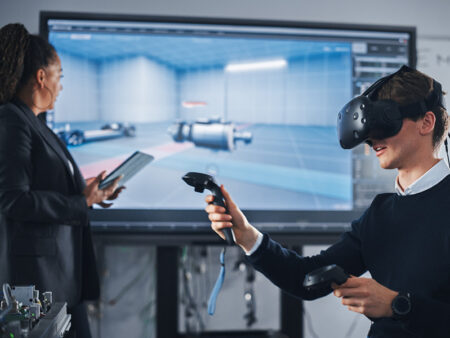
The burgeoning influence of augmented reality (AR), virtual reality (VR), and artificial intelligence (AI) on higher education is significant. These next-generation technologies are already capturing the imagination of learners, offering them interactive and immersive educational experiences. Pioneers in the field are collaborating with students to build proofs-of-concept, leveraging these technologies to further enrich education.

Focusing on functionality and personalization

The era of generic learning spaces is behind us. Today’s pedagogical practices and specific-use needs now shape the AV technology and design found in each learning space, such as quiet, semi-quiet, and remotely quiet; these environments are similar – but differ in important ways that make them convenient for different students.

New roles, such as “learning environment manager,” have emerged to design spaces that suit the unique pedagogical demands, thereby transforming conventional classrooms into collaborative classrooms integrated with AV tailored for higher education.

Crafting immersive learning scenarios

The pursuit of immersive learning environments is fueling the adoption of advanced AV solutions for higher education. Multiple cameras in learning spaces and collaborative classrooms offer seamless transitions between viewpoints, giving students a multi-faceted understanding of the subject. Cutting-edge LED walls enhance the depth of the immersive learning experience.

Elevating the student experience

Higher education is pivoting towards a student-centric approach. Institutions are tailoring AV solutions to fit the diverse needs and learning styles of students, enabling them to engage with the material in ways that resonate with them personally – and giving them the freedom to learn wherever and however they feel most comfortable.

Utilizing data for enhanced learning

Data-driven insights are increasingly shaping educational strategies. Emerging products that monitor brainwaves and eye movements provide invaluable data for adapting teaching techniques, thereby optimizing student learning experiences and outcomes.

Addressing challenges in AV adoption

While AV technologies offer promising advantages, challenges in effective integration exist. One significant obstacle is the learning curve for educators themselves, who may have little time to learn new technologies.

Additionally, with the increasing focus on educators’ needs and preferences, teaching tools need to be more personalized, while supporting the continuity of the experience in the classroom and beyond.

Comprehensive training programs and support tools offer a remedy by facilitating a quick and consistent educational experience across various learning spaces.

The potential of voice control and wearables

The advancements in voice control technology are streamlining AV system management and reducing adoption barriers. Emerging wearable technology like smartwatches and smart glasses offer additional layers of interactivity, further enriching the learning experience.

Conclusion: Pioneering the educational frontier

As we move into the future, AV solutions for higher education are altering the way higher education functions. From AR, VR, AI to personalized design principles, AV in higher education is setting the stage for groundbreaking educational experiences.

Although challenges like educator adoption and the need for flexible learning spaces remain, the possibilities for transformative change are limitless. By adopting the latest trends in AV for higher education, institutions can place themselves at the vanguard of educational innovation.

Are you ready to unlock the future of learning with audio-visual innovations? Join us as we embark on this exciting journey of transformative education.

Tags:

Education

Collaboration Applications

Control

Signal Management

Charterhouse prepares pupils for future success – with skills gained in an updated, AV-rich space

Quote Icon
“The transformation of our Lecture Theatre and introduction of a modern and comprehensive AV solution is allowing our teaching methods to diversify, to better prepare pupils for real-world work challenges ahead.”
Chris Hibbs, Director, External Relations & Foundation, Charterhouse

Background

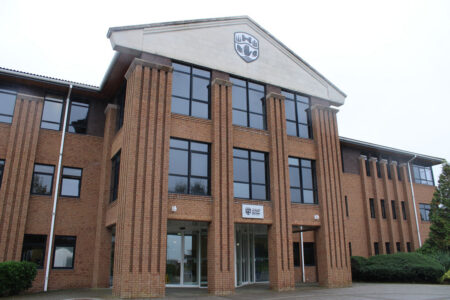
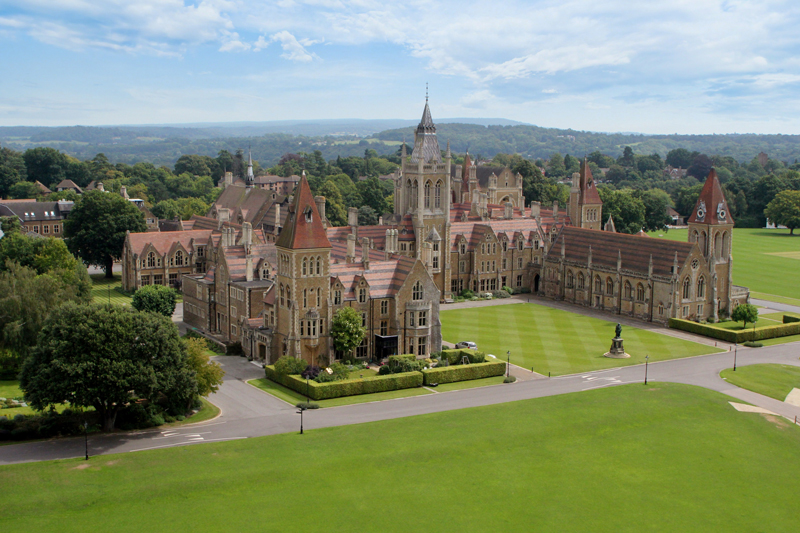
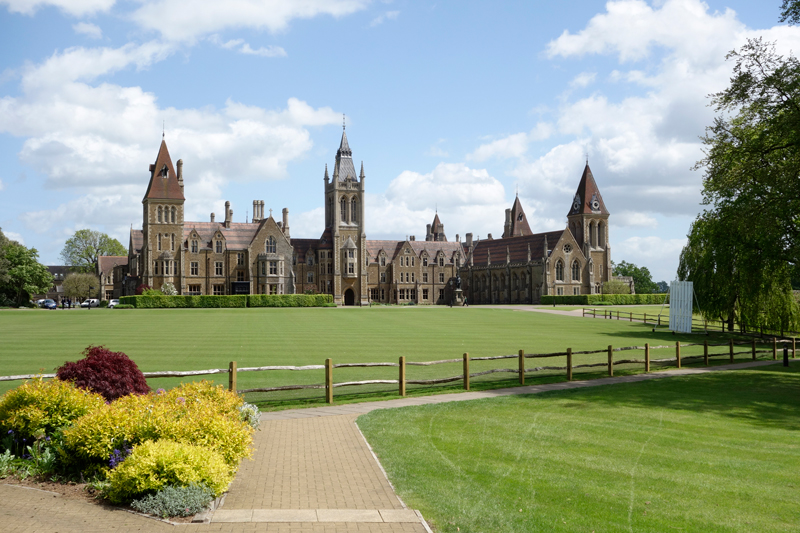
Founded in 1611, Charterhouse is one of the nine great public schools in England. Located in Godalming, just outside of London, it is home to 960 students – called Carthusians – aged 13 to 18, the majority of whom board onsite. Having educated a vast number of prominent alumni, the School maintains a reputation for imparting scholastic excellence alongside life skills and the School’s values of perseverance, responsibility, moral courage, open-mindedness, and kindness.

In 2019, Charterhouse set its vision on becoming the best coeducational boarding school in the country. Central to this vision was developing a truly world-class campus with targeted investment in its academic and co-curricular facilities.

Quote Icon
 
The AV solution is easy to use with interfaces that are self-explanatory. I’ve been impressed with the audio sounds and the quality of the visual definition. The solution is reliable and straightforward to troubleshoot. Overall, we’re having a very positive experience.”
Member of the IT Department, Charterhouse

Goals

Chris Hibbs, Director, External Relations & Foundation at Charterhouse, says the School wanted to “provide a technologically rich environment that would enable us to transform and step-change the experiences and learning of our pupils, in preparation for their adult lives.”

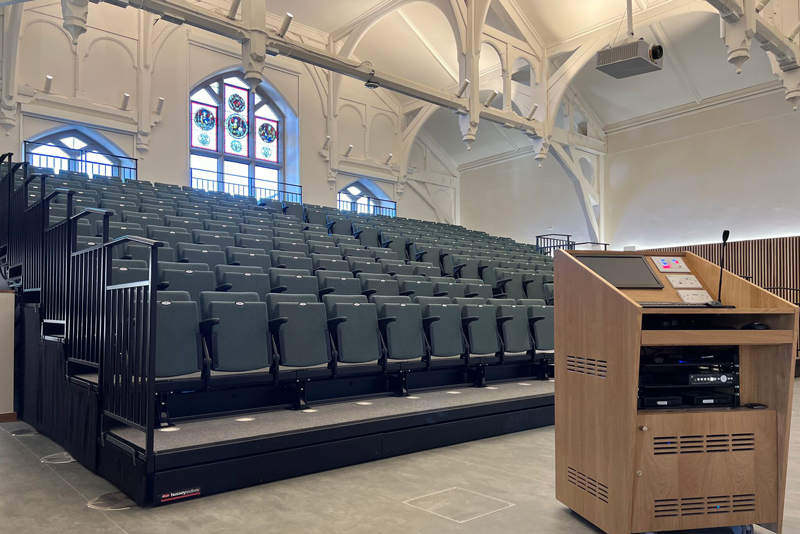
However, its lecture theater, built in the 1980s, was technologically outdated and therefore was underutilized. The School needed an AV system advanced enough to meet high expectations for modern program delivery, with the potential to be utilized for real-world and business scenarios, not just traditional teaching.

The new Charterhouse Entrepreneurship Diploma is one of the signature programs to be delivered from this facility. It combines a taught syllabus through lectures and speakers, with a framework for pupils to get involved in creating their own presentations. The lecture theater needed to be equipped with modern AV technology that would enable pupils to present and pitch, emulating the type of workspaces they will encounter at university and in professional workplaces.

Chris adds that “it was also essential that pupils and teachers alike are able to use the equipment with ease and efficiency.”

Solution

With the renovation of the lecture theater entirely funded by donations from the School’s community, the transformation of the AV solution began.

Prime AV, the integrator for the project, recommended Kramer as the ideal technology vendor for the new AV system. Kramer was chosen for the high robustness, reliability, and ease of integration of its products, and because the Kramer Control system is sophisticated without being complicated, delivering a good user experience. The Kramer equipment installed included a control keypad (RC-74DL), a room controller (SL-1N), and a presentation switcher/scaler (VP-440X).

In October 2022, the School opened its newly renovated lecture theater, a modern auditorium with sophisticated AV and presentation facilities.

Value

“We are now in the advantageous position of having an AV-rich facility that is being utilized by all year groups, across all academic disciplines,” says Chris.

He notes that “Pupils are now able to practice live presentation skills as well as receive feedback from peers and through video analysis reviews. This takes them through real challenges and real problems, and gives them proper exposure to some of the technologies that they’ll encounter, preparing them for future work.”

In addition to meeting the needs of the Entrepreneurship Diploma program, the collaborative and inclusive environment facilitated by the Kramer AV equipment means Charterhouse is also able to host dynamic speaker events and loan the space through its Community & Partnerships Program to assist with external educational endeavors.

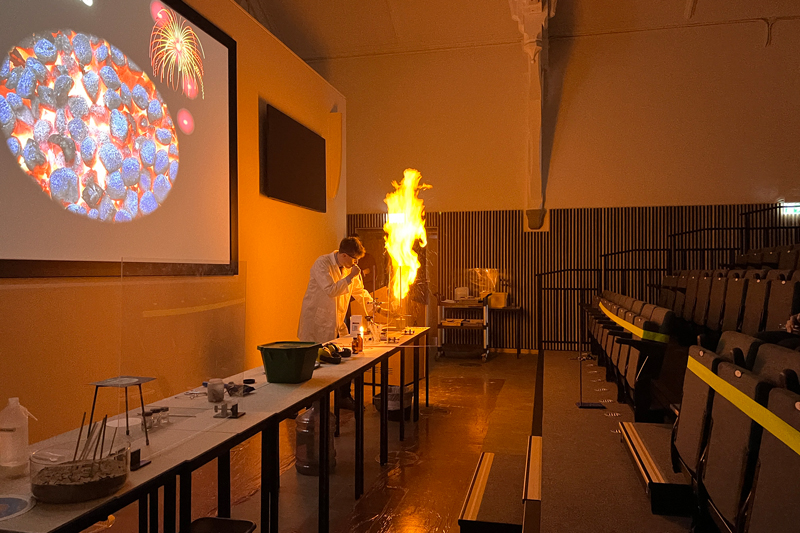
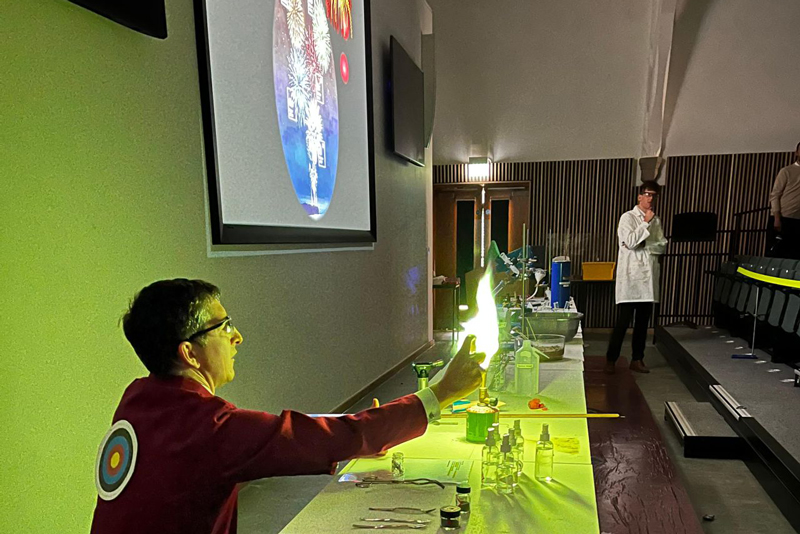
For example, the School hosted a lecture on ‘The Science of Fireworks’, which was attended by several other local schools. “The space was a brilliant area for demonstrations, and guests could clearly see the projector screen from all angles in the room,” comments David Dickinson, Head of Chemistry at Charterhouse. “The display and audio-visual equipment were also very easy to use, and provided a great backdrop for the demonstrations while presenting key information to pupils.”

The quality, ease of use, and reliability of the Kramer solution are all appreciated by Charterhouse’s IT department. According to a team member, “The AV solution is easy to use, with interfaces that are self-explanatory. I’ve been impressed with how the audio sounds, and the quality of the visual definition. The solution is reliable and straightforward to troubleshoot.”

Overall, Charterhouse is very pleased with how the comprehensive Kramer AV solution has helped the School transmit and build the desired skills in students. As Chris notes: “Being business-minded, entrepreneurial, adaptable, creative, and technologically savvy are fundamental skills for both further education and professional environments.”

While he is proud of the School’s achievements thus far, Chris says he recognizes that great institutions do not rest on their laurels. He looks with optimism toward more development to ensure that “modern, progressive, and enjoyable learning at Charterhouse truly prepares Carthusians to lead fulfilled and purposeful lives.”

Quote Icon
 
“Our newly renovated lecture theater enables traditional teaching environments to diversify, and teaching staff to present and educate in a style that is modern and engaging.”.”
Chris Hibbs, Director, External Relations & Foundation, Charterhouse

Tags:

Education

Control

EMEA

United Kingdom

Got a question for one of our AV experts? Contact us here, and we’ll connect you.

Embrace the digital classroom transformation – with Kramer’s advanced AV solutions for Education.

Akvarelli optimizes new multi-purpose center with Kramer AVoIP solution, enabling flexible education experiences

Quote Icon
“With AVoIP, teachers can now present everywhere in the classroom and are not dependent on any connection.”
Niko Sutinen, IT Manager, Forssa Municipality

Background

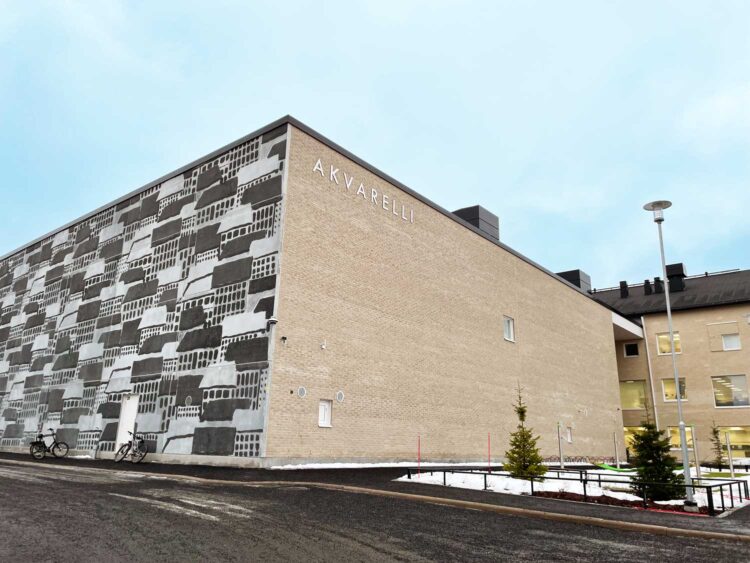
Akvarelli is a multi-purpose center located in Forssa, a small town between Finland’s three largest cities. It is a new build, planned by the city council, after conducting a service network survey and realizing that the existing school and kindergarten were beyond repair, with outdated technology and deteriorating physical infrastructure.

Designed to support the holistic wellbeing of children and youth in the area – including early childhood education, school classes, and extra-curricular leisure activities – the center currently serves 600 students aged 3-16.

Quote Icon
 
“We wanted to create a stress-free environment for teachers; to have the same setup and solution in every classroom with the same functions, so their time is spent teaching, not working complicated technology.”
Niko Sutinen, IT Manager, Forssa Municipality

Goals

Building of Akvarelli began in June 2018, with the goal of creating the modern facilities required to meet current and future pedagogical needs.

The main objective, according to Niko Sutinen, IT Manager for the Forssa Municipality, was to create flexible classrooms in which teachers would be able to move around. “We also wanted to create a stress-free environment for teachers; to have the same setup and solution in every classroom with the same functions, so their time is spent teaching, not working complicated technology,” he says.

As much as new technology was desired, to justify the investment, it had to be cost-effective and practical – something that teachers would actually use.

Solution

At first, Forssa was looking at a solution with HDMI connection to accommodate the many projectors and smart boards the former school building already had. But the municipality soon realized that with a bigger school in the Akvarelli center, it would need to invest in more smart boards, which would be very expensive. And after interviewing the teachers, it became clear the benefits of the existing smartboards were not being used anyhow. “If they don’t use the system, it will be an expensive investment,” Niko concluded. So an AVoIP solution was chosen as the new direction.

The system integrator, Advania, recommended moving forward with Kramer equipment. In addition to being able to provide a complete solution, Kramer’s local support as animportant factors in the decision.

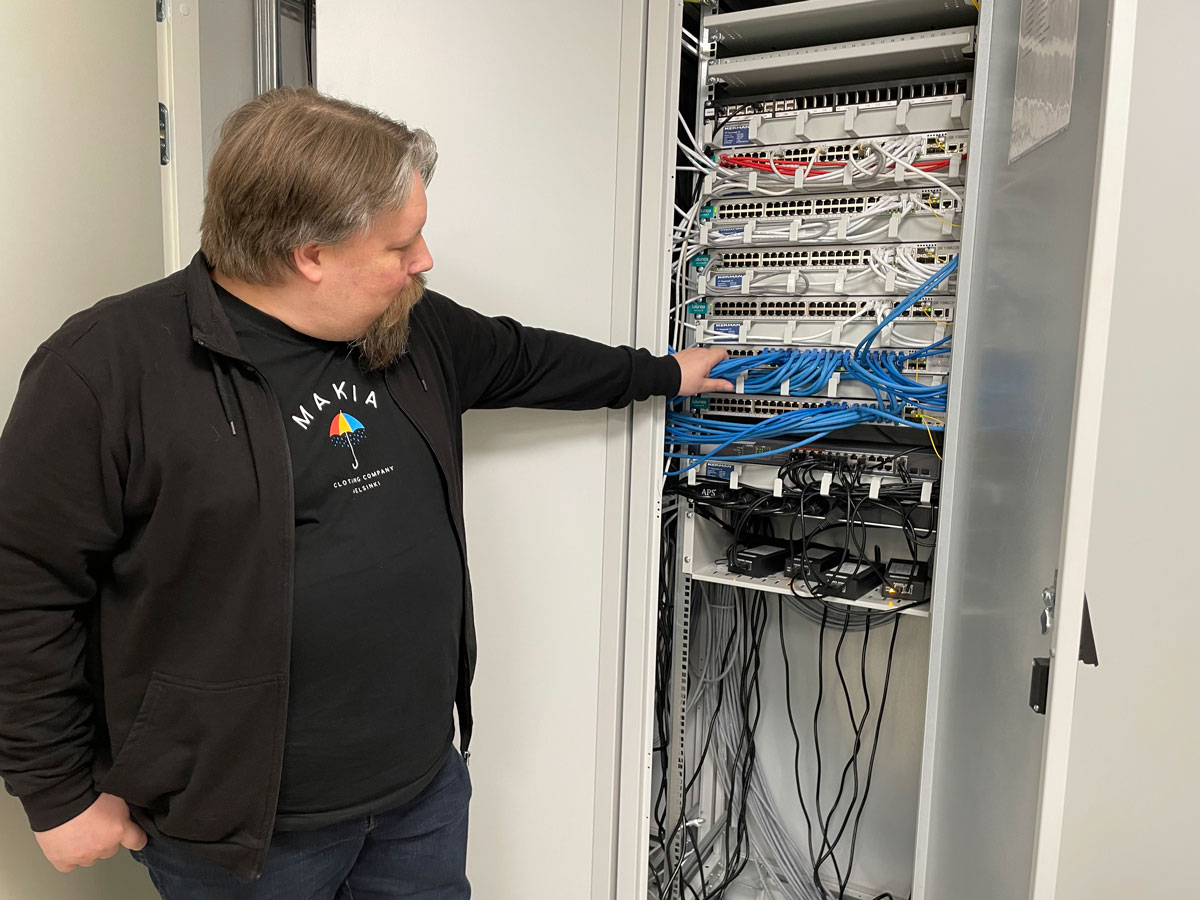
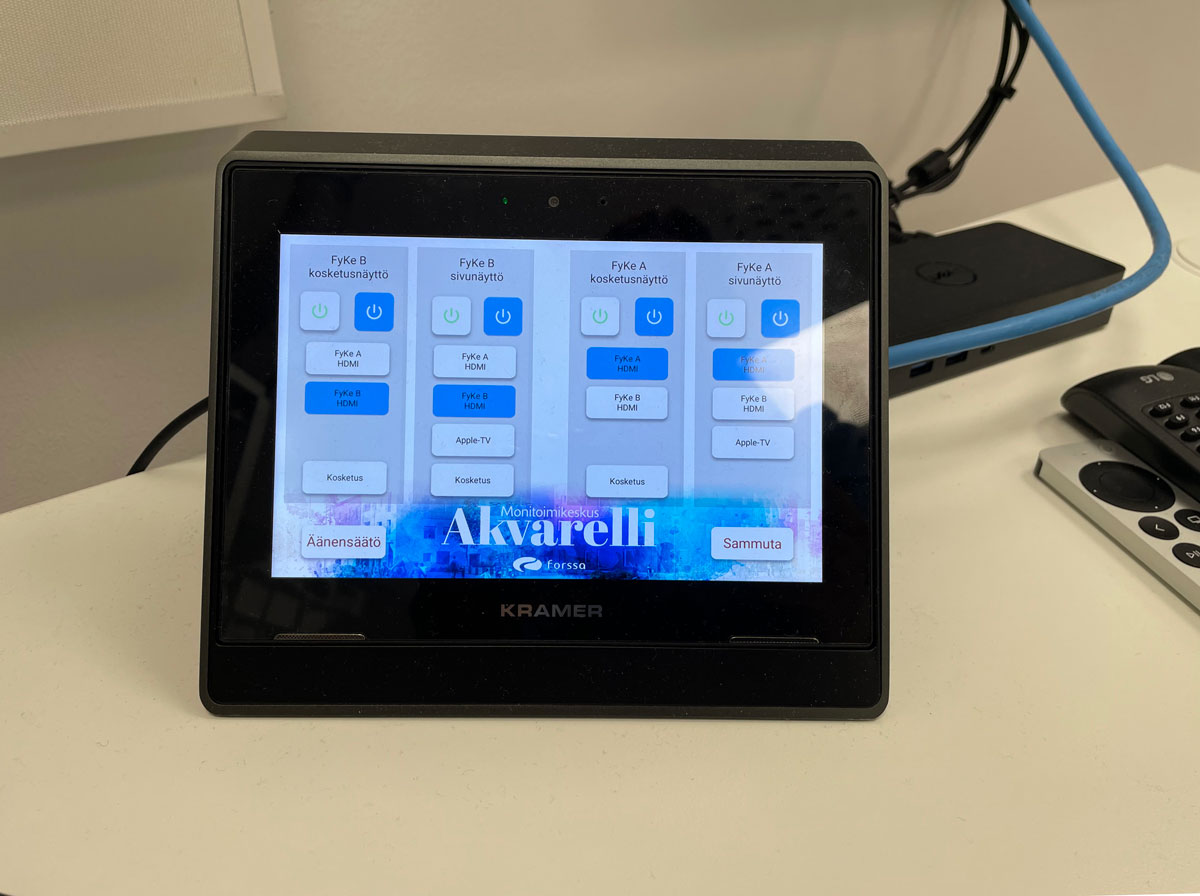
The solution included Kramer’s KC-Brainware-25 platform for controlling up to 25 spaces, 100 KDS-6 AVoIP streaming solution with one encoder and two decoders per classroom, and 25 KT-107 touch panels.

Value

As the new school was still under construction, the idea came up to create a demo classroom in the old school. “It is a huge step to change solutions for the teachers,” Niko explains, “so it needs to be done right.” In addition to familiarizing the staff with the new AV equipment, testing with the demo room helped iron out any tech issues in advance, to ensure a smoother onboarding. So positive was this experience, that he sees it as central to the project’s ultimate success.

“Now with AVoIP the teachers can present everywhere in the classroom and are not dependent on any connection,” Niko continues. You can open up the classrooms. Be a few steps ahead of other schools. And ultimately help Akvarelli become a stimulating learning environment that meets the challenges of education, today and in the future.” 

The audio-visual solution is used for multiple purposes beyond classroom lessons. For example, the school’s administrators use the screens for each morning’s 10-minute “opening ceremony” to make announcements and share messages, rather than the central radio. And if needed, for security purposes, they can pinpoint where a warning should be seen, or use the screens to display a silent alarm.

On the physical end, Niko really likes it that the installation is not restricted by cables, making it flexible and scalable.

In addition, with a properly planned AV infrastructure, the school needs less day to-day support from the IT team.

As it turned out, despite advanced planning, the construction of the school was behind schedule, so Advania had only half the expected time to meet the August 2022 finish date, and things were further complicated by global supply chain issues. Some workarounds were required, and Kramer’s local, Finnish-speaking team on the ground, proved invaluable.

While it’s still early days, so far, the system has been running smoothly and reliably. Niko says that he hasn’t heard any complaints, deducing that “if there are problems you would hear about them; silence usually means that people are happy.”

Going forward, the municipality will continue evaluating the solution. “If everything keeps working as well as it does now,” Niko concludes “we will expand the concept to other schools in Forssa.”

Tags:

Education

AVoIP Solutions

Control

EMEA

Finland

Got a question for one of our AV experts? Contact us here, and we’ll connect you.

Written by:

Theo Van Niekerk
Theo Van Niekerk

APAC Products & Solutions Director, Kramer

Efficient control of audio-visual (AV) systems is critical for almost every enterprise and educational campus today. Centralized solutions for AV control offer a multitude of advantages, resulting in improved efficiency and notable cost reductions.

A centralized AV control system provides unified control, which allows effortless management and control of diverse AV devices. Displays, projectors, sound systems, lighting, and other in-room systems such as blinds and heating, can all be controlled via a single interface. This removes the complexities that typically come with the management of multiple control systems and technologies, enabling smooth and integrated control operations in multiple spaces and even multiple sites. Organizations gain higher operational efficiency, shorter setup times, and consistent, dependable control experiences across their premises.

Boosting user experience

In retail, the customer is always king. And when it comes to audio-visual systems, as any AV manager knows, it’s the user who reigns supreme. Easy use, with a minimal learning curve, is fundamental to both the user experience and the ongoing support workload of the AV or IT department.

That’s why one of the most significant benefits of centralized AV control lies in its impact on user experience. Having a centralized control interface enables users to effortlessly control and interact with AV equipment in various spaces through a consistent, customized interface that can be accessed from any device. With technical hurdles removed, staff can concentrate on their primary tasks, instead of managing the AV equipment. With streamlined AV control organizations can optimize productivity, promote collaboration and efficient workflows, and increase user satisfaction.
Reducing operational costs

Businesses and educational institutions often also find that implementing a centralized AV control system can drive substantial cost savings. It reduces labor costs by dramatically reducing or eliminating the need to provide onsite support and maintenance, as much of it can be done remotely. Additionally, remote monitoring and troubleshooting further reduces downtime and other service disruptions that can be both costly and aggravating.

Furthermore, because centralized AV control enables organizations to get more use and uptime from their AV systems, they can allocate resources more efficiently, reducing both equipment purchases and energy consumption.
Centralized control also makes an AV system inherently scalable, opening the way to long-term financial benefits, along with cost-savings within individual spaces and buildings, and even across multiple sites.

Centralized control in action

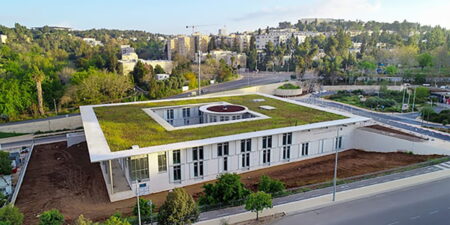
The experience of the Mandel Foundation, which works to cultivate leaders in the education, public and non-profit sectors, is an excellent example of how the benefits of centralized control can play out in a real-world implementation. The foundation needed to equip classrooms, meeting rooms, and a large auditorium with user-friendly AV systems. Even before construction on the new site began, Kramer’s experts worked closely with the Mandel Foundation’s IT team in planning a comprehensive audio-visual solution that covered display and collaboration devices (screens, cameras, speakers, microphones and more) in classrooms, the main auditorium, and even digital signage in public spaces.
The entire project was pulled together by the Kramer Control system, allowing for centralized management of the rooms, including real-time alerts and the ability to initiate system upgrades or provide an immediate response to possible malfunctions.

Oren Sharon, CEO, Or Lashir, the integrator that assisted with the project noted the value to end users: “We made sure that everything would be unified. That means if someone enters class one, two or three, they come across the same solution.”

Centralized control on the cloud

Centralized AV control does not have to be cloud-based but, with the growing adoption of cloud technologies across almost every aspect of business and education, it’s fast becoming the norm. As one of the first companies to introduce cloud-based control, Kramer has also lead the way in taking centralized AV control to the cloud.

Our cloud-based Kramer Control platform for room/space control and management enables users to operate any room with ease through a simple touch interface. The intuitive, drag-and-drop interface makes it easy to install, configure, and modify the control system – whether for a single room or a large enterprise or campus.

A final thought

There’s no doubt that centralized AV control provides huge value to enterprises and educational institutions. By adopting a centralized AV control system, organizations can streamline their control processes, improve user experiences, and boost their operational efficiency. Embracing the capabilities of centralized AV control will elevate control operations today and enable you to scale your AV solution as your needs grow in the future.

Tags:

Education

Enterprise

Control

Audio-Visual Control & Management

University of Insubria bridges the hybrid gap with Kramer AV

Quote Icon
Kramer delivers value for money, with robust and resilient equipment that works for a long time, without any problems.”
Luca Mondini – Front and Back Office Service and User Support, University of Insubria

Background

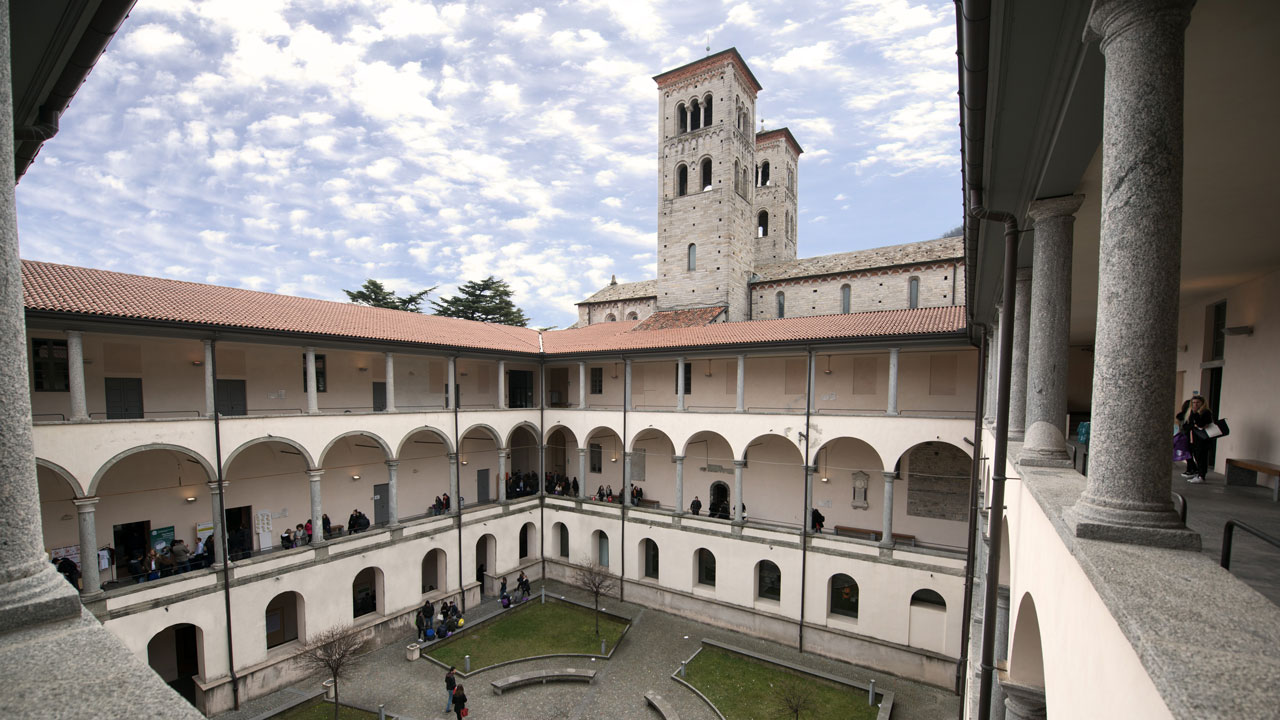
The University of Insubria – with primary locations in Como and Varese, Italy – was officially established in 1998, though its origins go back further. Home to over 12,000 students, 400 faculty members, and 320 technical and administrative staff across seven departments, it aims to provide high-quality education and facilities that prepare students to enter the job market with the requisite knowledge and skills. It also emphasizes top-level research between national and international groups, across interdisciplinary fields.

Following a recent funding resolution by the Lombardy Regional Council, the university had the opportunity to invest in new technologies for integrated teaching.

Andrea Fincato, AVC Project Manager, Adicom Group. The integrator who integrated Kramer's solutions in University of Insubria
 
“It is always a matter of target audience, but I highly recommend Kramer for AV projects. While it is true that there are different levels, in the level that Kramer is in, there really is no alternative or comparison.”
Andrea Fincato, AVC Project Manager, Adicom Group

Goals

Insubria wanted to upgrade its AV equipment, to better support hybrid learning following the COVID-19 lockdowns. At the same time, the academic deans, who were concerned to differentiate Insubria from an online university, wanted these tools to help stimulate the return of students to the classroom.

“We were aiming for a simple solution that would ensure fluidity between remote and in-person students, so that there could continue to be a choice of the most suitable teaching delivery mode,” explains Luca Mondini, Front and Back Office Service and User Support at the University of Insubria. “Being a distributed university with locations scattered throughout the Insubria area (between Milan and Switzerland), we have always relied on audio-video communication tools. Previously, meetings and distance learning could be handled with systems such as Polycom. But with the arrival of a large number of users due to the pandemic, when we went from 12 simultaneous connections to 250 or more, such systems no longer held up.

Our critical points were the lack of integration between new technologies and existing platforms,” he continues. “For example, Teams made it difficult for remote learners to interact transparently. It was difficult for the teacher and students to hear each other mutually and intelligibly.” But as importantly, to ensure adoption, ease of use was key, so, as Luca puts it, “the technology wouldn’t become a burden on the teacher.”

Solution

Kramer was chosen for the Insubria learning spaces retrofit after extensive scouting, with Luca citing the “excellent price-performance ratio” as a crucial factor. The university prepared exact specifications for the equipment and its placement, and Adicom Group installed it in 25 classrooms, 5 lecture halls, and 10 mobile studios (used for recording lectures), across three campuses.

“The university was strongly leaning towards Kramer, and I must say that I would have chosen Kramer as well,” says Andrea Fincato, AVC Project Manager at Adicom Group. “Kramer is a vendor we know well and with whom we’ve been collaborating for years. Also, we were supported by the Italian Kramer staff throughout.”

In terms of practicalities, the system was entirely analog, so everything was redone by Adicom, including replacing the wiring to support digital HDBT. Adicom installed a Kramer VS-62DT matrix in the medium and medium-small classrooms, installed racks, and supplemented them with the necessary equipment.

As Andrea elaborates in describing the integration processes and decisions: “The heart of the system is the VS-62DT matrix implemented in all classrooms. Another specificity is HDBT transmission (TP-583T and TP-583R) for all the projectors. And in some classrooms, where there were multiple projectors, HDMI output was used so that it could be rebroadcast with two (VM-2DT) or four (VM-4HDT) dedicated HDBT lines addressed to the projectors. This all was complemented by the adoption of RC-208 control keypads to provide a simplified user experience.”

Value

Both faculty and students at Insubria appreciate the new possibilities that the Kramer AV systems offer, especially in accommodating hybrid learning.

The Kramer keypads provide maximum simplicity, so that teachers interface with an identical and recognizable control dashboard that always behaves the same way, no matter what is behind it. As Luca says: “Complexity had to remain within the rack, but at the same time the teacher needed to benefit from rich possibilities of tools use – from the Microsoft Surface whiteboard, to the use of Wacom-like technologies, to the PC in the room, to the document camera.”

“The goal was to give teachers the opportunity, respecting their different ways of working, to use all devices: room camera, desktop camera, laptop camera. In short, everything needed to provide an AV system that fits their habits so that they can teach hybrid classes,” Andrea expands.

In addition, the new AV equipment supports the university’s desire to return students to campus. “At the moment, we’re experiencing a turnaround; 99% in-person and 1% remote, though students still want the ability to follow classes remotely,” says Luca. “One of the main advantages of being properly hybrid-equipped is that the university has not had to suffer declines in the number of enrollments or increased dropouts due to students’ inability to continue studying remotely. Instead, we’re now able to ensure that lessons are always delivered with the same degree of involvement, regardless of where the students are.”

Luca rates Kramer as excellent for ease of use, describing, as an example, how the RC-208 keypads are used to control the inputs of a 6×2 matrix. “We opted for buttons with icons so we could make usage accessible to anyone; and we equipped the console with a QR code that the teacher can frame, to view the user guides – in an illustrated comic format – of the advanced instrumentation,” he explains.

He’s also quick to point out his appreciation for the easier IT management enabled by a fully connected system across multiple sites. “We connected all equipment with their respective management systems to dedicated VLANs, then built a centralized server where we inputted Kramer solutions for programming the matrices and keypads, so that everything now works exactly as it was supposed to, and I can control everything from one place,” he says.

Andrea further notes that many Kramer products allow for the integration of multiple features, which speeds up and simplifies the installation phase, making for another simplicity advantage. For example, the VS-62DT matrix switcher and HDBT transmitter are already combined, avoiding the need to add external elements.

Overall, the university is extremely pleased with the value for money and the reliable, robust performance delivered by its Kramer AV solution. Over the next five years, it plans to continue its goal of 100% coverage, finishing the new auditorium and upgrading an additional 10 classrooms per year.
Tags:

Education

Control

Signal Management

EMEA

Got a question for one of our AV experts? Contact us here, and we’ll connect you.

Brisbane, Australia, March 2023 – Kramer, the leading audio-visual experience company, today announced its expanded distribution partnership with AVA Distribution (AVAD), an audio-visual distributor headquartered in Brisbane, Australia.

From innovative wireless presentation and collaboration, revolutionary room control built in the cloud, to web-based AV network management, Kramer is setting a new standard for AV/IT convergence upon an open ecosystem. The company is committed to providing the best products, solutions, and services, and remaining the all-round choice for the enterprise, education, and government markets.

With this new partnership, AVAD will  market, distribute, and support Kramer’s entire portfolio while delivering the most intuitive audio-visual experiences through its wide network of resellers, integrators, consultants & installers across Australia. Customers will now have access to a dedicated team, offering end-to-end audio-visual technologies with reliable support that drives their businesses forward.

The partnership falls under Kramer’s new ENGAGE Partner Program, designed to Enable its Network (of partners) to Grow, Accelerate, Gain and Excel. The scheme engages distributors, system integrators, and resellers to boost growth and profit via Kramer product portfolio adoption, training, certification, and marketing efforts. Accredited partners enjoy various benefits and incentives such as marketing development funds and special equipment discounts.

Marc Remond, Kramer President APAC, said: “We are very excited to partner with a value-added AV distributor such as AVAD to strengthen our position as a leading professional AV vendor in Australia. AVAD’s team is extremely professional, and the company has a longstanding reputation in the ProAV market.”

Thanks to this close partnership, both resellers and customers will gain access to Kramer’s secure and reliable products along with the technical support, training, and programming services they need to ensure their technology deployments are successful and provide the best possible return on investment.”

Santo Pappalardo, Managing Director at AVAD, said: “We have been a Kramer distributor since 2016 and are delighted to have been chosen to become their principal distributor for the new ENGAGE channel program. Kramer delivers a complete range of innovative products designed to help our ProAV resellers create the absolute best audio-visual experiences.”

About Kramer

Kramer audio-visual experiences power creativity, collaboration, and engagement. From AVSM to advanced cloud-based communication, collaboration, and control solutions, Kramer creates audio-visual experiences that are more engaging, more inclusive, and more connected than ever before. Headquartered in the heart of Startup Nation – Tel Aviv, Israel, with locations around the world, Kramer’s audio-visual experts are designing the future of engagement technology. Physical and digital boundaries have blurred. But no matter how hybrid our world becomes, our desire for real, human connection will never cease. Kramer’s intuitive, seamless technology breaks down walls, bridges gaps, and makes people feel closer together even when they’re far apart.

About AVA Distribution

AVA Distribution is a value-added distributor of ProAV products to AV integrators and installers throughout Australia. AVAD works closely with a small number of specialist vendor partners to supply professional audio-visual products and solutions to trade customers. Additionally, it offers a range of training, design & programming services to support its reseller network.

For more information, visit www.avad.com.au

Press Contact

For additional information, please contact:
Veralyne Tan or Mamolefe Molefe at [email protected]

Tags:

Education

Enterprise

Entertainment

Government and Defense

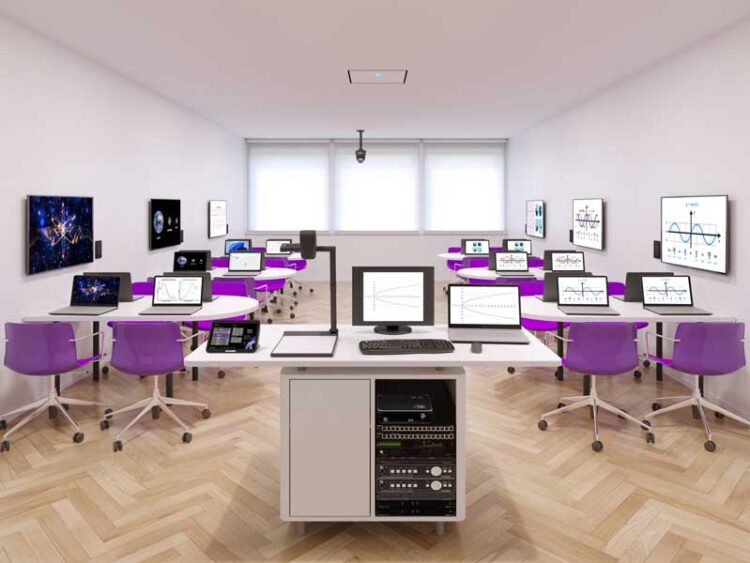
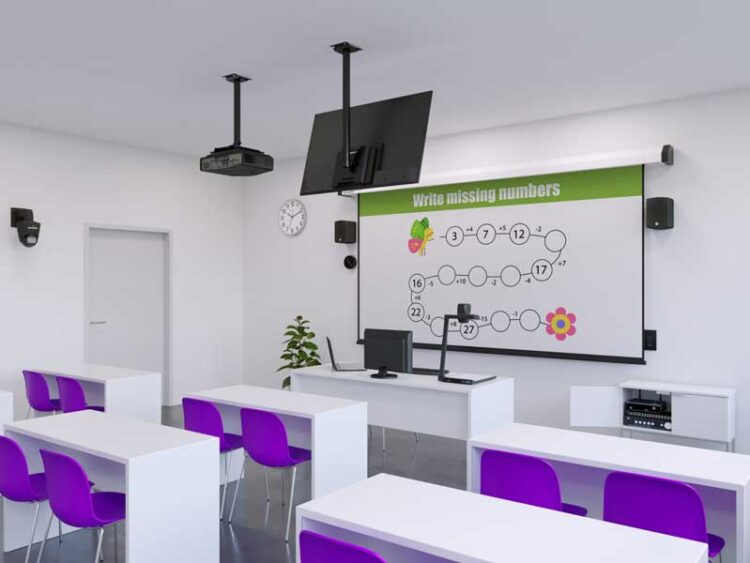
A picture of a classroom, in which Kramer's solutions are installed

AV Solutions for Education

The opportunity to go beyond the boundaries of the classroom, lab or lecture hall – with AV solutions for education.
AV solutions for education – Providing endless opportunities to teach and learn

Taking education beyond the class, lab, or lecture hall, we enable everyone to present, share, and engage no matter where they are. In every type of education space, our end-to-end solutions facilitate all imaginable learning experiences.

An icon of a group of people

Simplicity that works for everyone

Kramer solutions are all about education, not about technology. From planning and deployment to everyday teaching and learning, all the way to controlling and managing all classrooms, anyone can work with Kramer’s AV solutions for education, with ease. Teachers can simply teach, and students can simply learn. IT managers can stay on top of classrooms, any time, from anywhere.

An icon of a person in clouds, depicting peace of mind

Peace of mind in the class, and beyond

Deploying and managing classrooms is made easy and efficient. Designed by Kramer’s education experts and providing outstanding reliability backed by market-leading warranties and award-winning support, peace of mind is built-in to every Kramer’s AV solution for education.

An icon of a person surrounded with stars

Meeting your evolving needs

Our AV solutions for education are built with robust security to protect the network, in-room equipment and all content shared during lessons. They are flexible, easily scalable and future-proofed. With Kramer’s AV for education, today’s perfect-fit audio visual aids in education, can be adapted as your requirements change, protecting your investment for the long term.

Innovative learning spaces

Simple and natural collaboration from anywhere in the space, and beyond

Teaching and learning today look very different to just a few years ago. As technology has advanced, varied new learning models have come to the fore. Location is now less important, as both teaching and learning can take place from anywhere. Likewise, by utilizing audio visual equipment used in education, learning can be synchronous or asynchronous, with students learning at their own pace, alone or with others.

Innovative learning spaces
A picture of a classroom in which Kramer's solutions are installed

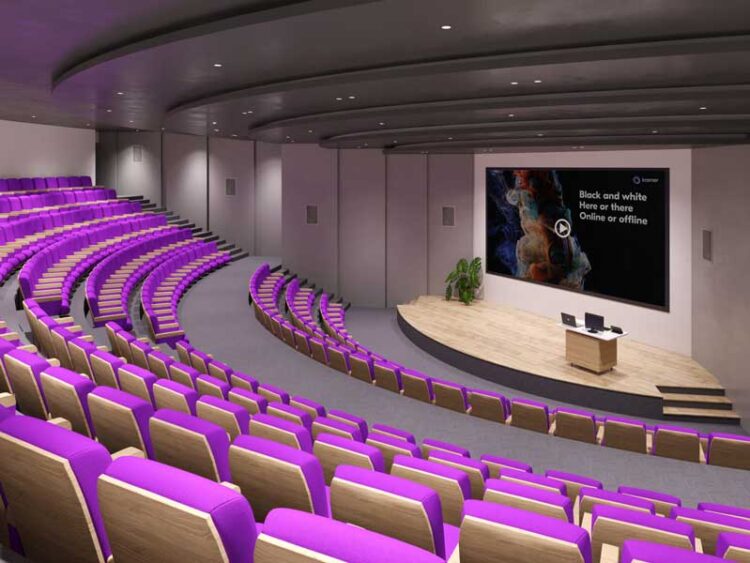
Auditoriums and lecture halls

Extend the lecture experience beyond the physical space

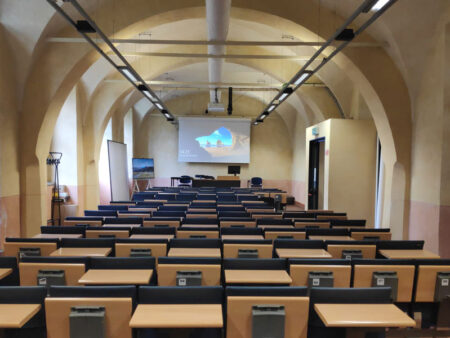
Today, adding remote participants to lecture halls is a must. But providing a natural hybrid experience for participants, while enabling lecturers to continue with their preferred ways of teaching habits, is far from simple. The requirements may vary depending on the design, architecture and focus of the campus, but all demand easy connectivity, top-quality audio and video that can be clearly heard and seen by everyone, and easy content sharing. With AV technology for higher education, collaboration in lecture halls becomes a breeze.

Auditoriums and lecture halls
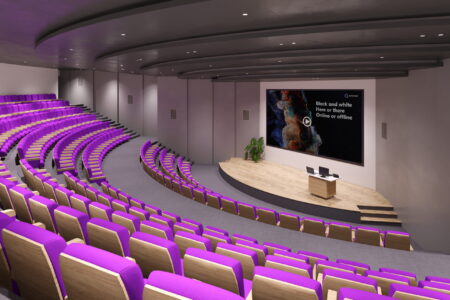
A picture of a lectures hall/auditorium  in which Kramer's solutions are installed

Classroom spaces

Moving to a digitized environment

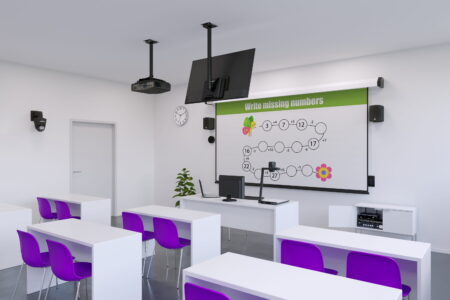
Classroom teaching methods have evolved greatly since we were children. By using audio visual technology in education, today’s teachers utilize a wide range of methodologies, and it is vital that classroom technology stays updated, enabling a high-quality educational experience for teachers and students alike.

Classrooms spaces
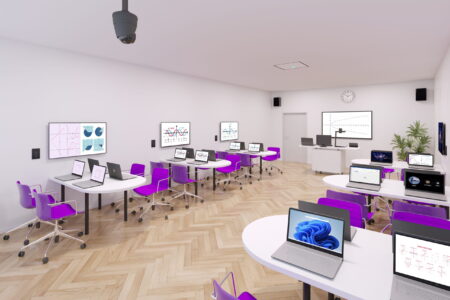
An image of a hybrid classroom, in which Kramer's solutions are installed

Need an audio visual solution for educational institutions?

A teacher sitting on a desk, explaining to students and to remote-participants

Victoria University empowers formal and informal learning across its new campus with Kramer’s VIA solution

Quote Icon
“The students are loving the experience here in the building, in terms of discovery of spaces and the enablement of their formal and informal learnings. They’re very grateful for the quality, and the fit-for-purpose customized spaces.”
Kirsten Jeffery | Project Director, Victoria University City Tower

Customer

Victoria University, Melbourne, Australia

Industry

Education

Goals

  • Enable wireless presentation in varied spaces for formal and informal learning
  • Ensure fast video streaming and smooth audio and video transitions, regardless of end-user device
  • Remotely manage all AV devices and digital signage, university-wide

Project Scope

  • Install about 400 wireless presentation devices in new 32-floor Victoria University City Tower Campus

Value

  • Supports goals for closer engagement between students and the teachers
  • Empowers students to collaborate independently and cast presentations to multiple screens
  • Small-footprint devices save room space
  • Full management flexibility
  • High reliability 24/7 across years of use

Background

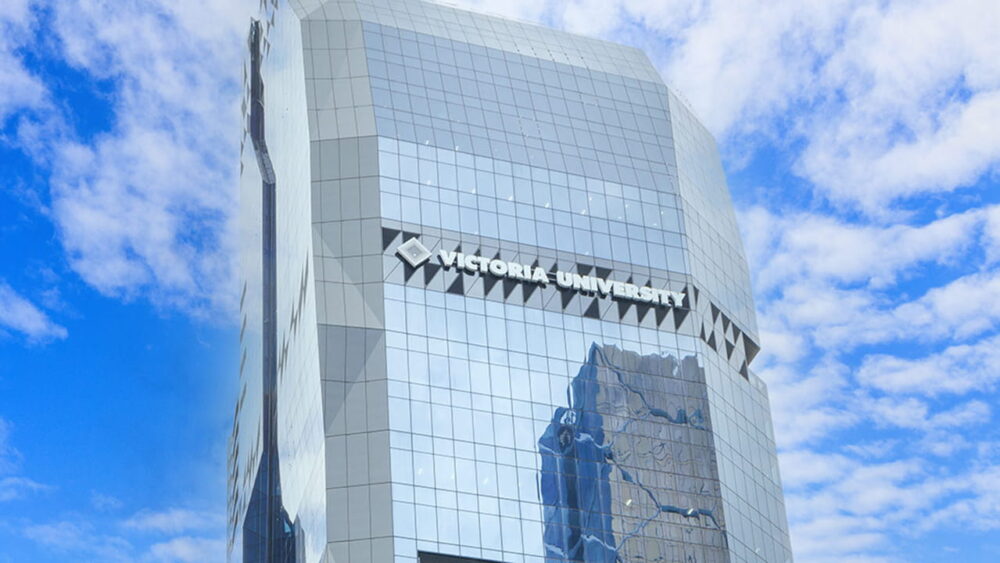
Victoria University (VU) is one of Australia’s few dual-sector universities combining higher education and vocational education. It achieved university status in 1991, though its preceding institutions date back to 2016. In recent years, VU has repeatedly ranked in the top 2% of universities worldwide. Today, over 40,000 students study at its seven campuses. The VU City Tower campus, which opened in 2022 in the heart of Melbourne’s central business district, offers both higher education and vocational learning, from practical TAFE certificates through to PhDs. Undergraduate and diploma students study with the award-winning VU Block Model, learning in interactive, workshop-style classes and completing one subject at a time.

Quote Icon
“The relationship with Kramer is a very long one… since the early 2000s. The lecture theaters are possibly 10, 15 years old, and these devices just keep running 24/7 without fail.”
Kieran Parboo | Client Services & AV Coordinator, Victoria University

Goals

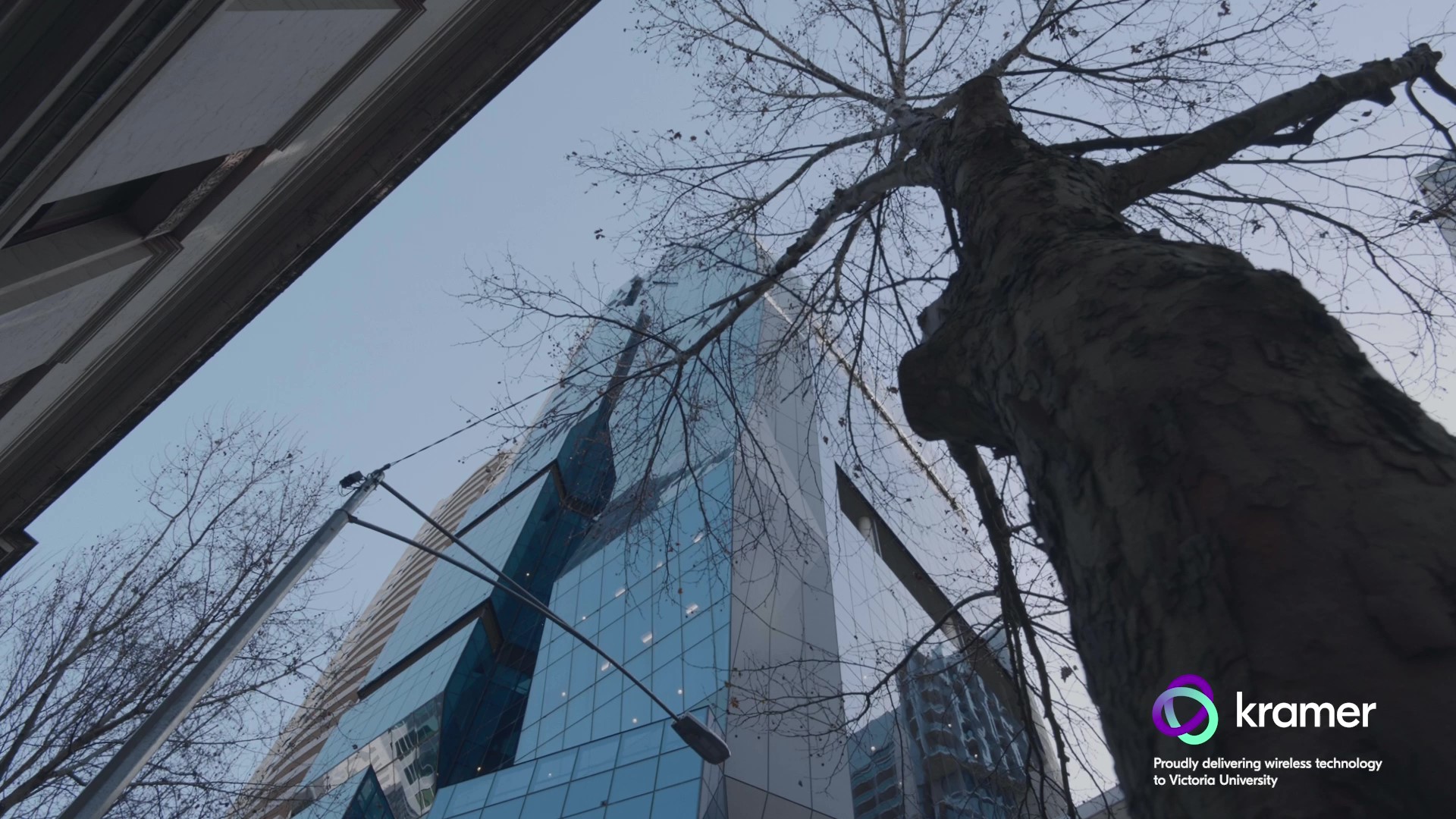
The 32-floor VU City Tower was built to consolidate three pre-existing VU city-based buildings into one vertical campus. The plans called for varied dynamic and interactive learning spaces, including purpose-built practical classrooms and clinics, informal learning spaces, and collaboration spaces of different sizes.

The audio-visual system in the new campus needed to support the VU Block Model, which is very focused on interactive, collaborative, industry-based problem-solving. The fundamental requirement was wireless presentation capabilities that would support formal and informal learning. With that, the key factors were the streaming rates and how smooth the audio and video transition would be when presenting from varied devices, including laptops and mobile phones.

Solution

Although Victoria University was already a very satisfied, long-time user of Kramer AV products, it conducted a review of available products before ultimately choosing Kramer VIA solutions for its new campus.

“We benchmarked against other devices to see what else it could bring to the table,” recalls Kieran Parboo, Client Services & AV Coordinator, Victoria University. “What we found is Kramer had an extensive range of options within the device itself that we could manage as a university, but also offer to academics to use to enable their teaching. And that’s where we came to the solution.”

VU installed a total of about 400 VIA presentation devices in the new VU City Tower. These are in addition to approximately 200 VIA devices installed on various other VU campuses. VIA Connect Plus enables simultaneous wired and wireless presentation and collaboration, and VIA GO2 provides a compact and secure device for 4K wireless presentation.

Quote Icon
“The VIA GO² is a small footprint device that sits in a rack. They’re very, very small, which is great for us. With our digital footprint, we want to keep that as low as possible.”
Kieran Parboo | Client Services & AV Coordinator, Victoria University

Value

The VIA solution is a hit with VU City Tower administrators, teaching staff and students.

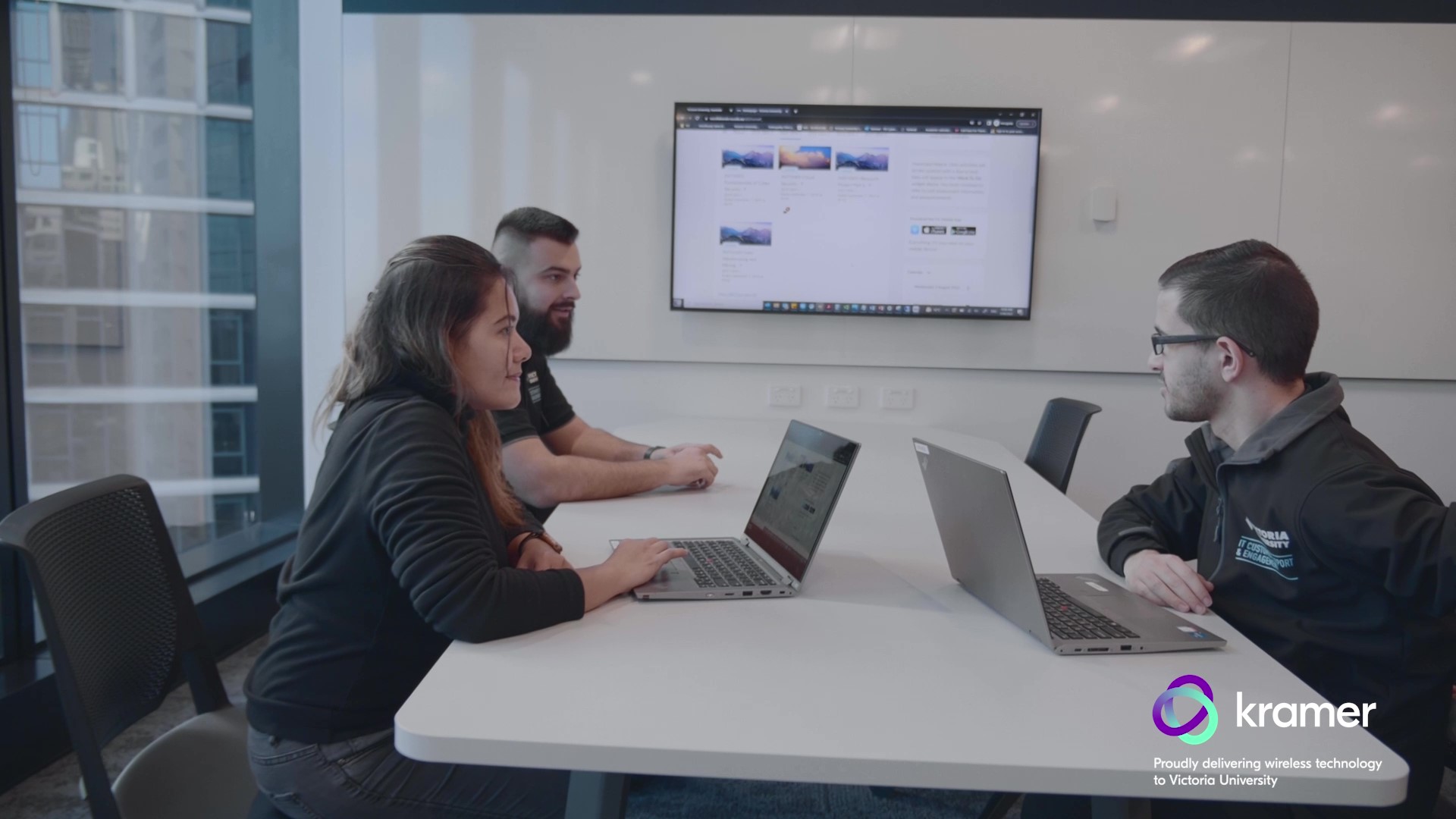
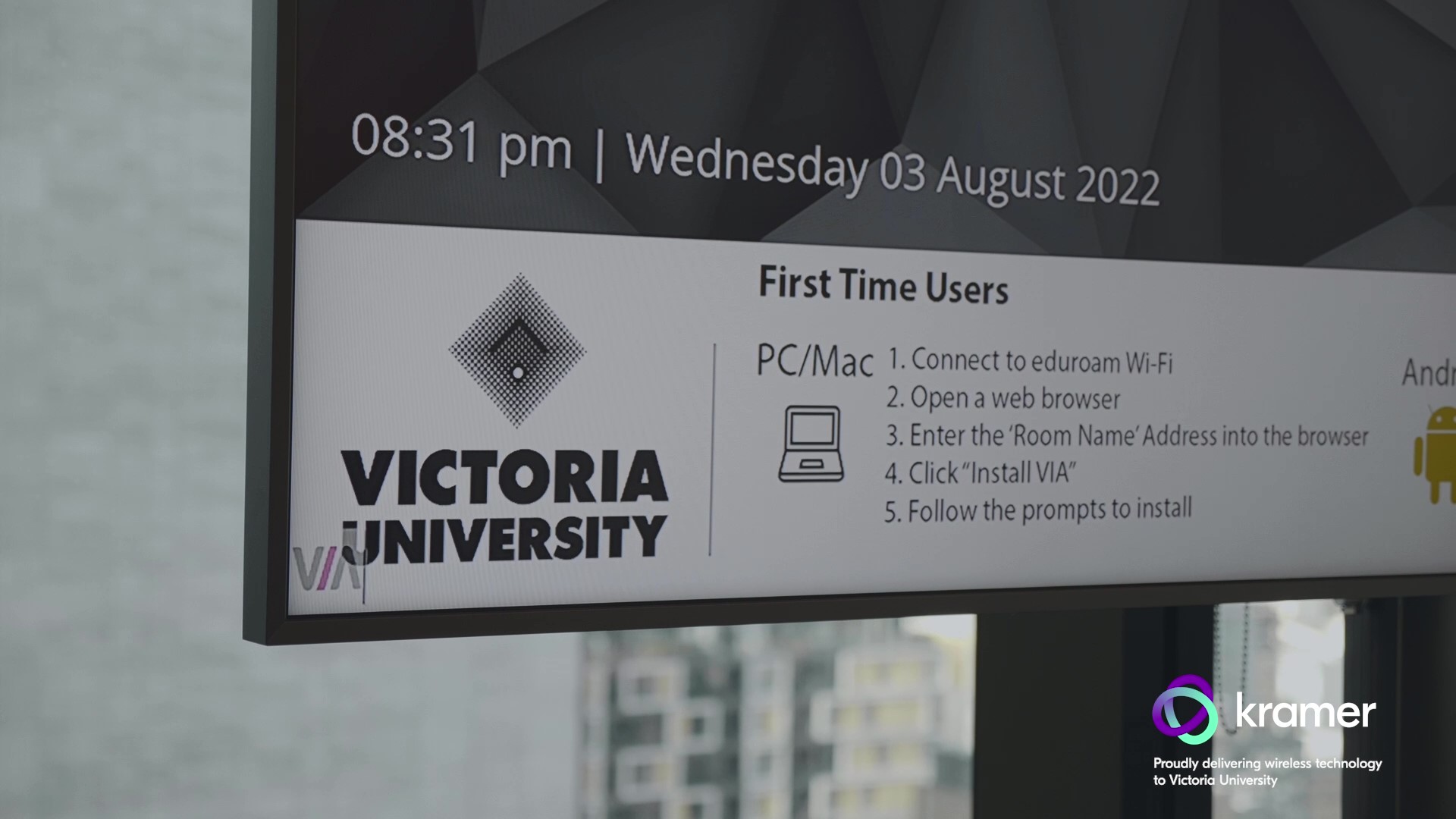
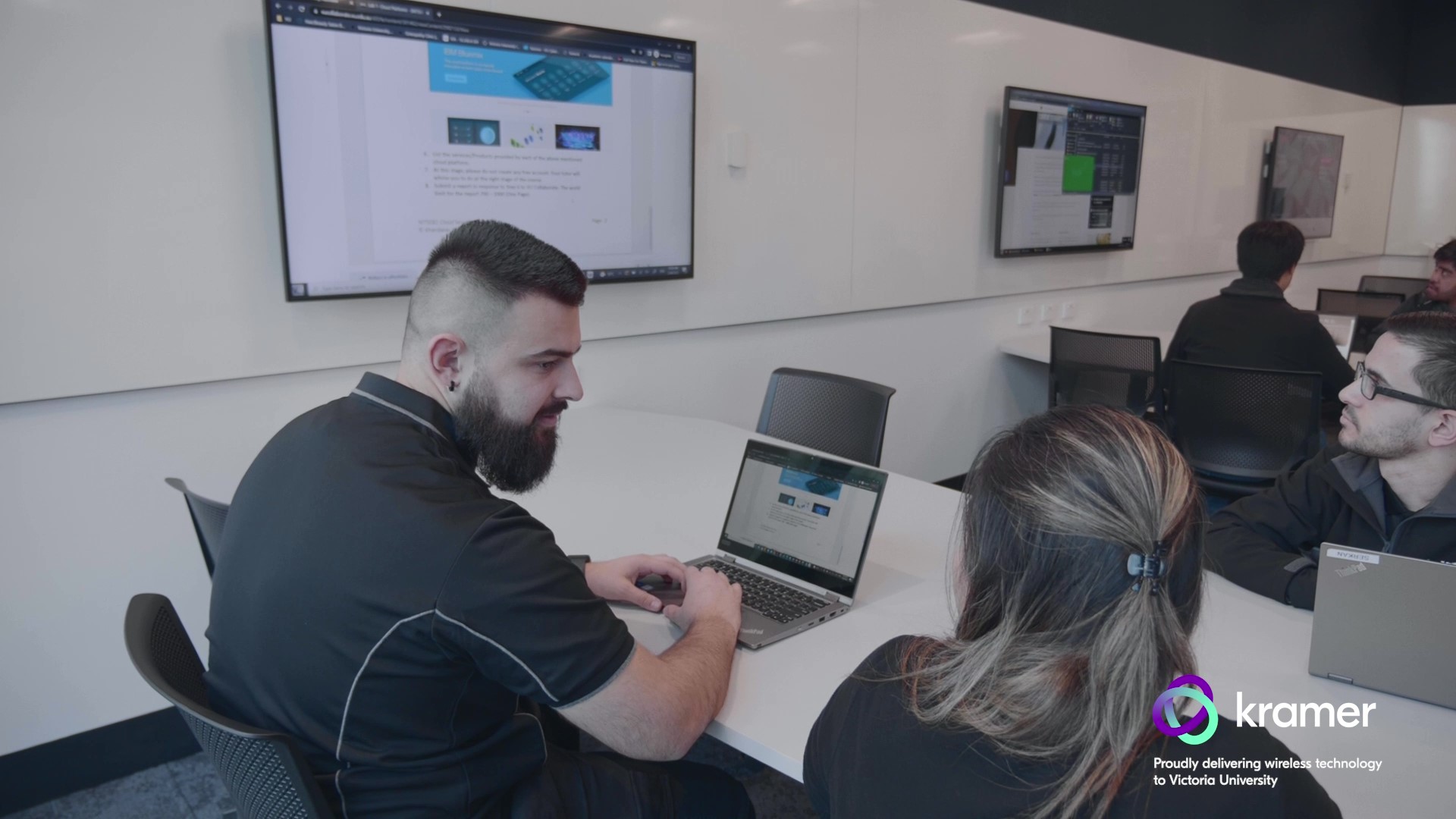
With the VIA display on the screens in the collaboration-style rooms, students are able to get started on collaborative work with ease. Kieran explains: “They simply walk up, enter the IP address, enter the code, and away they go. It allows students to collaborate independently, and then cast that around the room as required.”

According to Kirsten Jeffery, Project Director, Victoria University City Tower, the response to the collaboration capabilities supported by the new campus has been overwhelmingly positive. “The students are loving the experience here in the building, just in terms of discovery of spaces and the enablement of their formal and informal learnings. They’re very, very grateful and very appreciative for the quality, and, I think, the fit-for-purpose customized spaces.”

She also notes, “It’s terrific that we are able to showcase that commitment to students, and providing them with a quality education, surrounded by customized contemporary purpose-built facilities.”

With hundreds of VIA devices installed across the campus, the VIA Site Management (VSM) platform has proved critical to the AV services team’s day-to-day work. Kieran explains: “We use it not only for the management side to see if things are on or off or in a different state. We also use it for digital signage. We can also enable applications or disable applications. So, we have that full management flexibility with that platform, and it’s critical to us.”

When asked about the experience of working with Kramer, Kieran is unequivocal. “The relationship with Kramer is a very long one. It was before my time here at the university, and I’ve been here for 12 years. And they’ve been a big part of the university since the early 2000s. The lecture theaters are possibly 10, 15 years old, and these devices just keep running 24/7 without fail. They definitely stand the test of time.”

The next steps toward that future are already underway. With just under 600 VIA presentation devices now installed throughout VU, the university is planning to install additional VIA devices when it adds new collaboration-style rooms across the campuses later in the year.

Tags:

Education

Collaboration Applications

APAC

Australia

Got a question for one of our AV experts? Contact us here, and we’ll connect you.